When people think of a national laboratory, they may envision modern buildings, high-tech equipment and professionals in lab coats— and Los Alamos National Laboratory has all those things. But what they might not realize is that the site spans roughly 40 square miles.
Los Alamos’ facilities and operations are spread across forest-filled canyons and mesas that funnel water to the Rio Grande below. The Lab’s close work with the site’s earth, air, fire and water resources underpins its approach to stewardship. Here are four major ways the Lab’s site stewardship helps protect the environment and communities surrounding Los Alamos.
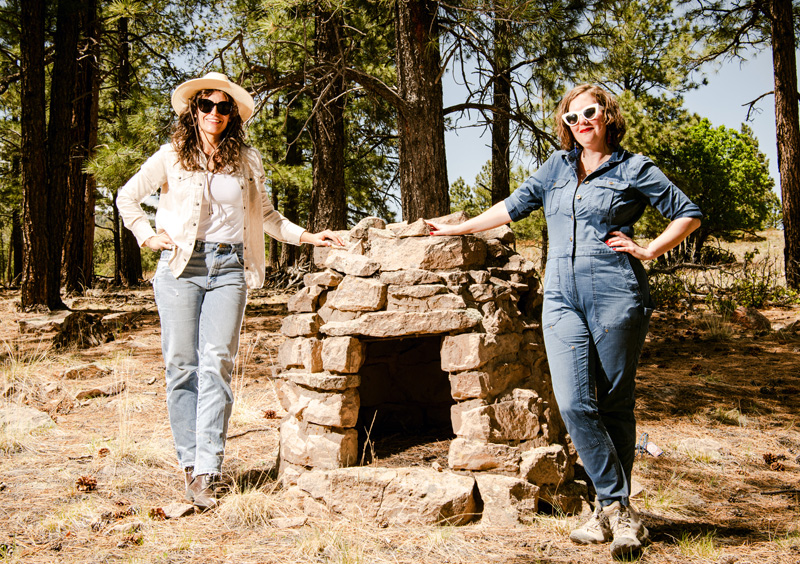
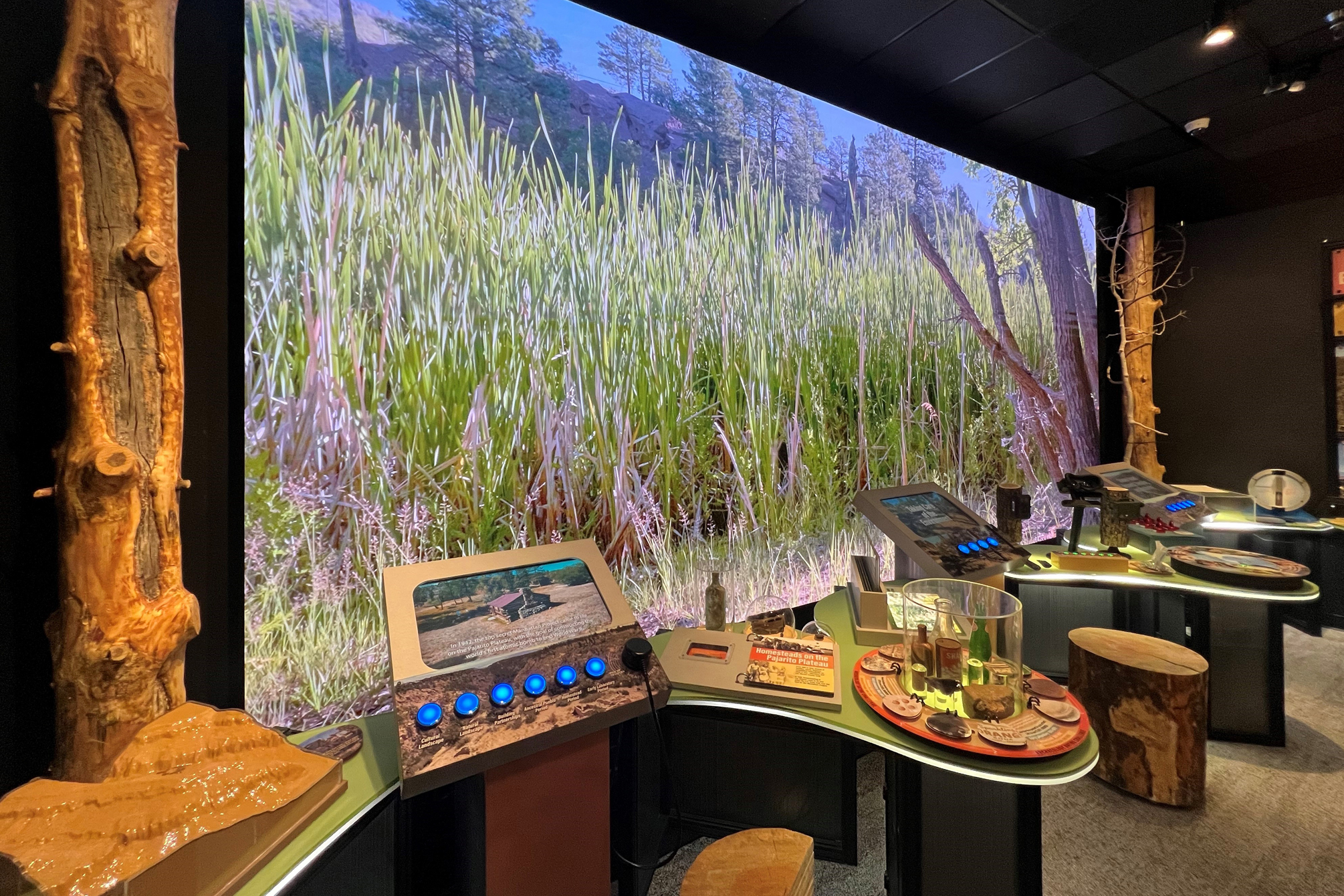
Earth: Human activity on the Pajarito Plateau, where Los Alamos National Laboratory and Los Alamos County are located, spans a period of more than 10,000 years. Sites associated with Ancestral Puebloans and more recently with homesteaders and the Manhattan Project are federally protected. Led by Lab archaeologists such as Sam Linford and Ali Livesay (pictured above at this homesteader site where part of a fireplace is all that remains of log cabin), the Lab carefully manages nearly 2,000 cultural sites and almost 500 historic buildings. Learn more at the Bradbury Science Museum’s new Homesteaders Exhibit.
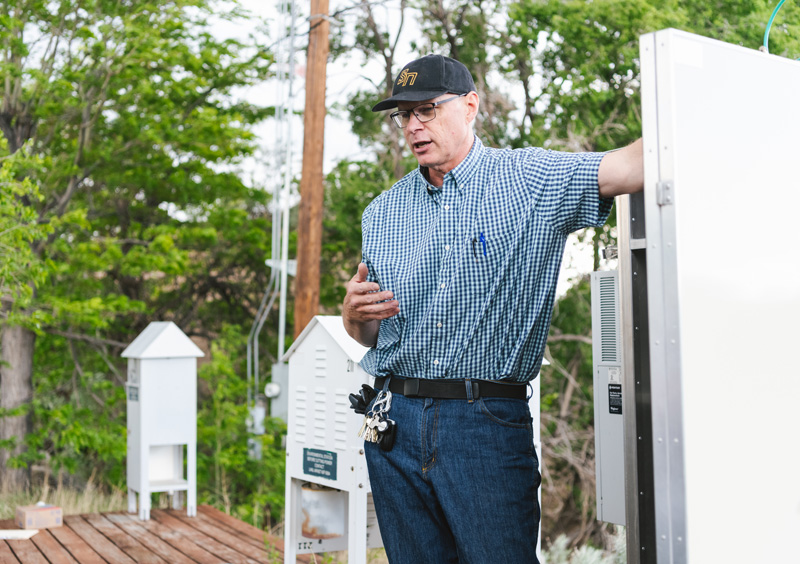
Air: The air surrounding the Laboratory and its neighboring communities is monitored continuously by a comprehensive network of 68 radiological air sampling stations like this one, as explained by Dave Fuehne (above), an expert in the Lab’s environmental compliance programs. The stations measure air quality and do specialized sampling in the event of wildfires. Air monitoring ensures the Laboratory’s compliance with regulatory permits, such as the Clean Air Act.
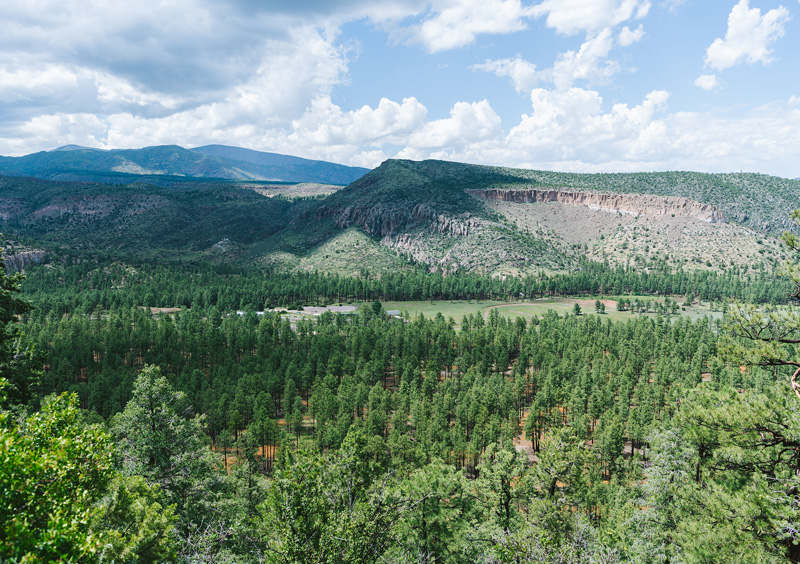
Fire: The Laboratory’s high-desert surrounds are prone to forest fire, which is a natural part of the ecosystem. Laboratory experts proactively manage the forests on the site by thinning the understory, trimming trees around powerlines and making sure vegetation is trimmed to 6 inches or less. Rendija Canyon (above) is an example of a location where forest stewardship and fire-mitigation experts created a firebreak with these techniques. Wood resulting from the thinning process is then distributed to the four neighboring Native American pueblos (Cochiti, Jemez, Santa Clara and San Ildefonso) for use as firewood.
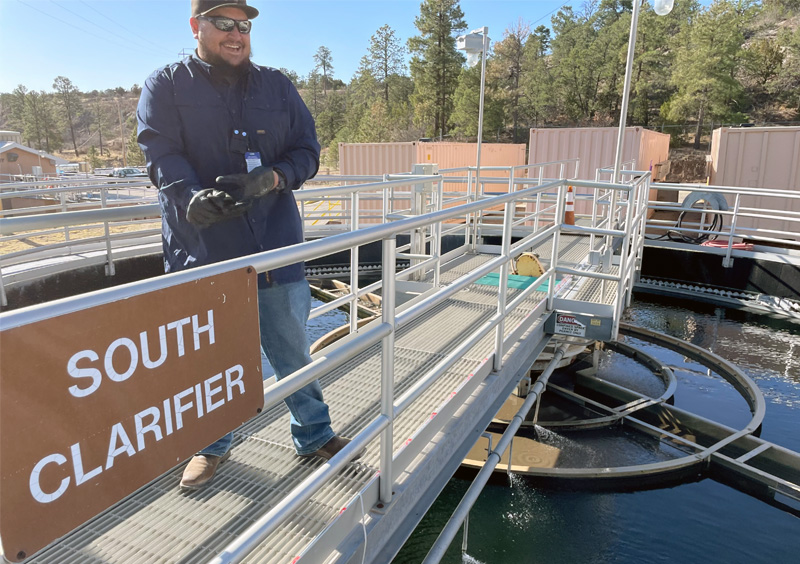
Water: The Laboratory’s water is strictly monitored, and experts such as Earl Martinez (above) ensure that Los Alamos remains proactive with its stewardship of water resources. This includes filtering polyfluorinated alkyl substances, or PFAS, from Lab wastewater. Much of the PFAS on Lab property is found in a commonly used fire-fighting foam, but PFAS are found in many products used by the Lab and everyday people, such as non-stick surfaces, moisture-resistant fabrics and adhesives. Now, Lab experts are working to detect PFAS in the products it uses, find alternatives to the products with those contaminants and reduce sources that contain PFAS. Learn about the process.
Want to know more? Read the Lab’s Annual Sitewide Environmental-impact Report (ASER).
LA-UR-25-29564