The Laboratory reinforced its commitment to safety during March and most of April through a community-wide active threat training exercise, partnering with Protective Force, the Los Alamos Police Department, Los Alamos Fire Department, Rio Arriba County Sheriffs tactical team and the Lab’s Emergency Management’s Active Threat Program.
Real-life scenarios
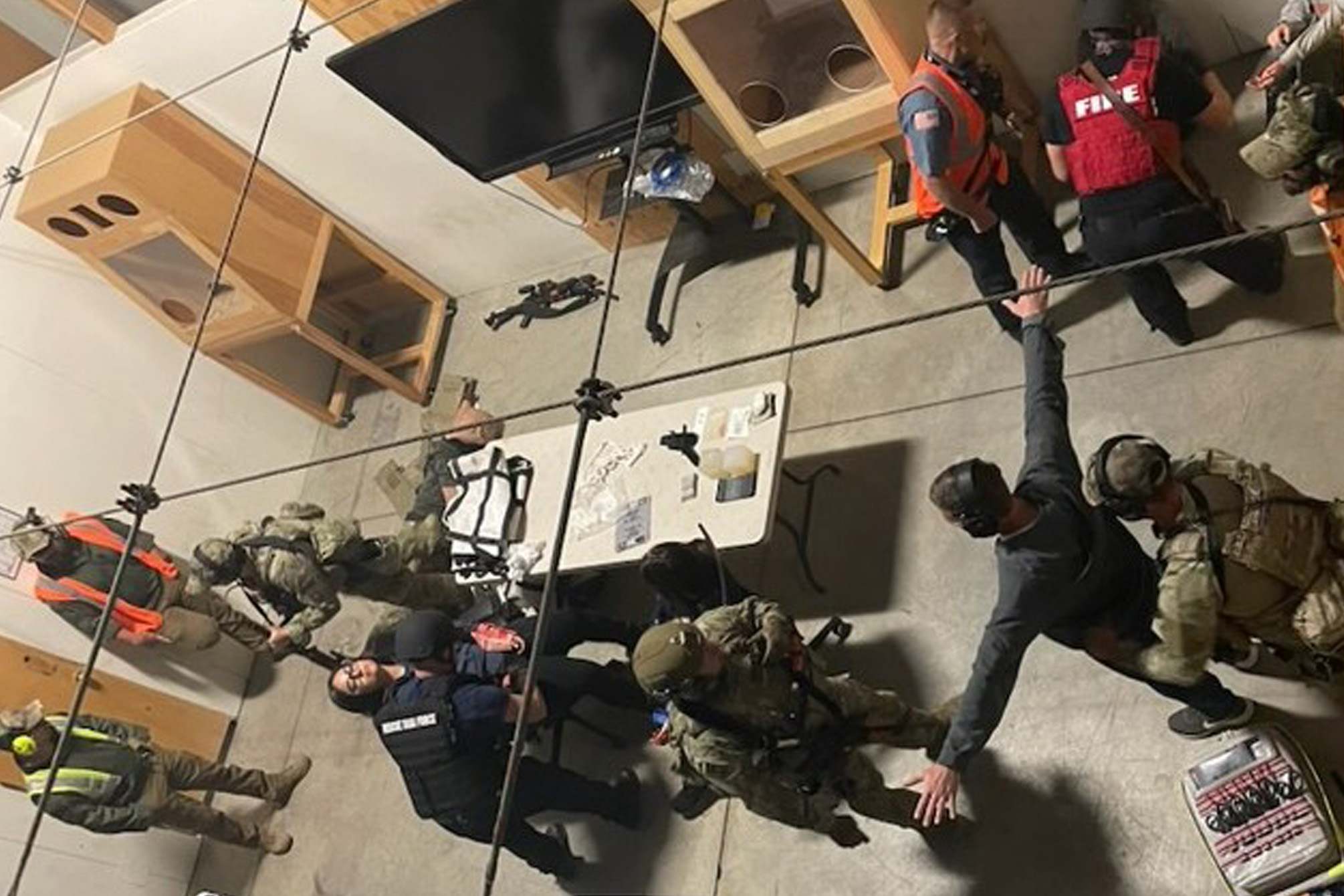
More than 100 role-playing Lab volunteers and 180-plus security first responders took part in 20 immersive, scenario-based training exercises at the TA-16 Tactical Training Facility. Designed to enhance real-world readiness, the training tested response plans, strengthened communication and validated interagency coordination in dynamic environments. Participants engaged in multiple daily scenarios featuring simulated gunfire, smoke and time-sensitive decision-making conducted under strict safety protocols, including the use of personal protective equipment and Engagement Simulation Systems AR-15 rifles that are designed to fire blank ammunition.
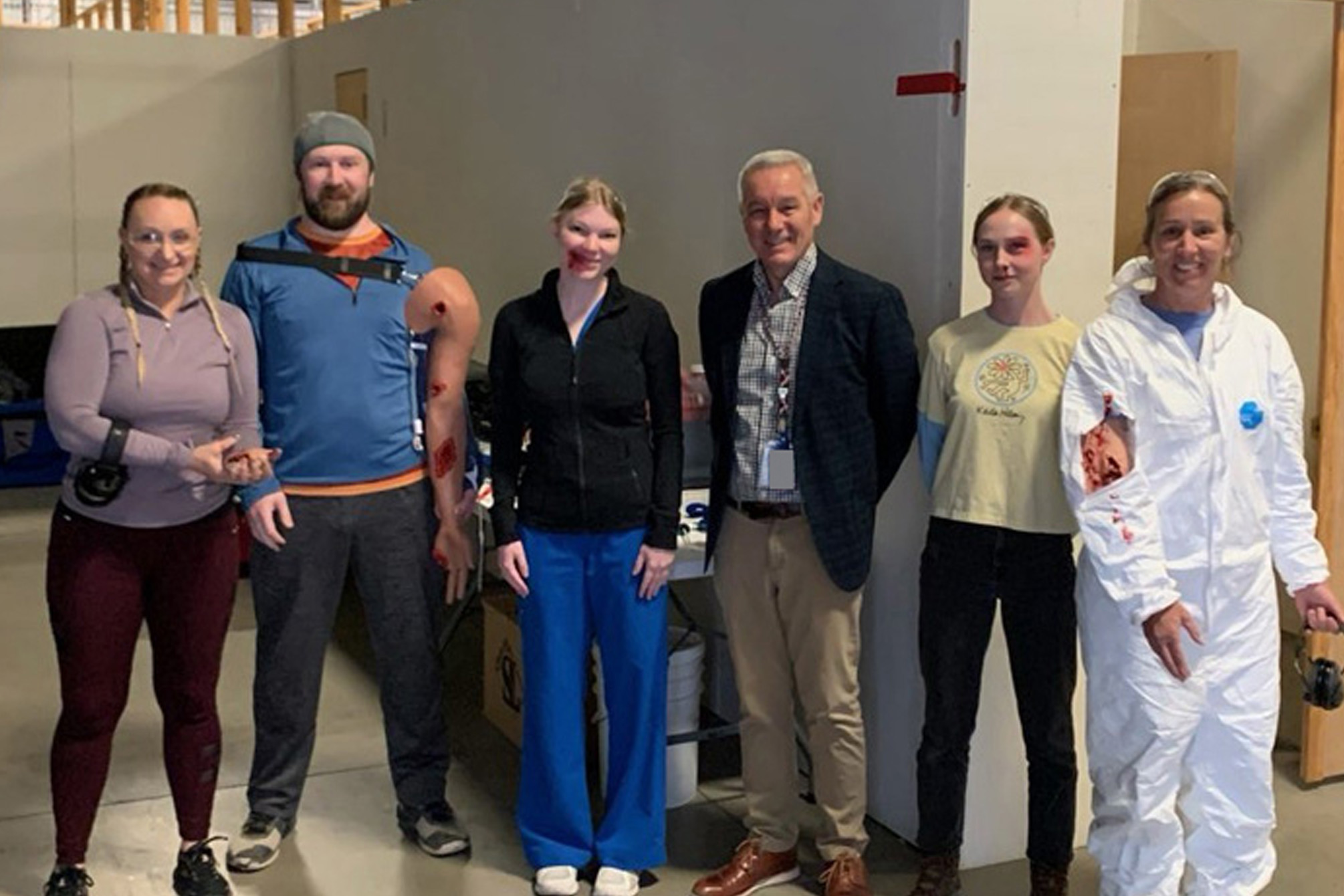
Realistic training depends on dedicated role players. Volunteers were essential in creating high-fidelity scenarios, portraying victims with assigned roles that challenged responders and deepened the training experience. Some role-play volunteers were treated to Hollywood-style makeup and prosthetic injuries.
“I was impressed with the volunteers — they took their roles at training seriously,” said Gilbert Miera, the Lab’s active threat program manager. “This gave the volunteers the opportunity in a safe environment to think about how they would react if this were a real situation.”
Each day began with a mandatory safety training and issuing of protective clear eyewear and sound-muffling ear protection to wear, called “eyes and ears.” All role players were trained on Run, Hide, Fight — the Lab’s recommended actions in the event of an active threat. During the training, role-play volunteers used their Run and Hide response actions. Every scenario concluded with immediate debriefs for volunteers and first responders, providing the opportunity to evaluate performance, identify gaps, and improve coordination and communication.
Community strength
Beyond individual team readiness, the training highlighted the strength of partnerships across Northern New Mexico.
“The collaboration between the Laboratory and surrounding community security professionals was years in the making, and when these types of valuable partnerships are built, it benefits everyone in the community,” Operations Director Mark Davis said. “By investing in realistic training and strong partnerships, the Lab continues to strengthen its commitment to safeguarding its workforce and the broader community.”
LA-UR-26-23127