DOE/LANL Jurisdiction Fire Danger Rating:
  1. LANL Home
  2. Science & Engineering
  3. Super Intelligence
  4. SI Projects

SeparationML

Skip to content
  • Software Packages
  • Personnel
  • Publications

Accelerating f-element separation with machine learning

A grand challenge in chemical separation currently stands in the way of the development of abundant, affordable, and reliable energy systems and the secure supply of critical materials.

Our central scientific mission is to accelerate f­ element separation science design using an integrated data-driven autonomous discovery loop that explores the vast space of separation chemistries with minimal human bias, in a way that provides fundamental molecular-level understanding of the separation process. Toward this end, this proposal concentrates on separation of critical rare earth materials from one another and from actinides relevant to nuclear energy generation, with a particular focus on +3 f-elements, specifically Neodymium (Nd), Europium (Eu), Terbium (Tb), Dysprosium (Dy), Holmium (Ho), Yttrium (Y), Americium (Am) and Curium (Cm). We will employ a multidisciplinary approach that combines high-throughput computations and experiments integrated together with modern data-science and super intelligence approaches to advance fundamental understanding and enable energy and critical material security. 

Energy Security

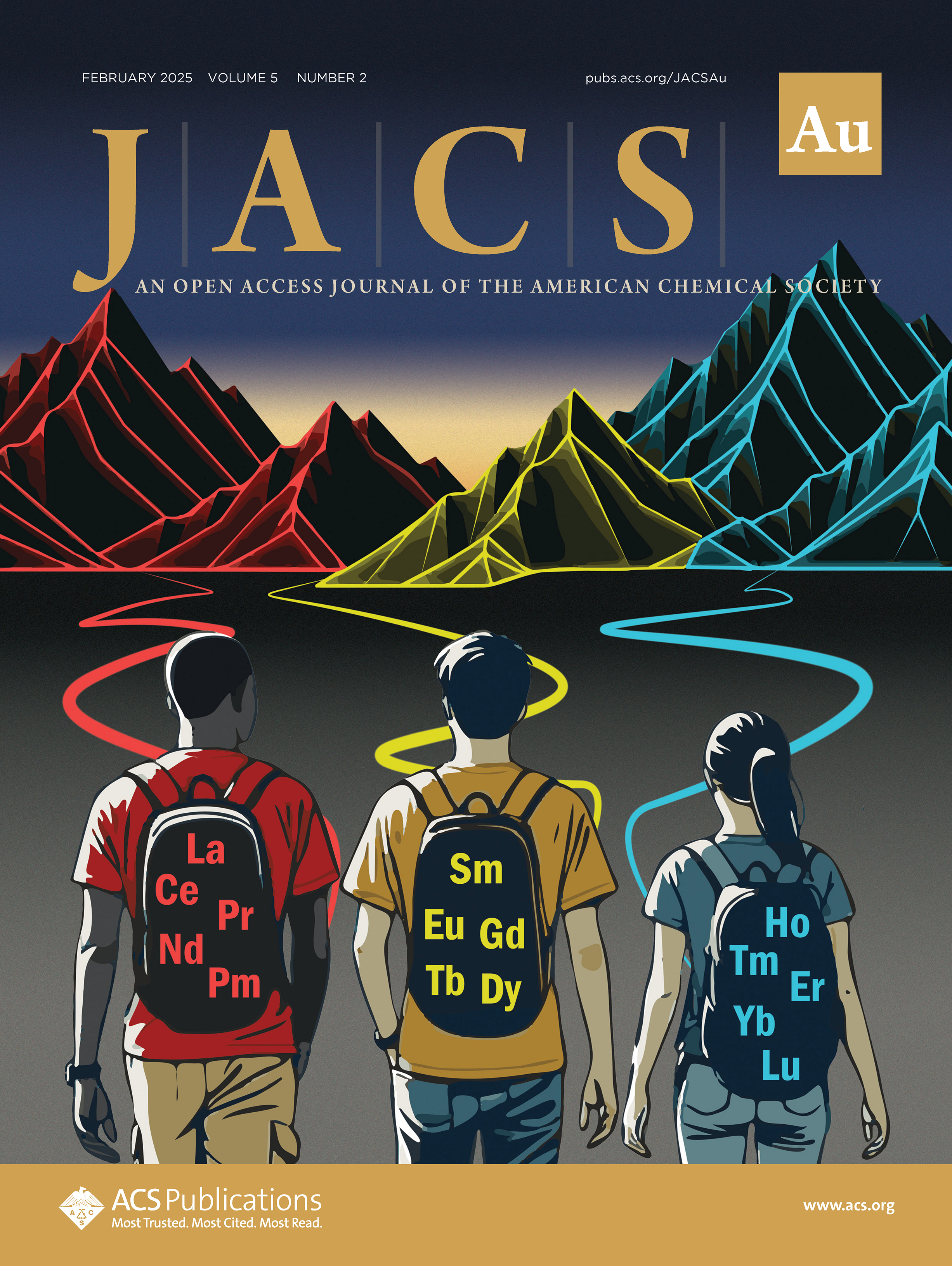
A grand challenge in chemical separation currently stands in the way of the development of abundant, affordable, and reliable forms of energy. Critical 4f rare earths and minor Sf actinides are all +3 f-elements with similar chemistries, but often very different applications. Separating these elements from one another in high purity and in high yield is essential to developing solutions for national energy security, but separation is extremely difficult given their nearly indistinguishable chemical characteristics.

Accelerated Separation Discovery

ML for Separation Process

Our central scientific mission is to accelerate f­ element separation science design using an integrated data-driven autonomous discovery loop that explores the vast space of separation chemistries with minimal human bias, in a way that provides fundamental molecular-level understanding of the separation process. Toward this end, this proposal concentrates on separation of critical rare earth materials from one another and from actinides relevant to nuclear energy generation, with a particular focus on +3 f-elements, specifically Nd, Eu, Tb, Dy, Ho, Y, Am, and Cm. We will employ a multidisciplinary approach that combines high-throughput computations and experiments integrated together with modern data-science approaches to shed light on the fundamental understandings to enable a low-carbon future.

LANL Super Separator Separations Robot

Automating Separations: LANL Super Separator

  • Makes it easier to develop a new process.
  • Makes it easier to optimize an operational process with the confines of an existing safety envelope.
  • Automation increases throughput and minimizes human error.
  • Commissioned for radioactive actinides.
Process of solvent extraction, extraction chromatography, selective precipitation
High throughput experiments process

Design Areas:

Thrust 1: Design and screen highly selective extractants by controlling coordination environment
High-throughput workflow and computation Architector, density functional theory, density functional tight binding theory, pyrion, machine learning model

Thrust 2: Navigate the vast f-element separation landscape with data-driven high throughput robotics
High-throughput robotic experiment, the Super Separator, Bayesian optimization 

Thrust 3: Understand temporal changes in structure and speciation at the molecular level
System identification, Chemical reaction network, molecular dynamics simulations, experimental spectroscopic validation

Software Packages

Media Coverage

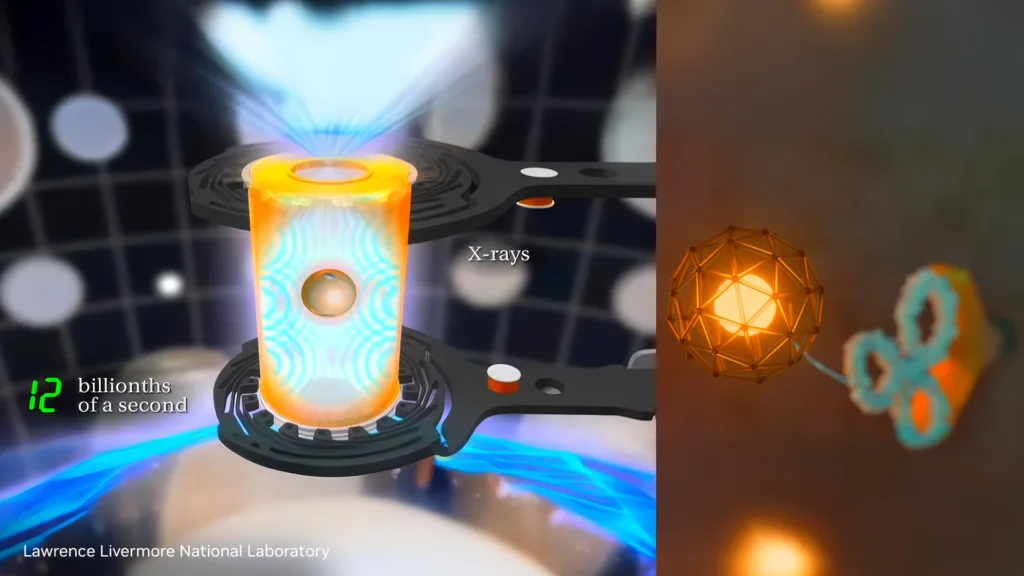
Pioneering AI Co-Scientists for Fusion Research and Cancer Treatment

AI is reshaping scientific research and innovation. Scientists can leverage AI to generate, summarize, combine, and analyze scientific data.

Read Morechevron_right

Harness Agentic AI and Reasoning Models to Accelerate Scientific Discovery

Learn how an AI co-scientist that combines powerful reasoning models with science simulations can expand the aperture for human scientists to achieve breakthroughs in domains such as fusion energy and targeted alpha therapy for cancer.

Read Morechevron_right

Chemists have a new tool to predict 3D structures of f-block organometallics

An application called Architector could help scientists separate valuable metals from nuclear waste

Read Morechevron_right

Building molecules across the periodic table

Computational tools that successfully generate three-dimensional (3D) molecular configurations have become increasingly available for a variety of applications...

Read Morechevron_right

SeparationML Team Wins 2025 Award

SeparationML Team won the LANL Distinguished Performance Award.

Emerging Technologies Episode 4: Materials Science

Carry the Two was joined by Danny Perez, a staff scientist at Los Alamos National Lab in New Mexico, Logan Ward, a PhD computational scientist, and Jason Hattrick-Simpers, a professor of material science and engineering at the University of Toronto and a research scientist at Natural Resources Canada, CMAT Materials.

Read Morechevron_right

On the Importance of Configuration Search to the Predictivity of Lanthanide Selectivity

The lanthanide elements are crucial components in numerous technologies, yet their industrial production through liquid–liquid extraction continues to be economically and environmentally costly due to the challenge of separating elements with similar physicochemical properties.

Read Morechevron_right

Personnel

Partnership & Collaboration

NVIDIA

Logan Ward, Scot Halverson, Yuliana Zamora, Xiaoyun Wang, Geetika Gupta, Paul Cook, Justin Smith

Los Alamos National Laboratory

P.O. Box 1663

Los Alamos, NM 87545

(505) 667-5061

At The Lab

  • Business Opportunities
  • Jobs
  • Organizations
  • Research Library
  • User Facilities

Information

  • Emergency
  • Ombuds
  • Reading Room
  • Resources
  • Science Museum

For Employees

  • AskIT
  • LANLInside
  • MyMail
  • Training
DOE White Seal
  • Terms of Use/Privacy

Managed by Triad National Security, LLC for the U.S. Dept. of Energy’s NNSA

Copyright 2026 Triad National Security, LLC. All Rights Reserved.

Learn about the Department of Energy’s Vulnerability Disclosure Program