
Building frameworks for the future
In the mid-1800s, chemistry was a science without order, riddled with inconsistent atomic weights, conflicting formulas, and little agreement on the nature of atoms and molecules. Across Europe, scientists strived to bring clarity to the sixty known elements, but their models only worked within the limits of existing data, stopping short of imagining what else might be. These early efforts faltered because they didn’t leave space for the unknown.
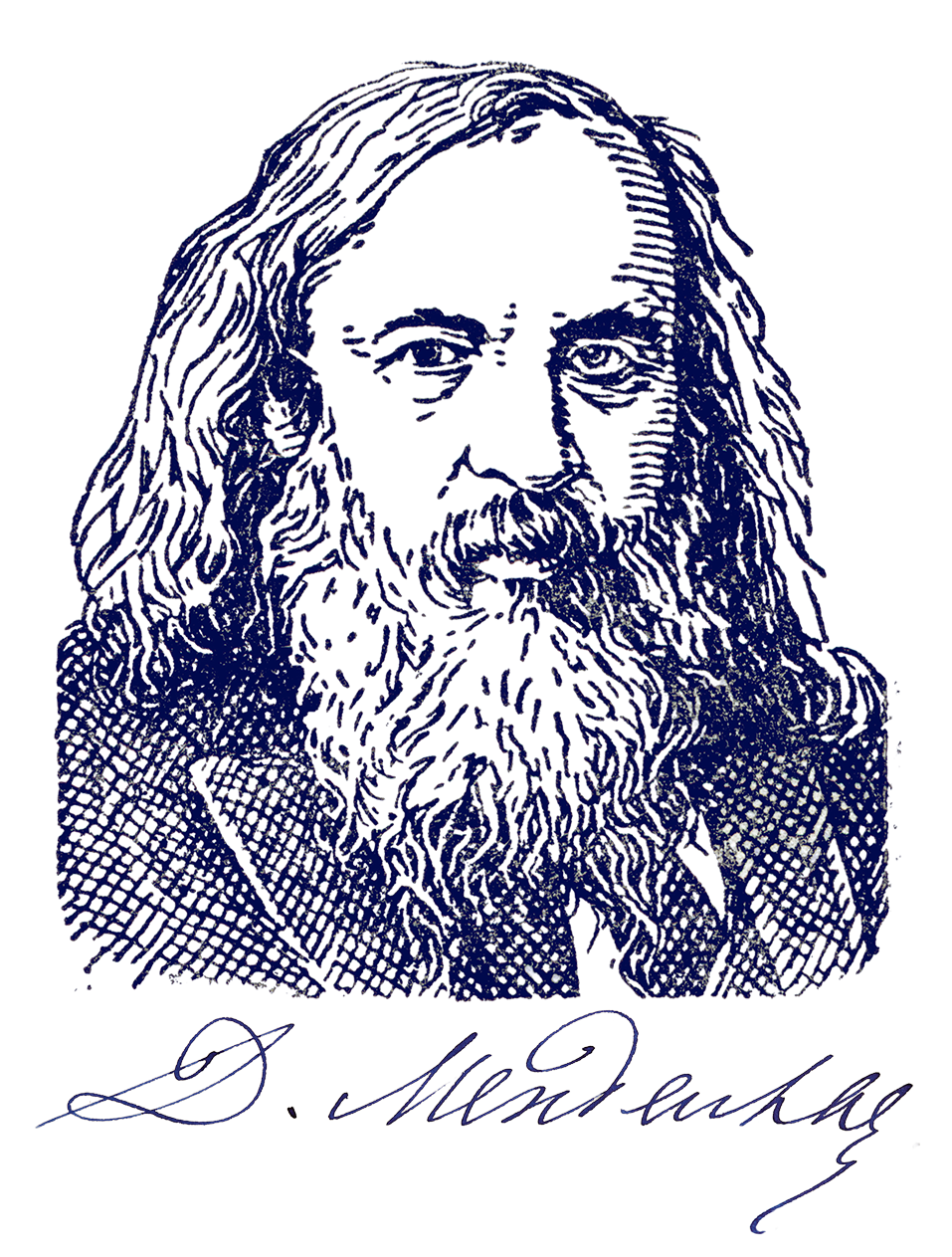
Dmitri Mendeleev did something radically different: he built a system that acknowledged its limitations and used them as a strength. By leaving deliberate gaps for elements not yet discovered, he transformed a lack of information into opportunity. His table wasn’t just a record of what was known—it was a map of what should exist. When elements like gallium and germanium were later discovered with the exact properties Mendeleev’s table predicted, chemistry gained something far greater than new elements: it demonstrated that a well-structured system could reveal truths beyond existing data.
Mendeleev’s periodic table revealed order hidden within complexity. By arranging the elements in order of increasing atomic weight (and, later, atomic number), Mendeleev revealed that their chemical and physical properties repeat in predictable intervals—a periodicity that reflects the underlying structure of matter itself. This transformed chemistry from a catalog of facts into a coherent system that explained the known and highlighted the unknown.
That was Mendeleev’s true genius: by treating uncertainty as a guide rather than a barrier, he established a framework for discovery.
Mendeleev’s insight—that structure can reveal what data alone cannot—remains central to discovery today. At Los Alamos, that principle defines how the Laboratory tackles the world’s most complex problems. Through high-performance modeling, AI reasoning, and experimental integration, Los Alamos scientists and engineers build frameworks that transform massive datasets into insight, revealing patterns hidden beneath noise and turning raw data into the kind of structure that makes discovery possible. Where Mendeleev’s table predicted missing elements, Los Alamos science predicts behaviors, forecasts material performance, and maps emerging risks—each serving as a foundation for national security in a world of accelerating change.
Modeling and simulation extend this work, providing digital frameworks that let researchers explore complex systems long before they can be observed experimentally. Using high-performance computing and AI-enhanced algorithms, LANL scientists replicate the dynamics of stars, the properties of new materials, and the behavior of nuclear systems with extraordinary precision. These virtual experiments don’t replace observation; they expand it—testing ideas at scales impossible to reach in the lab. In doing so, the Laboratory extends the limits of current measurements to push the boundaries of science.
Just as Mendeleev’s periodic table gave us a map of the elements, Los Alamos builds the maps of modern discovery—frameworks that unite AI reasoning, advanced manufacturing, and experimental science in service of national security. Though separated by centuries, both endeavors share a single aim: to bring clarity to complexity and transform the knowledge of today into the foresight that unlocks the discoveries of tomorrow.