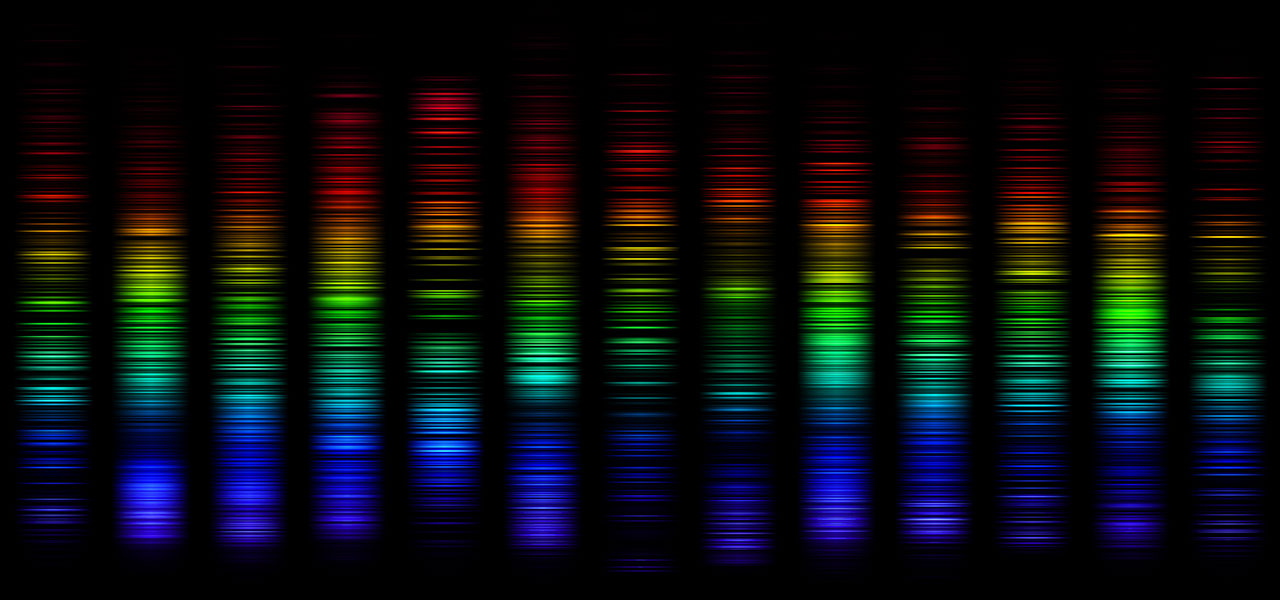
After William Ramsay and Morris Travers successfully collected neon, argon, and krypton from liquid air in 1898, they wondered if other gases were in the atmosphere. One day, they received a high-tech gift from wealthy businessman Ludwig Mond—a new liquid-air machine that was able to collect larger amounts of Krypton. After repeating the process several times, they eventually collected a heavier gas that glowed a beautiful blue color when isolated in a vacuum tube. This gas did not react during their experiments, so they concluded that they had found another member of the inert gas group and named it xenon after the Greek word xénos, meaning 'foreign(er)', 'strange(r)', or 'guest'.
As decades passed, scientists continued to study xenon, all contributing to our modern understanding of the noble gas. In the 1930s, Harold Edgerton studied the light created by sending electricity through xenon gas. From1939 to 1951, Albert R. Behnke Jr., Nikolay V. Lazarev, and John H. Lawrence, investigated the anesthetic properties of xenon. In 1962, Neil Bartlett was able to combine xenon and hexafluoride and created the first known compound. Most recently, in the 1980s, IBM scientists used new technology to position xenon atoms on chilled crystal nickel, marking the first time atoms were purposefully positioned on a flat surface.