DOE/LANL Jurisdiction Fire Danger Rating:
  1. LANL Home
  2. Science & Engineering
  3. Periodic Table

Thallium

81
204.4
Tl
Thallium

Element Stats

Select a temperature unit to update boiling and melting point values.

Physical

Physical Properties
PropertyValuePropertyValue
AppearanceSoft, silvery-white metal that rapidly tarnishes in air
ClassificationPost-Transition MetalsDensity11.85 g/cm³ at STP
Boiling Point1746 KMelting Point577 K

Atomic

Atomic Properties
PropertyValuePropertyValue
Atomic Number81Atomic Mass204.38
Van Der Waals Radius196Atomic Radius (empirical)170

Electronic & Chemical

Electronic and Chemical Properties
PropertyValuePropertyValue
Electronegativity1.62Electron Affinity36.4 kJ/mol
Electron Configuration1s2 2s2 2p6 3s2 3p6 4s2 3d10 4p6 5s2 4d10 5p6 6s2 4f14 5d10 6p1
Oxidation States3, 2, 1, -1, -2, -5
Ionization Energies

Showing all 3 ionization energies.

  1. 589.4 kJ/mol
  2. 1971 kJ/mol
  3. 2878 kJ/mol

History

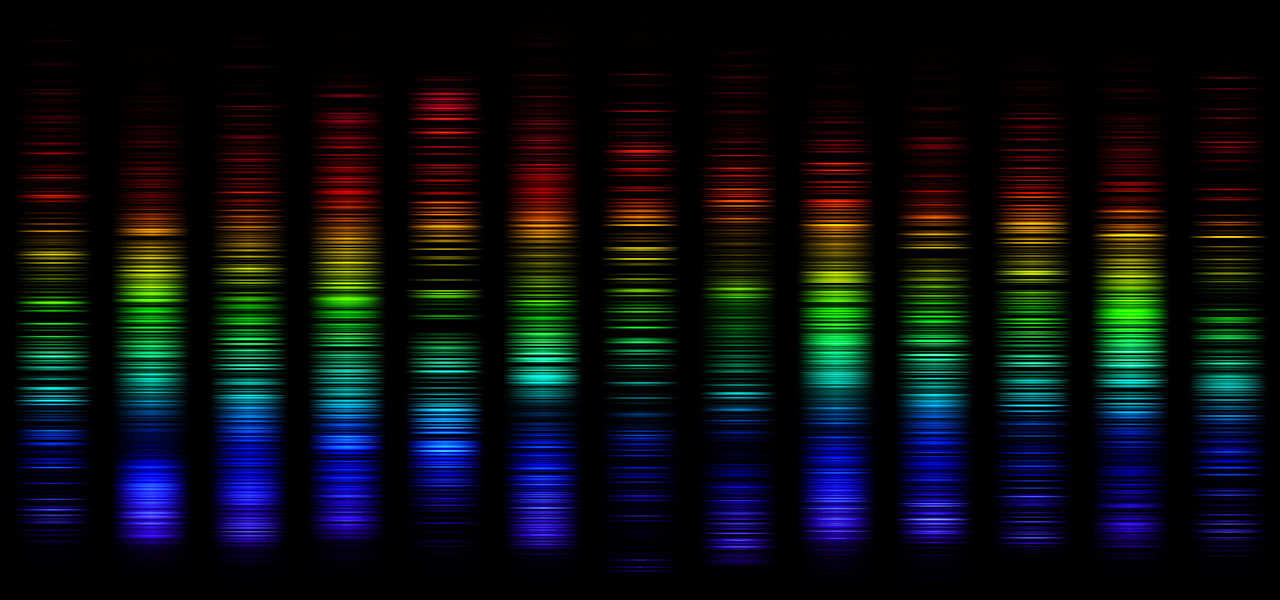
In 1861, British chemist William Crookes (inventor of the Crookes tube) was busy examining the leftovers from producing sulfuric acid. He used flame spectroscopy, a technique that had just been approved for identifying minerals after improvements by scientists like Robert Bunsen (yes, the guy behind the Bunsen burner!). Crookes was hoping to find tellurium, but instead, he spotted something totally new—a bright green line in the flame. This had never been seen before and meant he had a new element on his hands. He named it thallium, after the Greek word thallos, meaning "green twig" because of that distinctive green color.

But Crookes wasn't the only one on the trail of thallium! Around the same time, Claude-Auguste Lamy in France was also using flame spectroscopy to study materials from sulfuric acid production. Lamy noticed the same green spectral line and realized he, too, had found a new element. While Crookes was first to announce the discovery, Lamy was the first to purify thallium, producing a small nugget of the shiny new metal in 1862.

There was a bit of drama between Crookes and Lamy about who should get the most credit for discovering thallium. While Crookes made the initial find, Lamy was the first to isolate it in larger quantities, which helped scientists learn more about the element’s properties. Ultimately, both scientists were recognized for their work.

Properties

Thallium is a soft, heavy, silvery-gray post-transition metal. It can be cut with a knife at room temperature. It tarnishes very quickly when exposed to air, forming a layer of blue-gray thallium oxide. It is the heaviest of the boron group elements, and is found in group 13, period 6 of the periodic table. It can be identified by the brilliant green flame it produces in a Bunsen burner.

Uses

Thallium sulfate was commonly used as a rat poison, until people realized just how toxic it was to humans and other animals. In 1972, it was banned in the United States (after 50 years of use), when it was discovered that about one quarter of sick/dead bald eagles had been poisoned by thallium. Household use is now banned in most countries.

Thallium oxide is used to make a special glass with a high refractive index that is used in optical measuring devices. Thallium is also used in low temperature thermometers and switches, because when alloyed with mercury, it lowers its melting point by 20°C.

Thallium-201 is proving to be an excellent isotope for cardiovascular imaging, because it has a half-life of 73 hours and emits x-rays as it decays. That short half-life means that it leaves the body quickly and is less risky for patients.

Thallium compounds are also used to produce green fireworks and color artificial gemstones.

Compounds

Several minerals containing thallium occur in nature as sulfide/selenide complexes with antimony, arsenic, copper, lead, and silver.

Thallium oxide, bromide, iodide, and sulfate are produced for industrial uses. Thallium usually takes a +3 or +1 oxidation state in these compounds, reflecting the number of electrons it has lost.

Forms

There are currently 41 known isotopes of thallium, with atomic masses ranging from 176 – 216. Only thallium-203 and thallium-205 are stable, and the only isotopes found naturally. Thallium-203 makes up 29.5% of naturally occurring thallium, with thallium-205 accounting for 70.5%. The most stable radioisotope of thallium is thallium-204, which has a half-life of 3.78 years.

Sources

Thallium is not found in its free form in nature, but thallium compounds do exist. The main naturally occurring ones are crookesite, hutchinsonite, and lorandite. Thallium is also found in manganese nodules on the ocean floor. Thallium is estimated to exist in the earth’s crust at an abundance of 0.7 ppm. It is mostly obtained as a by-product of sulfuric acid production from pyrites, and from refining of copper, lead, and zinc from their ores.

Fun Facts

Your favorite poison’s favorite poison

In the 1800s, thallium was tested to treat human ailments, but it made most patients sicker. By the start of the 20th century, thallium transitioned from would-be healer to killer, as it became a common pesticide. It earned the nickname the “poisoner’s poison” because it is tasteless, odorless, and difficult to detect. Fortunately for potential victims, thallium was banned in the United States in 1975.

When fiction becomes reality

Agatha Christie used thallium poisoning as a murder method in her 1961 book The Pale Horse. She described the symptoms so accurately that her novel is credited for saving at least two lives and catching a murderer! In one case, police and doctors were mystified by what was causing the strange “Bovingdon bug” that was sickening and killing workers at a factory in England in 1971. It wasn’t until Scotland Yard was brought in that one of their doctors, who was an Agatha Christie fan, realized that a poisoner was to blame. The poisoner was quickly caught because he’d done it before—he'd poisoned his stepmother when he was a teenager!

I can see clearly now the low refraction’s gone

Thallium oxide is used to make glass with a high refraction index, meaning it bends more light. This is important for making thinner lenses for glasses and for scientific equipment that must limit spherical and color aberrations, like photonics and biomedicine.

Los Alamos National Laboratory

P.O. Box 1663

Los Alamos, NM 87545

(505) 667-5061

At The Lab

  • Business Opportunities
  • Jobs
  • Organizations
  • Research Library
  • User Facilities

Information

  • Emergency
  • Ombuds
  • Reading Room
  • Resources
  • Science Museum

For Employees

  • AskIT
  • LANLInside
  • MyMail
  • Training
DOE White Seal
  • Terms of Use/Privacy

Managed by Triad National Security, LLC for the U.S. Dept. of Energy’s NNSA

Copyright 2026 Triad National Security, LLC. All Rights Reserved.

Learn about the Department of Energy’s Vulnerability Disclosure Program