Strontium is named for the town of Strontian, Scotland. A Scottish doctor, Adair Crawford, recognized that a particular ore found in the Strontian lead mines behaved differently than other ore. Another Scot, chemistry professor Thomas Charles Hope, examined the ore in greater detail in 1791. He confirmed and built upon Crawford’s observations, concluding that it contained a new element. English chemist Sir Humphrey Davy isolated the element in 1808 using electrolysis (electrical current to drive a chemical separation reaction) to split up strontium chloride.
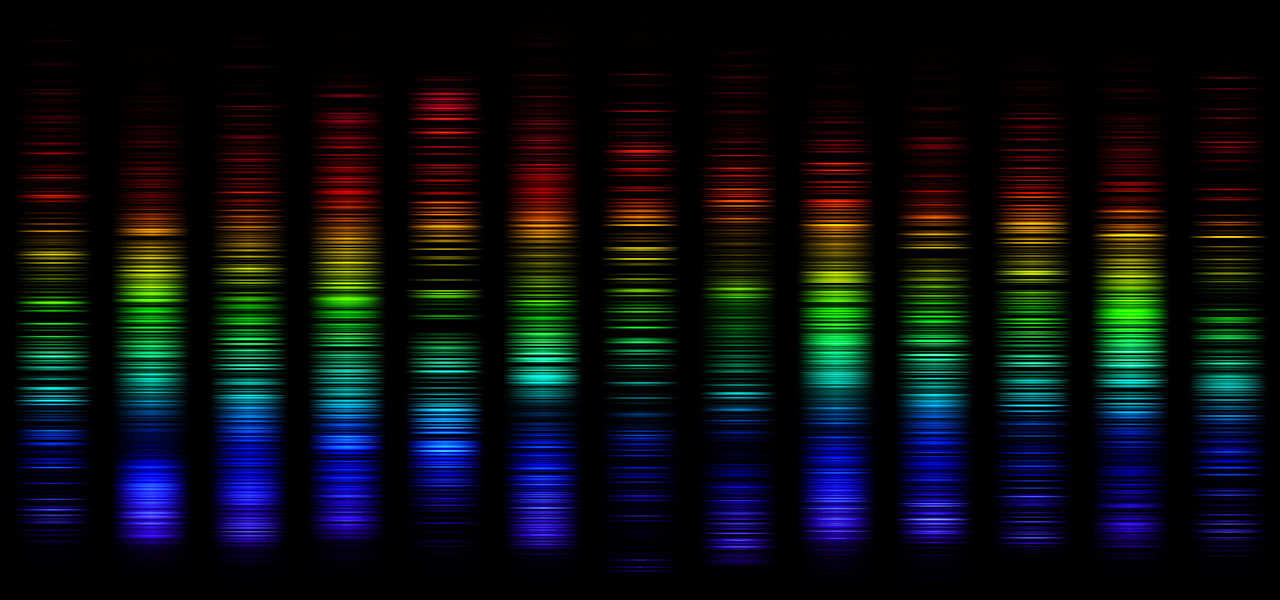
Strontium
38
87.62
Sr
Strontium
Element Stats
Select a temperature unit to update boiling and melting point values.
Physical
| Property | Value | Property | Value |
|---|---|---|---|
| Appearance | Soft, silvery metal | ||
| Classification | Alkaline Earth Metals | Density | 2.582 g/cm³ at STP |
| Boiling Point | 1650 K | Melting Point | 1050 K |
Atomic
| Property | Value | Property | Value |
|---|---|---|---|
| Atomic Number | 38 | Atomic Mass | 87.621 |
| Van Der Waals Radius | 249 | Atomic Radius (empirical) | 215 |
Electronic & Chemical
| Property | Value | Property | Value |
|---|---|---|---|
| Electronegativity | 0.95 | Electron Affinity | 5.023 kJ/mol |
| Electron Configuration | 1s2 2s2 2p6 3s2 3p6 4s2 3d10 4p6 5s2 | ||
| Oxidation States | 2, 1 | ||
| Ionization Energies | Showing 5 of 11 ionization energies.
| ||
History
Properties
Strontium is a soft, reactive metal. Freshly cut, it has a silvery, slightly yellowish appearance, but it rapidly turns more yellowish as it oxidizes in air. If it’s cut into small enough pieces, the pieces spontaneously ignite in air.
Natural strontium is a mixture of its four stable isotopes.
Uses
You may not have known it, but you've probably played with strontium a lot! Strontium carbonate and other strontium salts are used to make bright red fireworks and flares. It is also used to make magnets. Strontium aluminate is the key ingredient in glow-in-the-dark toys because it is phosphorescent, another way to say it glows. When something phosphoresces, it absorbs light and slowly reemits it at a different wavelength, giving off a color.
Strontium chloride is also used in toothpaste for sensitive teeth and in refining zinc.
Strontium atoms have a natural transition between two states that can be exploited to make atomic clocks. Most existing atomic clocks use cesium atoms, but strontium is slightly more accurate. That means strontium atomic clocks are able to define, with great precision, what “one second” really is.
In addition to its chemical and atomic properties, two strontium isotopes have valuable nuclear properties. The human-made isotope strontium-89 is used to treat bone cancer. Because it behaves chemically like calcium (being in the same column on the periodic table), it goes where calcium goes—into the bones. It especially goes to the parts of bones where new cells are forming. Because cancer makes cells grow so quickly, strontium-89 finds its way to bone tumors, killing them because of its radioactivity.
The isotope strontium-90 is produced in nuclear reactors and can be obtained from nuclear waste. It is strongly radioactive, emitting high-energy particles that heat up the surrounding matter. In a device called a “radioisotope thermoelectric generator” (RTG), that heat can be used to make electrical power—like a powerful battery. With a half-life of 29 years, strontium-90 makes for a long-lived RTG. It can power important devices in remote locations where it’s not easy to replace or recharge batteries, like spacecraft, navigational or research buoys in the middle of the ocean, isolated lighthouses, and remote research stations.
Forms
There are three different forms, or allotropes, of solid strontium metal. As the temperature is raised beyond 235°C, and then 540°C, the atoms rearrange themselves. They connect to one another at different angles. This gives the three allotropes a different look and feel. (Diamond and graphite—allotropes of carbon—provide a striking example of this.) If the temperature is increased past the melting point at 777°C, the last allotrope melts to a liquid.
Sources
As of 2015, the leading producers of strontium were China, Spain, and Mexico. Even though strontium deposits are plentiful in the United States, domestic mining ended in 1959. The main sources are two whitish crystals, the minerals celestine and strontianite. Celestine (strontium sulphate, SrSO4) is more common and more available, while strontianite (strontium carbonate, SrCO3) is more rare and more useful. The sulphate form is often mined and chemically converted into the more useful carbonate.
To obtain strontium metal by itself, strontium oxide can be reacted with aluminum or strontium chloride can be separated by electrolysis.
Fun Facts
Ancient migration
The four naturally occurring, nonradioactive isotopes of strontium can be measured and analyzed in human and animal remains to reveal ancient migration patterns. This is because these isotopes are absorbed into bones in varying amounts, depending on where the organism lived.
Peak precision
The most accurate clock ever built—one that will gain or lose only one second every 40 billion years—uses strontium atoms. Strontium atoms cycle between energy states much faster than the cesium atoms in typical atomic clocks do, enabling strontium-based clocks to measure much smaller time intervals.