DOE/LANL Jurisdiction Fire Danger Rating:
  1. LANL Home
  2. Science & Engineering
  3. Periodic Table

Silicon

14
28.09
Si
Silicon

Element Stats

Select a temperature unit to update boiling and melting point values.

Physical

Physical Properties
PropertyValuePropertyValue
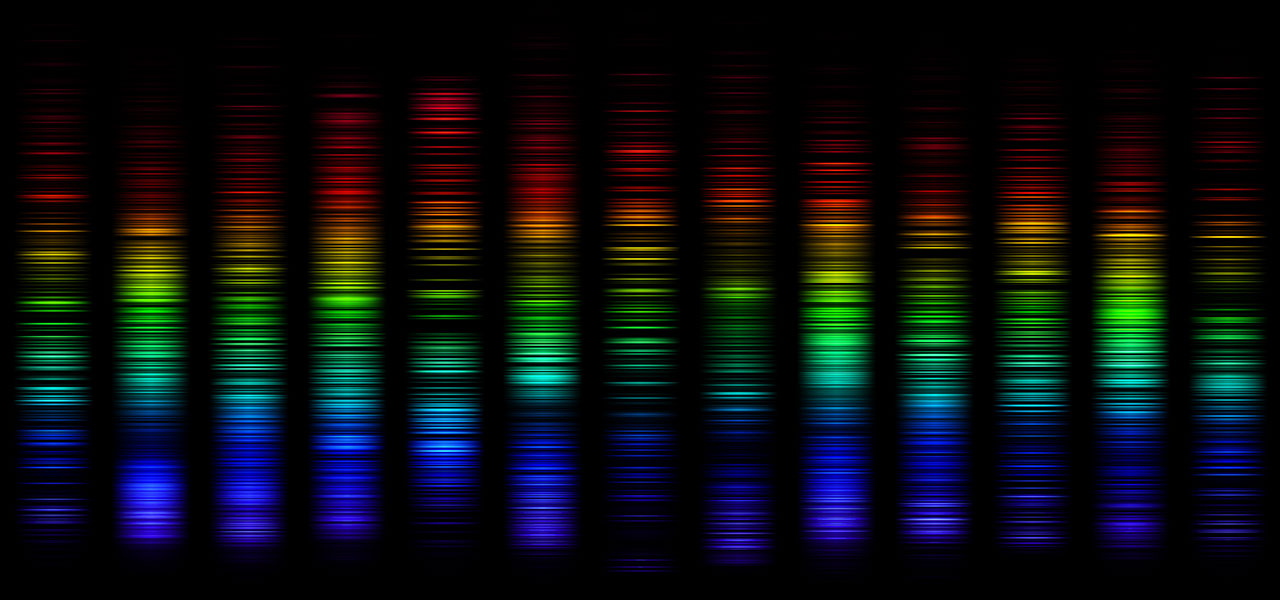
Appearancecrystalline, reflective with bluish-tinged faces
ClassificationMetalloidsDensity2.329085 g/cm³ at STP
Boiling Point3538 KMelting Point1687 K

Atomic

Atomic Properties
PropertyValuePropertyValue
Atomic Number14Atomic Mass28.085
Van Der Waals Radius210Atomic Radius (empirical)111

Electronic & Chemical

Electronic and Chemical Properties
PropertyValuePropertyValue
Electronegativity1.9Electron Affinity134.0684 kJ/mol
Electron Configuration1s2 2s2 2p6 3s2 3p2
Oxidation States4, 3, 2, 1 -1, -2, -3, -4
Ionization Energies

Showing 5 of 14 ionization energies.

  1. 786.5 kJ/mol
  2. 1577.1 kJ/mol
  3. 3231.6 kJ/mol
  4. 4355.5 kJ/mol
  5. 16091 kJ/mol

History

“Silicon” comes from the Latin word silex, meaning flint. Sharp flints of silica (silicon dioxide, SiO2) are among humanity’s first known tools. For thousands of years, humans have put silica and other rock-crystal forms of silicon to different uses. They made beads and vases with it and the Egyptians knew how to make glass from silica by 1500 BCE.

In 1787, French chemist Antoine Lavoisier correctly suspected silica was an oxide of a new element, but the silicon and oxygen were bound so tightly that he didn’t know how to remove the oxygen to test his theory. In 1808, Sir Humphrey Davy of England tried to isolate silicon with an electric current (electrolysis). Even though he was able to isolate other elements this way, it didn’t work with silicon.

In 1811, French chemists Joseph Gay-Lussac and Louis Jacques Thénard reportedly prepared an impure, amorphous (non-crystalline) silicon by heating potassium with silicon tetrafluoride. The idea was to use potassium’s reactivity to lure the tetrafluoride off the silicon, but they didn’t fully isolate or identify the new element. Chemist Jöns Jacob Berzelius of Sweden followed Gay-Lussac and Thénard’s use of potassium. But Berzelius started with a different silicon compound and carefully purified the resulting material to finally derive amorphous silicon. In 1854, French chemist Henri Deville later prepared crystalline silicon. Others would follow in that important line of work.

Davy had proposed naming the unknown element silicium, ending in -ium because he believed it to be a metal, like lithium, sodium, or strontium. A Scottish chemist, Thomas Thomson, argued that it should instead be named silicon, believing it to be a nonmetal (like boron or carbon). Today it is considered something in between, a metalloid. Metalloids have some metal properties and some nonmetal properties.

Properties

Crystalline silicon has a metallic luster and appears bluish-gray color. Silicon is not very reactive and most acids, except hydrofluoric, do not affect it. Nonreactive usually means nontoxic; however, silicon can have some harmful properties. Miners, stonecutters, and others engaged in work where they breathe in silicon-containing dust may develop a serious lung disease known as silicosis and some silicates, such as asbestos, cause cancer.

Uses

Silicon is one of humanity’s most useful elements. Some of its applications require fairly little processing. Silicon in the form of sand and clay is used to make concrete and brick. In the form of silicates, it is used to make mortar and stucco, enamel, pottery, ceramic, and fiberglass. Combining silicon and oxygen atoms with organic chemicals creates the rubbery polymer silicone. Silicone is important as a sealant, lubricant, and adhesive. It is used to make many products, including electrical insulation, cooking utensils, and waterproof caulk.

Silica, as sand, is a key ingredient of glass. Glass is one of the most inexpensive materials and has very useful mechanical, optical, thermal, and electrical properties. Glass can be made in a great variety of shapes for a variety of purposes, such as containers, windows, insulators.

Silicon is used in many alloys as well. It enhances the properties of metals such as iron, aluminum, and steel. Other applications, particularly semiconductor applications, require more sophisticated processing. A semiconductor is what it sounds like: something in between a conductor like copper and an insulator like glass. Silicon is a natural semiconductor.

When silicon is extremely pure and then “doped,” it becomes spectacularly useful. Doping means substituting a few atoms (say, one out of every billion silicon atoms) with atoms of a different kind, such as boron, gallium, phosphorus, or arsenic. When suitably doped semiconductors are put together, they create a junction where electrical conductivity can be controlled. In a transistor, for example, applying a voltage to one area allows electricity to flow through a connected circuit. This creates an electrical switch with no moving parts. It is the basis for integrated circuits, which make up computer chips. The computer circuitry effectively reconfigures itself from moment to moment to meet the needs of different computer programs.

In addition to computer chips, semiconductor devices also include solar cells, x-ray detectors, and LEDs (for lamps, lasers, and display screens). Silicon has long been the core material for such devices.

Forms

Silicon comes in two main forms, or allotropes: amorphous and crystalline. In each, the atoms are organized differently, resulting in a different overall structure. Amorphous silicon, in which the atoms connect every which way, is a brown powder. It can be melted and poured to make solar panels. By contrast, the atoms in crystalline silicon are arranged in a perfectly regular pattern.

The most common silicon crystal looks metallic gray, tinged slightly blue. It has a crystal structure the same as a diamond. This makes sense because carbon and silicon are neighbors. Silicon sits directly below carbon on the periodic table. They both have four valance electrons (electrons that can be shared with another atom). So, it’s not surprising that carbon and silicon’s crystals would have the same structure.

Sources

Silicon is the eighth most abundant element in the universe by mass. It is made in the cores of massive stars and distributed through space when those stars explode. New stars, planets, and asteroids all obtain large amounts of silicon this way. Silicon is the second most abundant element in the earth’s crust, after oxygen. More than 90 percent of the crust—basically all kinds of rock, clay, soil, and sand—is made of silicon-oxygen minerals called silicates. Silica, found in quartz and sand, nicely exemplifies the relative amounts. It is made from one silicon atom and two oxygen atoms. Quartz is a major source of silicon used in industry.

Silicon is prepared commercially by heating silica and carbon in an electric-arc furnace. (That’s exactly what it sounds like—a furnace that heats with an electric arc.) Several other methods can be used, too, including one with aluminum instead of carbon. These methods are fine for making amorphous silicon, a brown powder that can be melted or vaporized easily. But, for more precise applications, high-purity crystals are needed. In the Czochralski process, a seed crystal is carefully dipped, lifted, and twisted in molten silicon. The crystal structure serves as scaffolding and molten silicon atoms to attach to the crystal in a very precise way, allowing the crystal to grow. Other methods also exist to create even higher-purity crystals for specialty applications.

Fun Facts

Alien DNA

Some scientists believe that silicon-based life, as opposed to the carbon-based life we have on Earth, could exist elsewhere in the universe. Key biomolecules, such as DNA, rely on the carbon atom’s structure—it has four valence electrons capable of making four covalent bonds, sharing four electrons with another atom. Silicon, right below carbon on the periodic table, has the same structure, meaning it could theoretically have the same function.

From Planet Earth – July 1969

In 1969, Apollo 11 astronauts left a small silicon disc on the moon. About the size of a half dollar, the disc was etched with messages of peace and goodwill from over seventy countries. The rim was engraved with “From Planet Earth – July 1969.”

One in a billion

Electronic grade silicon needs to be super pure—99.9999999% pure, to be exact! This is called "nine-nines" or "9N" purity. It means that out of a billion atoms, only one can be something other than silicon.

Los Alamos National Laboratory

P.O. Box 1663

Los Alamos, NM 87545

(505) 667-5061

At The Lab

  • Business Opportunities
  • Jobs
  • Organizations
  • Research Library
  • User Facilities

Information

  • Emergency
  • Ombuds
  • Reading Room
  • Resources
  • Science Museum

For Employees

  • AskIT
  • LANLInside
  • MyMail
  • Training
DOE White Seal
  • Terms of Use/Privacy

Managed by Triad National Security, LLC for the U.S. Dept. of Energy’s NNSA

Copyright 2026 Triad National Security, LLC. All Rights Reserved.

Learn about the Department of Energy’s Vulnerability Disclosure Program