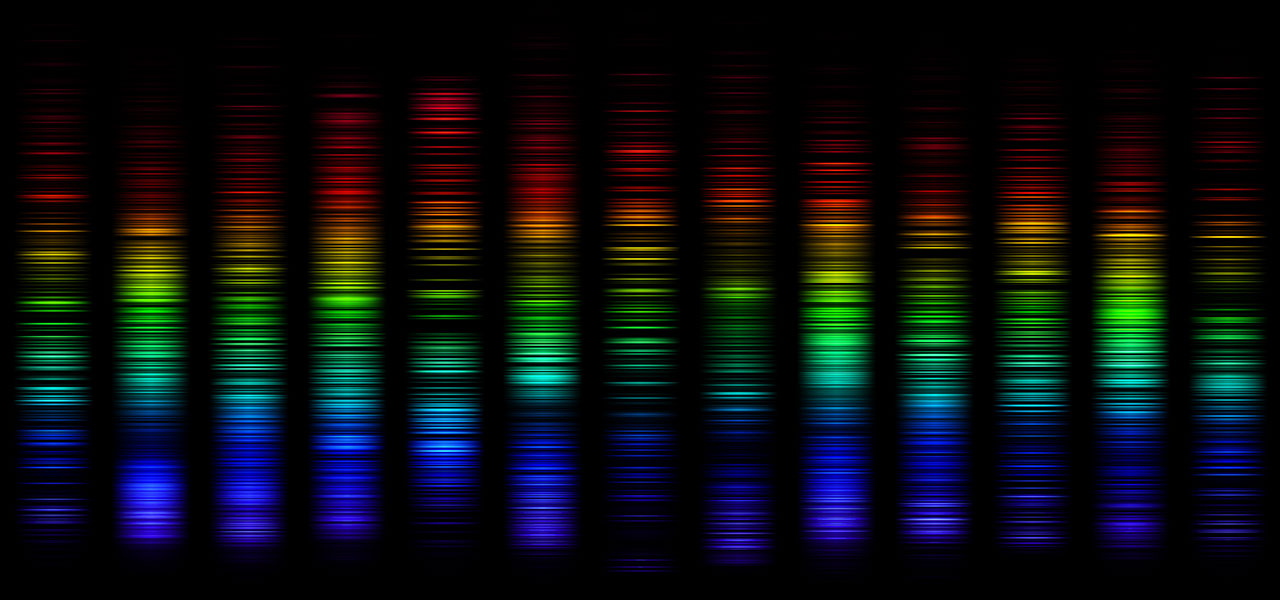
In 1898, during a six-week period, British chemists William Ramsay and Morris Travers discovered three noble gases by evaporating liquid air and extracting the gases one-by-one (a process called fractional distillation). Krypton was the first gas to be identified, then Ramsay and Travers repeated the same experiment, this time changing the pressure to evaporate solid Argon. Because of the tweaked distillation process, the gas that evaporated first was neon which, when collected in an atomic spectrometer, glowed a brilliant red-orange light. The bright color shocked the scientists as Travers noted, "the blaze of crimson light from the tube told its own story and was a sight to dwell upon and never forget."
Neon as we know it, bright and descriptive on storefront signs and motel vacancy notices, did not come to be until the 1900s. In 1902, George Claude collected neon as a by-product of his air-liquefication business and in 1910, he sealed the neon in a tube (similar to the modern use) and tried to sell the tubes as an indoor lighting source. This business attempt was not successful because homeowners weren’t fond of the intense colors, but in 1912, Claude found success in using neon tubes for advertising.