DOE/LANL Jurisdiction Fire Danger Rating:
  1. LANL Home
  2. Science & Engineering
  3. Periodic Table

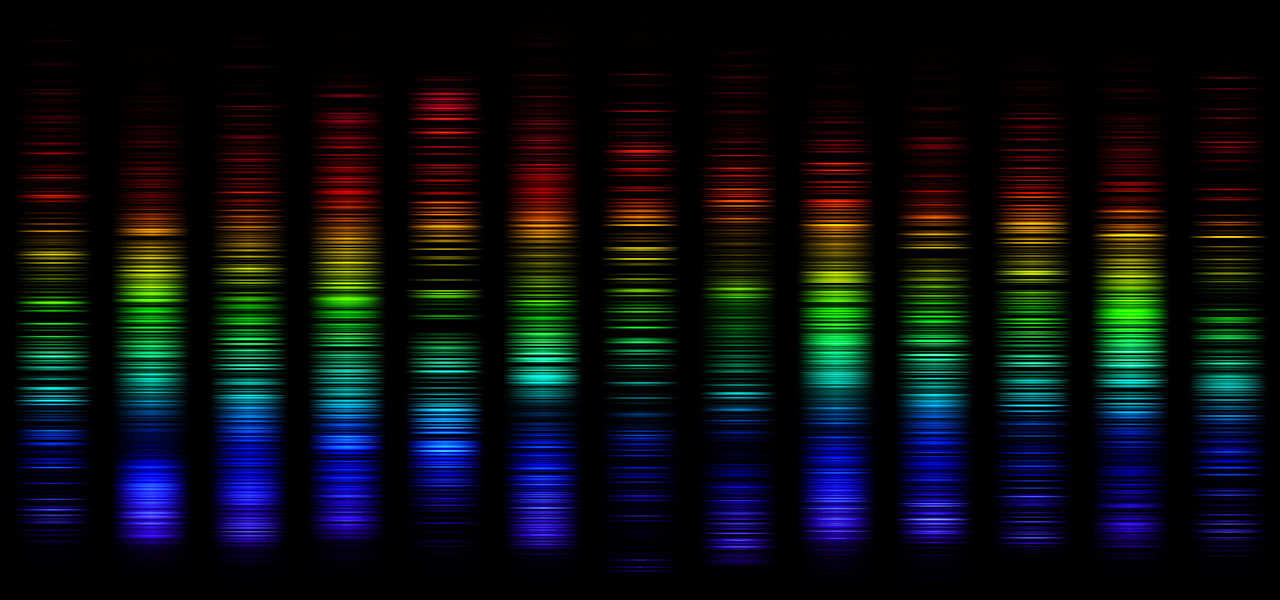
Manganese

25
54.94
Mn
Manganese

Element Stats

Select a temperature unit to update boiling and melting point values.

Physical

Physical Properties
PropertyValuePropertyValue
AppearanceHard, brittle, silvery-gray metal
ClassificationTransition MetalsDensity7.476 g/cm³ at STP
Boiling Point2334 KMelting Point1519 K

Atomic

Atomic Properties
PropertyValuePropertyValue
Atomic Number25Atomic Mass54.938046
Van Der Waals Radius197Atomic Radius (empirical)127

Electronic & Chemical

Electronic and Chemical Properties
PropertyValuePropertyValue
Electronegativity1.55Electron Affinity-50 kJ/mol
Electron Configuration1s2 2s2 2p6 3s2 3p6 4s2 3d5
Oxidation States7, 6, 5, 4, 3, 2, 1, -1, -2, -3
Ionization Energies

Showing 5 of 25 ionization energies.

  1. 717.3 kJ/mol
  2. 1509 kJ/mol
  3. 3248 kJ/mol
  4. 4940 kJ/mol
  5. 6990 kJ/mol

History

People have been using manganese for thousands of years, even if they didn’t always know that they were! The cave paintings at Lascaux, some of the oldest known works of art, were created in part with manganese dioxide pigments. In Ancient Egypt, glassblowers discovered that adding manganese to glass, which was naturally greenish, would make the glass transparent.

In the late 1700s, a group of Swedish chemists led by Torbern Bergman became convinced that manganese was an element separate from magnesium. Johan Gahn purified manganese for the first time in 1774, proving that manganese was indeed its own element.

Properties

On its own, manganese metal is brittle and looks a lot like iron. There are four allotropes, or forms, of manganese, all of which are metallic. The qualities of these allotropes vary, but one form is flexible, soft, and easily cut.

Uses

Today, over 90 percent of manganese produced worldwide is used to make steel. The earliest steels had impurities that made them brittle and hard to work with. However, British industrialist Robert Forester Mushet discovered that by adding manganese to molten iron, the steel became much more malleable and easier to work with. Manganese steel, which contains even more manganese than ordinary steel, is extremely strong. It’s used for things like railway tracks, rifle barrels, and mining equipment.

Soda cans are made of aluminum alloyed with manganese to make the metal corrosion resistant. Alkaline batteries also use manganese, and manganese compounds are mixed into fertilizers. Manganese is an essential nutrient. Much as the element makes steel stronger, manganese also makes for strong bones! That's why manganese is often mixed into livestock feed.

Compounds

Manganese forms many compounds. Manganese oxide, sulfate, and gluconate are used in fertilizers. Manganese dioxide is used in certain kinds of batteries, paints, fireworks, and porcelain.

A variety of manganese compounds are used to give glass different colors.

Potassium permanganate can be an oxidizing agent and has been used as a preservative for flowers and fruits. The next time you give someone a bouquet of roses, consider giving them a little potassium permanganate, too!

Forms

Manganese-55 is a stable (non-radioactive) isotope found in nature. Manganese-53 is also found in nature, but because it is radioactive, it’s quite rare, making it useful in radioactive dating (which involves using isotopes to tell how old something is).

Several radioactive manganese isotopes have been created in laboratories. The longest-lived, manganese-53, has a half-life of 3.7 million years. The shortest-lived isotopes have half-lives of less, or much less, than one minute.

Sources

Manganese minerals are found all over the world, with pyrolusite and rhodochrosite being the most common. South Africa is the largest producer of manganese ores, followed by China, Australia, and the Gabonese Republic.

Fun Facts

A new blue hue

In 2009, researchers at Oregon State University developed YInMn Blue. This pigment, which contains yttrium, indium, and manganese, was the first inorganic blue pigment to be discovered in more than 200 years!

Caveman’s paint brush

Around 17,000 years ago, cave artists in what is now France used black ore in the form of manganese oxides to make cave paintings.

Potatoes of the sea

The ocean floor is covered in potato-sized chunks of manganese. These 'nodules' are one of the most important ocean mineral deposits and companies are spending big bucks to harvest those polymetallic potatoes.

Los Alamos National Laboratory

P.O. Box 1663

Los Alamos, NM 87545

(505) 667-5061

At The Lab

  • Business Opportunities
  • Jobs
  • Organizations
  • Research Library
  • User Facilities

Information

  • Emergency
  • Ombuds
  • Reading Room
  • Resources
  • Science Museum

For Employees

  • AskIT
  • LANLInside
  • MyMail
  • Training
DOE White Seal
  • Terms of Use/Privacy

Managed by Triad National Security, LLC for the U.S. Dept. of Energy’s NNSA

Copyright 2026 Triad National Security, LLC. All Rights Reserved.

Learn about the Department of Energy’s Vulnerability Disclosure Program