Lawrencium was synthesized in 1961 by Albert Ghiorso, Torbjørn Sikkeland, Almon Larsh, and Robert Latimer at the Lawrence Berkeley National Laboratory, California. It was the last member of the actinide series to be discovered. It is named after Ernest Lawrence, the inventor of the cyclotron particle accelerator.
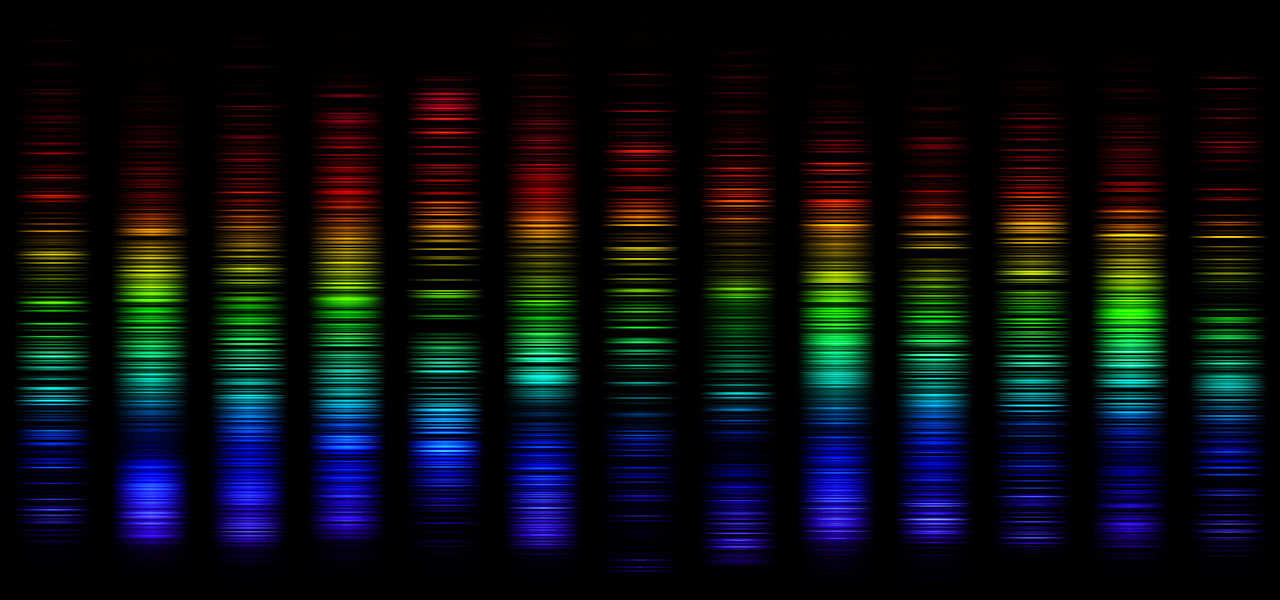
Lawrencium
103
266
Lr
Lawrencium
Element Stats
Physical
| Property | Value | Property | Value |
|---|---|---|---|
| Appearance | Appearance unknown; only microscopic quantities have been produced | ||
| Classification | Actinides | Density | 14.4 g/cm³, predicted |
| Boiling Point | -- | Melting Point | 1900 K, predicted |
Atomic
| Property | Value | Property | Value |
|---|---|---|---|
| Atomic Number | 103 | Atomic Mass | 266 |
| Van Der Waals Radius | -- | Atomic Radius (empirical) | -- |
Electronic & Chemical
| Property | Value | Property | Value |
|---|---|---|---|
| Electronegativity | 1.3 | Electron Affinity | -30.04 kJ/mol |
| Electron Configuration | 1s2 2s2 2p6 3s2 3p6 4s2 3d10 4p6 5s2 4d10 5p6 6s2 4f14 5d10 6p6 7s2 5f14 7p1 | ||
| Oxidation States | 3 | ||
| Ionization Energies | Showing all 1 ionization energies.
| ||
History
Properties
Lawrencium is expected to be a silvery radioactive metal that easily oxidizes in air steam, and acids. It is expected to be rather heavy with a density of around 14.4 g/cm3. It is also predicted to have a melting point of around 1627°C.
Uses
Because of the scarcity of lawrencium, it has no uses beyond scientific research.
Compounds
In 1969, lawrencium was shown to react with chlorine to form a product that was a trichloride. At this time, other compounds are predicted but have not yet been identified.
Forms
Lawrencium has 14 isotopes whose half-lives are known. All of the isotopes are short-lived and radioactive. The longest-lived isotope is lawrencium-266 with a half-life of approximately 10 hours. It is not used in chemical experiments because it can only be produced as a final decay product of heavier and harder-to-make elements.
Lawrencium-264 (half-life of 4.8 hours), lawrencium-262 (half-life 3.6 hours), and lawrencium-260 (half-life of 2.7 minutes) are the next long-lived. All other known isotopes have half-lives shorter than five minutes. The shortest half-life is 24.4 milliseconds.
Sources
Lawrencium does not occur naturally. It is produced in particle accelerators by bombarding californium with boron.
Fun Facts
The predictive powers of the periodic table
In 1949, 22 years before lawrencium’s discovery, Glenn Seaborg predicted that this element would be the last actinide. Turns out, he was right!