DOE/LANL Jurisdiction Fire Danger Rating:
  1. LANL Home
  2. Science & Engineering
  3. Periodic Table

Lanthanum

57
138.9
La
Lanthanum

Element Stats

Select a temperature unit to update boiling and melting point values.

Physical

Physical Properties
PropertyValuePropertyValue
Appearancesilvery white
ClassificationLanthanidesDensity6.145 g/cm³ at STP
Boiling Point3737 KMelting Point1193 K

Atomic

Atomic Properties
PropertyValuePropertyValue
Atomic Number57Atomic Mass138.90547
Van Der Waals Radius240Atomic Radius (empirical)187

Electronic & Chemical

Electronic and Chemical Properties
PropertyValuePropertyValue
Electronegativity1.1Electron Affinity53 kJ/mol
Electron Configuration1s2 2s2 2p6 3s2 3p6 4s2 3d10 4p6 5s2 4d10 5p6 6s2 5d1
Oxidation States3, 2, 1
Ionization Energies

Showing all 5 ionization energies.

  1. 538.1 kJ/mol
  2. 1067 kJ/mol
  3. 1850.3 kJ/mol
  4. 4819 kJ/mol
  5. 5940 kJ/mol

History

Lanthanum was discovered by Swedish chemist Carl Gustaf Mosander in 1839, in a sample of a mineral called cerite. But this discovery took a lot of patience!

In the 1820s, Mosander suspected that a sample of cerite he’d gotten from his mentor, legendary Swedish chemist Jöns Jacob Berzelius, might contain a new element. However, in the early 1820s, there was only one known source of cerite—a mine in Bastnäs, Sweden—which meant that supplies of the mineral were limited. Unfortunately, Mosander ran out of the mineral, which meant that he had to give up his quest for the new element for more than a decade.

In 1839, Mosander acquired more cerite and resumed his research. Ultimately, he succeeded in finding a new element in the mineral. But he was reluctant to announce his discovery, because he didn’t want to embarrass his mentor, Berzelius, who’d failed to find the element first. Finally, Mosander overcame his shyness and told Berzelius about the discovery. Berzelius suggested calling the new element “lanthan,” which came from the Greek word lanthanein, meaning “to lie hidden.”

Mosander still wasn’t sure that he’d completely separated the new element from his cerite, so he waited until 1840 to publish his results. By the time he officially announced lanthanum’s discovery, he’d further broken down the cerite into oxides that later yielded the new elements praseodymium and neodymium. In chemistry, it pays to be thorough!

Properties

Lanthanum is a rare earth metal that’s soft, silver, and ductile (meaning that it can be stretched) and malleable (meaning it can be hammered or shaped). Lanthanum is a lot more reactive than the other lanthanides—douse it with water, and it will give off hydrogen gas. Lanthanum metal is soft enough to be cut with a knife!

Uses

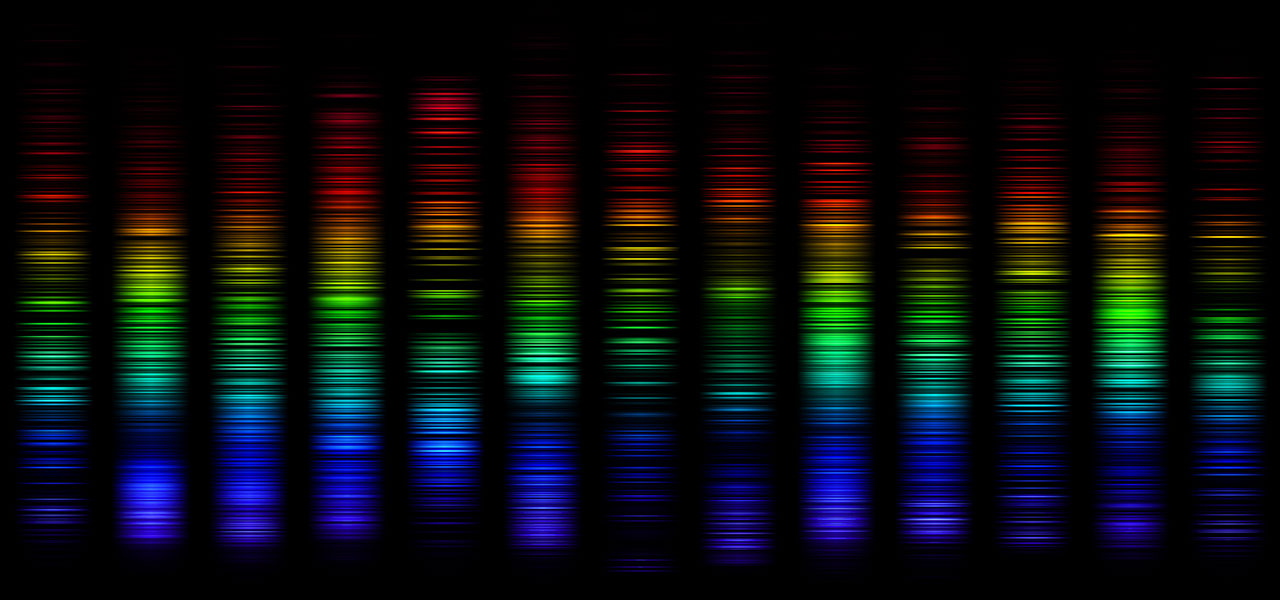
Hollywood owes lanthanum a thank you: Because the element produces an emissions spectrum like sunlight, it’s often used in photographic and film studio lighting.

Camera lenses also often contain lanthanum, which can improve the glass’s color spectrum. Because lanthanum nickel absorbs hydrogen gas—as a powder the compound can absorb up to 400 times its own volume in hydrogen—lanthanum nickel can be used to store hydrogen, which can make it useful for things like hydrogen-powered cars.

Compounds

Lanthanum nickel does a great job of absorbing hydrogen, which makes it useful in things like hydrogen-powered cars. Hybrid cars also use lanthanum in their batteries. Up to 40% of all lanthanum oxide gets mixed into optical glass, which is in turn used in things like cameras and binoculars. Mischmetal alloy, which contains lanthanum, can be used to create sparks in lighters.

Forms

In nature, you’ll find lanthanum either as lanthanum-139 or lanthanum-138. But you’d have to look hard to find lanthanum-138. More than 99.9% of naturally occurring lanthanum is lanthanum-139. Both isotopes are stable (non-radioactive). Synthetic lanthanum radioisotopes generally have a half-life of less than one minute (although lanthanum-137 has a half-life of around 60,000 years).

Sources

It’s a lot easier to find lanthanum today than it was in Mosander’s day! Most lanthanum comes from monazite and bastnäsite, which can be up to 25% and 38% of the mineral, respectively. Most lanthanum ores come from the United States, Brazil, India, Sri Lanka, and Australia. About 12,500 metric tons of lanthanum are produced each year.

Fun Facts

She doesn't even go here!

Although the lanthanide series of elements are named after lanthanum, chemists like to debate whether lanthanum even technically belongs in the lanthanide series.

More common than you think

Lanthanum is a rare earth element, but it’s still almost three times more abundant than lead in the Earth’s crust!

Los Alamos National Laboratory

P.O. Box 1663

Los Alamos, NM 87545

(505) 667-5061

At The Lab

  • Business Opportunities
  • Jobs
  • Organizations
  • Research Library
  • User Facilities

Information

  • Emergency
  • Ombuds
  • Reading Room
  • Resources
  • Science Museum

For Employees

  • AskIT
  • LANLInside
  • MyMail
  • Training
DOE White Seal
  • Terms of Use/Privacy

Managed by Triad National Security, LLC for the U.S. Dept. of Energy’s NNSA

Copyright 2026 Triad National Security, LLC. All Rights Reserved.

Learn about the Department of Energy’s Vulnerability Disclosure Program