DOE/LANL Jurisdiction Fire Danger Rating:
  1. LANL Home
  2. Science & Engineering
  3. Periodic Table

Indium

49
114.8
In
Indium

Element Stats

Select a temperature unit to update boiling and melting point values.

Physical

Physical Properties
PropertyValuePropertyValue
AppearanceLustrous, silvery-gray metal
ClassificationPost-Transition MetalsDensity7.29 g/cm³ at STP
Boiling Point2345 KMelting Point429.7485 K

Atomic

Atomic Properties
PropertyValuePropertyValue
Atomic Number49Atomic Mass114.8181
Van Der Waals Radius193Atomic Radius (empirical)167

Electronic & Chemical

Electronic and Chemical Properties
PropertyValuePropertyValue
Electronegativity1.78Electron Affinity37.043 kJ/mol
Electron Configuration1s2 2s2 2p6 3s2 3p6 4s2 3d10 4p6 5s2 4d10 5p1
Oxidation States3, 2, 1, -1, -2, -5
Ionization Energies

Showing all 4 ionization energies.

  1. 558.3 kJ/mol
  2. 1820.7 kJ/mol
  3. 2704 kJ/mol
  4. 5210 kJ/mol

History

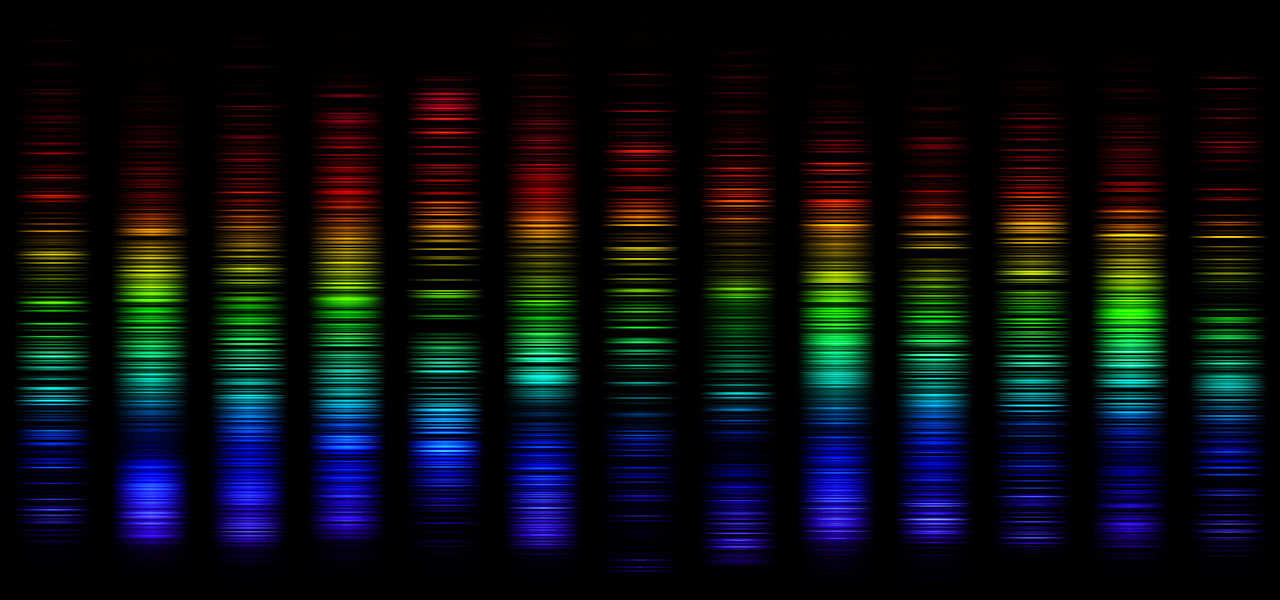
Indium was discovered in 1863 through the teamwork of Ferdinand Reich and Hieronymus Richter at the Freiberg School of Mines in Germany. Reich was investigating a zinc-containing mineral that he believed might also contain the recently discovered element thallium. He obtained a solid, yellow substance from the mineral sample that he thought was thallium sulfide. However, his spectroscope—a device used to look at the color “fingerprint” of an element—showed a line pattern that wasn't just different from the unique pattern of thallium—it didn't match any known element!

Because he was color blind, Reich asked Hieronymus Richter to take a look at the pattern on the spectroscope. Richter could see that one of the lines was a brilliant violet. This eventually gave rise to the name indium for the new element, from the Latin word indicum, meaning violet. Together, Reich and Richter isolated indium and announced its discovery.

Properties

Just like neighboring tin, indium is a silvery-white metal with a brilliant luster. It is extremely malleable and ductile and soft enough to cut with a knife.

The pure metal gives a high-pitched "cry" when bent as its tiny crystals rub against each other.

Uses

The first large-scale use of indium was as a stabilizing agent in alloy coatings applied to aircraft engine parts during World War II. Today, indium alloys with low melting points are used in devices like heat-triggered fire sprinklers and semiconductors. Indium has been called the “metal vitamin” because of how greatly small amounts can improve the properties of other metals.

Since the 1990s, indium has most commonly been used to make indium tin oxide (ITO), which conducts electricity, "wets" glass (meaning it bonds more strongly to glass surfaces than it does to itself), and is transparent. These characteristics make ITO the perfect film for liquid-crystal display (LCD) screens and touch screens, earning indium designation as a technology-critical element. Because of its anti-corrosive properties, ITO is also used in energy-saving reflective finishes on the windows of tall buildings and as a component of high-absorption solar panels.

Sources

Indium is most often found as a small component of zinc sulfide and (less commonly) lead ores. Most indium is obtained as a byproduct of smelting these ores. Indium is about as abundant as silver or mercury, but until 1924, only a gram or so constituted the world's supply of this element in isolated form. Today, about 900 metric tons of indium are produced annually.

Fun Facts

Snap, crackle, pop

When you bend indium metal, it makes a high-pitched squeaks or crackles due to the tiny crystals inside breaking apart and reorganizing themselves.

A new blue hue

In 2009, researchers at Oregon State University developed YInMn Blue. This pigment, which contains yttrium, indium, and manganese, was the first inorganic blue pigment to be discovered in more than 200 years!

Los Alamos National Laboratory

P.O. Box 1663

Los Alamos, NM 87545

(505) 667-5061

At The Lab

  • Business Opportunities
  • Jobs
  • Organizations
  • Research Library
  • User Facilities

Information

  • Emergency
  • Ombuds
  • Reading Room
  • Resources
  • Science Museum

For Employees

  • AskIT
  • LANLInside
  • MyMail
  • Training
DOE White Seal
  • Terms of Use/Privacy

Managed by Triad National Security, LLC for the U.S. Dept. of Energy’s NNSA

Copyright 2026 Triad National Security, LLC. All Rights Reserved.

Learn about the Department of Energy’s Vulnerability Disclosure Program