DOE/LANL Jurisdiction Fire Danger Rating:
  1. LANL Home
  2. Science & Engineering
  3. Periodic Table

Holmium

67
164.9
Ho
Holmium

Element Stats

Select a temperature unit to update boiling and melting point values.

Physical

Physical Properties
PropertyValuePropertyValue
Appearancesilvery white
ClassificationLanthanidesDensity8.79 g/cm³ at STP
Boiling Point2873 KMelting Point1734 K

Atomic

Atomic Properties
PropertyValuePropertyValue
Atomic Number67Atomic Mass164.93033
Van Der Waals Radius216Atomic Radius (empirical)176

Electronic & Chemical

Electronic and Chemical Properties
PropertyValuePropertyValue
Electronegativity1.23Electron Affinity32.61 kJ/mol
Electron Configuration1s2 2s2 2p6 3s2 3p6 4s2 3d10 4p6 5s2 4d10 5p6 6s2 4f11
Oxidation States3, 2, 1 (a basic oxide)
Ionization Energies

Showing all 4 ionization energies.

  1. 581 kJ/mol
  2. 1140 kJ/mol
  3. 2204 kJ/mol
  4. 4100 kJ/mol

History

In the history of chemistry, sometimes an element gets discovered simultaneously by different people. That’s the case with element 67, holmium!

In the late 1800s, scientists across Europe were studying an oxide called yttrium that came from an unusual stone in the town of Ytterby, Sweden. By the late 1800s, the oxide had already yielded several new elements, including yttria, terbium, erbium, and ytterbium. Ultimately, seven more elements would be discovered in yttria. Not bad for a single stone!

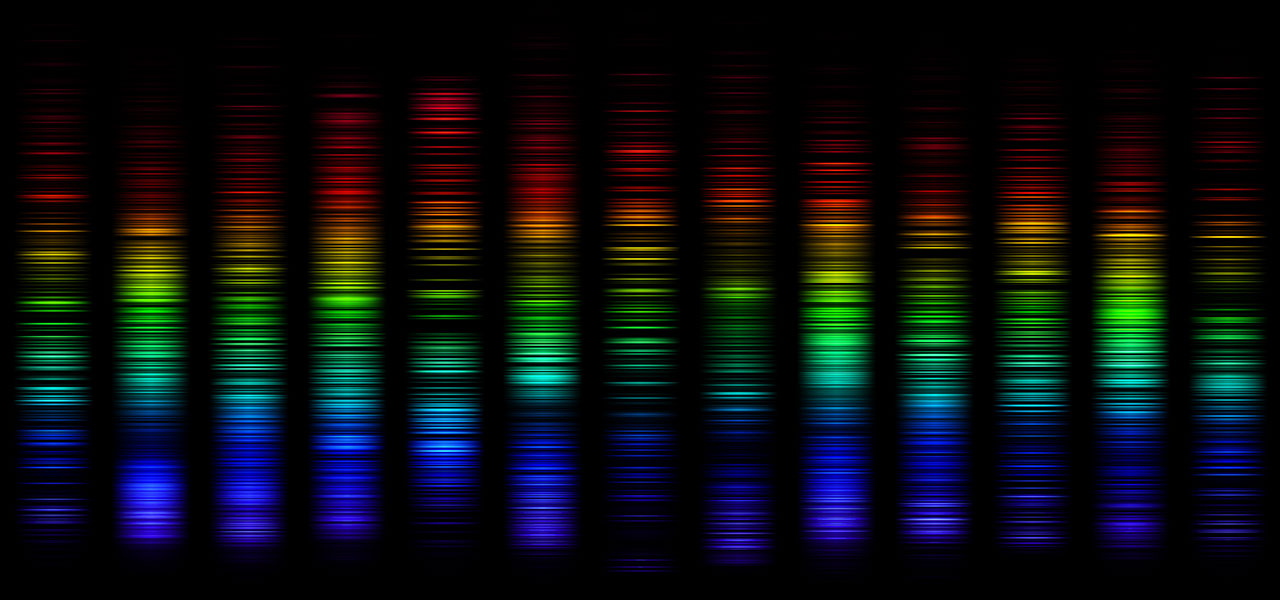
One of these elements, holmium, was discovered by researchers who were analyzing yttria. In 1878, Swiss chemists Jacques-Louis Soret and Marc Delafontaine noticed that a substance they took to be pure erbium oxide emitted unexpected spectrographic bands (like a visual fingerprint). They concluded that the erbium oxide must contain a new element, which they called “element X.”

Meanwhile, in 1879, Swedish chemist Per Teodor Cleve noticed that samples of erbium he was analyzing had varying weights depending on how the samples had been produced. This implied the existence of another substance in the erbium. Cleve named the new element holmium, after the Latin word for Stockholm, Holmia, which is what we call the element today (presumably because “element X” was too cool of a name to keep permanently).

Properties

Holmium is a bright, soft, silvery metal that looks a lot like the other rare earth elements. It is malleable, meaning it can be hammered into shape, and ductile, meaning it can be stretched without breaking.

Holmium is a paramagnet, meaning that it becomes magnetic when exposed to a magnetic field. However, once it’s exposed to a magnetic field in this way, holmium becomes the most magnetic element of all. You’d better take off your jewelry before you work with holmium!

Uses

Holmium doesn’t have all that many uses. Yttrium-iron garnet—a synthetic crystal that’s used in lasers—sometimes includes small amounts of holmium. These lasers can be used in everything from cleaning teeth to zapping cancerous tumors!

Holmium has unique magnetic properties, which is why it’s also used in certain magnets. Because holmium can absorb neutrons, it’s sometimes used in nuclear reactors, too.

Compounds

Holmium oxide is among the most powerful paramagnetic substances known (meaning that the substance becomes magnetic when it’s exposed to an external magnetic field). Holmium oxide is also useful for calibrating spectrophotometers, which can help researchers determine what elements are inside a given substance.

Forms

In nature, holmium is found in one stable (non-radioactive, isotope)—holmium-165. Scientists have made 35 synthetic radioisotopes of holmium that have half-lives ranging from some 4,500 years to much less than a second.

Sources

Most holmium comes from China—specifically, from the rare earth mines in Inner Mongolia, which are the source of most of the world’s rare earth elements. Holmium is extracted chiefly from the minerals monazite and bastnäsite. Russia and Malaysia also produce holmium.

Fun Facts

Such strength. Much magnetism.

Holmium has the highest magnetic strength of any element!

Los Alamos National Laboratory

P.O. Box 1663

Los Alamos, NM 87545

(505) 667-5061

At The Lab

  • Business Opportunities
  • Jobs
  • Organizations
  • Research Library
  • User Facilities

Information

  • Emergency
  • Ombuds
  • Reading Room
  • Resources
  • Science Museum

For Employees

  • AskIT
  • LANLInside
  • MyMail
  • Training
DOE White Seal
  • Terms of Use/Privacy

Managed by Triad National Security, LLC for the U.S. Dept. of Energy’s NNSA

Copyright 2026 Triad National Security, LLC. All Rights Reserved.

Learn about the Department of Energy’s Vulnerability Disclosure Program