DOE/LANL Jurisdiction Fire Danger Rating:
  1. LANL Home
  2. Science & Engineering
  3. Periodic Table

Europium

63
152
Eu
Europium

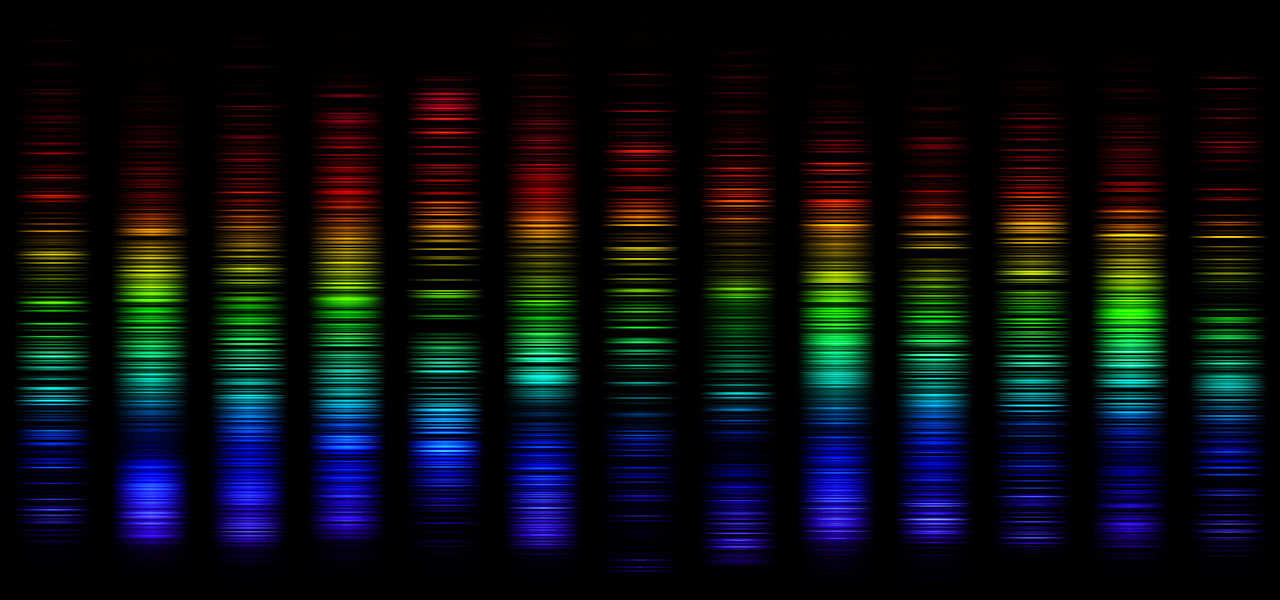
Element Stats

Select a temperature unit to update boiling and melting point values.

Physical

Physical Properties
PropertyValuePropertyValue
AppearanceSoft, silvery metal that rapidly tarnishes in air
ClassificationLanthanidesDensity5.264 g/cm³ at STP
Boiling Point1802 KMelting Point1099 K

Atomic

Atomic Properties
PropertyValuePropertyValue
Atomic Number63Atomic Mass151.9641
Van Der Waals Radius233Atomic Radius (empirical)180

Electronic & Chemical

Electronic and Chemical Properties
PropertyValuePropertyValue
Electronegativity1.2Electron Affinity11.2 kJ/mol
Electron Configuration1s2 2s2 2p6 3s2 3p6 4s2 3d10 4p6 5s2 4d10 5p6 6s2 4f7
Oxidation States3, 2, 1
Ionization Energies

Showing all 4 ionization energies.

  1. 547.1 kJ/mol
  2. 1085 kJ/mol
  3. 2404 kJ/mol
  4. 4120 kJ/mol

History

The story of the rare earth elements is a story of ongoing discovery. And europium is a case in point!

In 1803, ceria—which was thought to be a new element—was discovered in ores from a mine in Bastnäs, Sweden. Although ceria did contain the element cerium, it contained other elements, too. In 1839, Swedish chemist Carl Mosander separated lanthanum and didymium from ceria as well.

Mosander thought that didymium was its own element, but this wasn't the case. In fact, didymium is made mostly of two elements, which Austrian chemist Carl Auer von Welsbach separated in the 1880s. These elements became known as neodymium and praseodymium.

But wait! There's more! In addition to neodymium and praseodymium, there were other elements in the didymium yet to be discovered. In 1879, French chemist Paul-Émile Lecoq de Boisbaudran separated samarium from didymium—but the samarium wasn’t pure, either! In 1880, Swiss chemist Jean Charles Galissard de Marignac separated the element gadolinium from samarium. Like a Russian nesting doll, there appeared to be one more metal in the samarium, which French chemist Eugène-Anatole Demarçay at last separated in 1901. He named europium after—you guessed it—Europe. The name was fitting, given how many European scientists it took to find the element!

Properties

Europium is a relatively soft metal that is ductile (meaning that it can be stretched without breaking). It is the most reactive of the rare earth elements, which is why it tarnishes quickly in air.

Uses

In the early 1960s, it was discovered that europium could be used in television sets to produce a vibrant red color, which caused demand for the element to soar. Europium(II) can also be used in televisions to produce the color blue. Europium is great at absorbing neutrons, so it’s also used in lasers and in nuclear control rods. All told, europium doesn’t have quite as many uses as some other rare earth elements do—but it’s still plenty useful!

Compounds

Europium is unusual among the rare earth metals for its ability to form divalent compounds. Europium(II) oxide has been researched for potential use in magnetic refrigeration. That’s not a refrigerator with magnets on it; it’s the use of magnets to make things cold!

Europium(II) sulfide has also been researched for use in magnets, as well as in semiconductors. Europium(III) oxide is used in tubes in old-fashioned televisions, while europium-doped yttrium oxysulfide can used in light-emitting diodes (LEDs).

Forms

In nature, europium comes in the form of two isotopes. Just under 50% of naturally occurring europium is europium-151, while just over 50% of naturally occurring europium is europium-153. Europium-153 is stable (non-radioactive), while europium-151 is unstable, although the isotope has a very long half-life (of 5 x 10¹⁸ years).

Scientists have produced 35 other europium isotopes, all of which are radioactive. The half-lives of these isotopes range from around 37 years to mere nanoseconds.

Sources

Like other rare earth elements, you won’t find europium by itself in nature. Instead, europium is something of a “buddy element” that’s extracted alongside other rare earth elements from ores such as bastnäsite and monazite.

The largest producers of europium, and of most of the rare earth metals, are China, Russia, and Malaysia.

Fun Facts

Show me the money!

The euro banknote contains europium! That’s because europium, when illuminated with an ultraviolet light, glows red, helping banks to tell real bills from counterfeit ones.

Science fiction

In the DC Comics universe, europium is highly coveted by intergalactic travelers as the key to teleportation. The Justice League’s the Atom fought off Kulan Dar, stopping the villain from stealing the element. TBD if europium is the key to teleportation in real life, but it is really good at absorbing neutrons!

Los Alamos National Laboratory

P.O. Box 1663

Los Alamos, NM 87545

(505) 667-5061

At The Lab

  • Business Opportunities
  • Jobs
  • Organizations
  • Research Library
  • User Facilities

Information

  • Emergency
  • Ombuds
  • Reading Room
  • Resources
  • Science Museum

For Employees

  • AskIT
  • LANLInside
  • MyMail
  • Training
DOE White Seal
  • Terms of Use/Privacy

Managed by Triad National Security, LLC for the U.S. Dept. of Energy’s NNSA

Copyright 2026 Triad National Security, LLC. All Rights Reserved.

Learn about the Department of Energy’s Vulnerability Disclosure Program