DOE/LANL Jurisdiction Fire Danger Rating:
  1. LANL Home
  2. Science & Engineering
  3. Periodic Table

Dysprosium

66
162.5
Dy
Dysprosium

Element Stats

Select a temperature unit to update boiling and melting point values.

Physical

Physical Properties
PropertyValuePropertyValue
AppearanceBright, silvery metal
ClassificationLanthanidesDensity8.55 g/cm³ at STP
Boiling Point2840 KMelting Point1680 K

Atomic

Atomic Properties
PropertyValuePropertyValue
Atomic Number66Atomic Mass162.5001
Van Der Waals Radius229Atomic Radius (empirical)178

Electronic & Chemical

Electronic and Chemical Properties
PropertyValuePropertyValue
Electronegativity1.22Electron Affinity33.96 kJ/mol
Electron Configuration1s2 2s2 2p6 3s2 3p6 4s2 3d10 4p6 5s2 4d10 5p6 6s2 4f10
Oxidation States4, 3, 2, 1, 0
Ionization Energies

Showing all 4 ionization energies.

  1. 573 kJ/mol
  2. 1130 kJ/mol
  3. 2200 kJ/mol
  4. 3990 kJ/mol

History

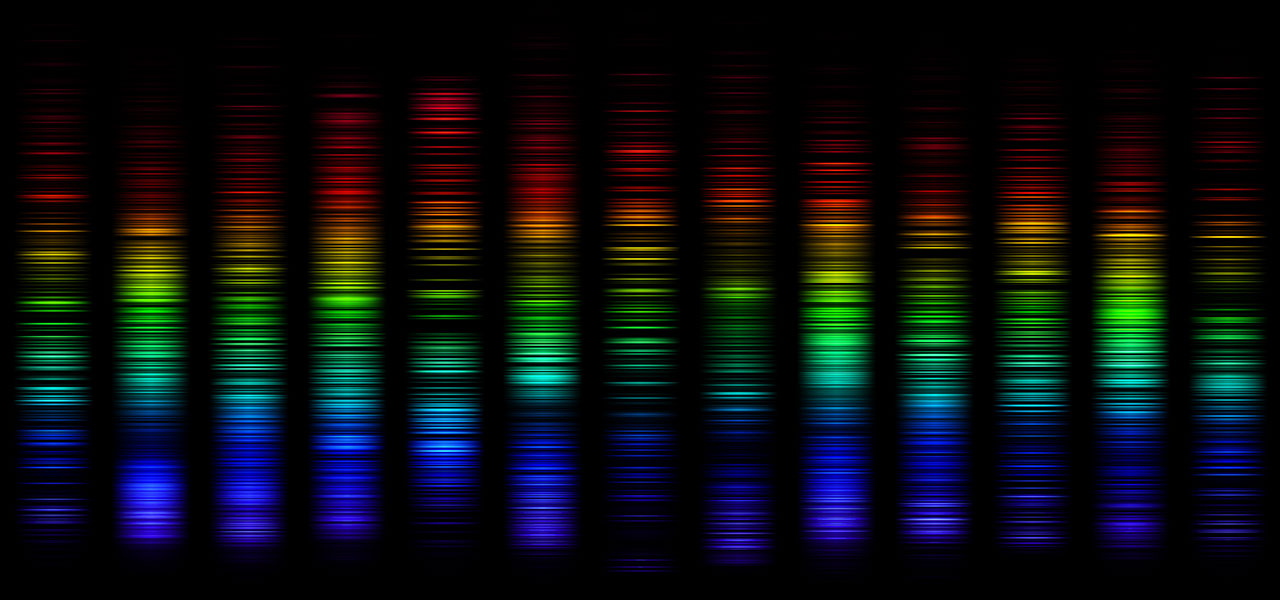
Dysprosium was discovered in 1886 by Paul-Émile Lecoq de Boisbaudran, a French chemist who also discovered samarium, europium, and gallium. Lecoq de Boisbaudran was a self-taught scientist who began his career in a laboratory that he assembled on the second floor of his family’s home. He was a pioneer in the field of spectroscopy, which involved looking at the color of light emitted by burning a substance to determine what the substance was made of. Lecoq de Boisbaudran’s career shows that you don’t need an expensive laboratory to be a scientist! You just have to be passionately curious.

In 1886, Lecoq de Boisbaudran was analyzing a sample of erbium oxide when he noticed that the substance had an unusual spectrum. He proceeded to spend a lot of time trying to separate out the element—so much time, in fact, that he chose to name the element dysprosium, which comes from the Greek word dysprositos, meaning hard to get. Not to be confused with Despacito—though the process was as slow as the song’s title suggests!

It wasn’t until decades later, in 1950, that Frank Spedding at Iowa State University developed a technique to easily separate out dysprosium and other lanthanide elements.

Properties

Like other rare earth metals, dysprosium is silvery white and soft enough to cut with a knife. Dysprosium has a high melting point, and it’s very good at absorbing neutrons. At room temperature, it’s stable in air. However, dysprosium is easily dissolved with certain kinds of acids, such as sulfuric acid. Dysprosium is one of the most magnetic elements there is, so it’s a good idea to make sure your keys are still in your pocket after you work with it!

Uses

The biggest use of dysprosium is in magnets. In fact, up to 95% of dysprosium is used in magnets. Dysprosium’s ability to be magnetized makes it useful in computer hard discs. Even at high temperatures, dysprosium stays magnetic, which makes it useful for the magnets used in wind turbines or electric car motors. Because more and more electric cars are being produced, demand for dysprosium is growing all the time.

Dysprosium also gets top marks for its ability to absorb neutrons, which is why it’s sometimes used in nuclear reactors. And dysprosium is sometimes used in dosimeters, which help scientists and other people who work with radioactive substances tell how much radiation they're being exposed to.

Compounds

Dysprosium iodide gets used in metal halide lamps. Mixed in the right way with gallium, aluminum, or iron, dysprosium can be made into a kind of crystal called a garnet, which can be useful in lasers or in a process called magnetic refrigerating (which involves using magnets to make cold temperatures). Mixed with nickel, dysprosium oxide can be used in the control rods of nuclear reactors. Dysprosium oxide is highly magnetic, which is why it’s used in—you guessed it—magnets, among other things.

Forms

In nature, dysprosium comes in a few different isotopes—seven of them, to be precise— dysprosium-156, dysprosium-158, dysprosium-160, dysprosium-161, dysprosium-162, dysprosium-163, and dysprosium-164. The most common are dysprosium-164 and dysprosium-162. Around 28% of naturally occurring dysprosium is dysprosium-164, while another 26% is dysprosium-162.

Scientists have made around 30 radioactive isotopes of dysprosium. These radioisotopes have half-lives that range from millions of years down to much less than a second.

Sources

Most dysprosium comes from monazite sand, which is extracted using the ion exchange process developed by Frank Spedding’s team in 1950. Most dysprosium comes from China, although in recent years, Australia has begun producing more of the element.

Fun Facts

Can't touch this

Dysprosium is so soft that you can cut it with a knife, but you shouldn’t! Dysprosium is incredibly dangerous to work with. In powdered form, it can explode with just a single spark! Some compounds can even burst into flame if they touch skin.

Los Alamos National Laboratory

P.O. Box 1663

Los Alamos, NM 87545

(505) 667-5061

At The Lab

  • Business Opportunities
  • Jobs
  • Organizations
  • Research Library
  • User Facilities

Information

  • Emergency
  • Ombuds
  • Reading Room
  • Resources
  • Science Museum

For Employees

  • AskIT
  • LANLInside
  • MyMail
  • Training
DOE White Seal
  • Terms of Use/Privacy

Managed by Triad National Security, LLC for the U.S. Dept. of Energy’s NNSA

Copyright 2026 Triad National Security, LLC. All Rights Reserved.

Learn about the Department of Energy’s Vulnerability Disclosure Program