The first known discovery of berkelium happened in 1949 at the University of California, Berkeley. Stanley Thompson, Albert Ghiorso, and Glenn Seaborg bombarded americium with alpha particles (two protons and two neutrons, like helium without the electrons) for several hours in a 60-inch cyclotron—ultimately producing a new element. The isotope that they produced had a half-life of about five hours. It took another nine years before enough berkelium was made to see it with the naked eye (and the amount was only a few micrograms). It was named berkelium after Berkeley, California, the city of its discovery.
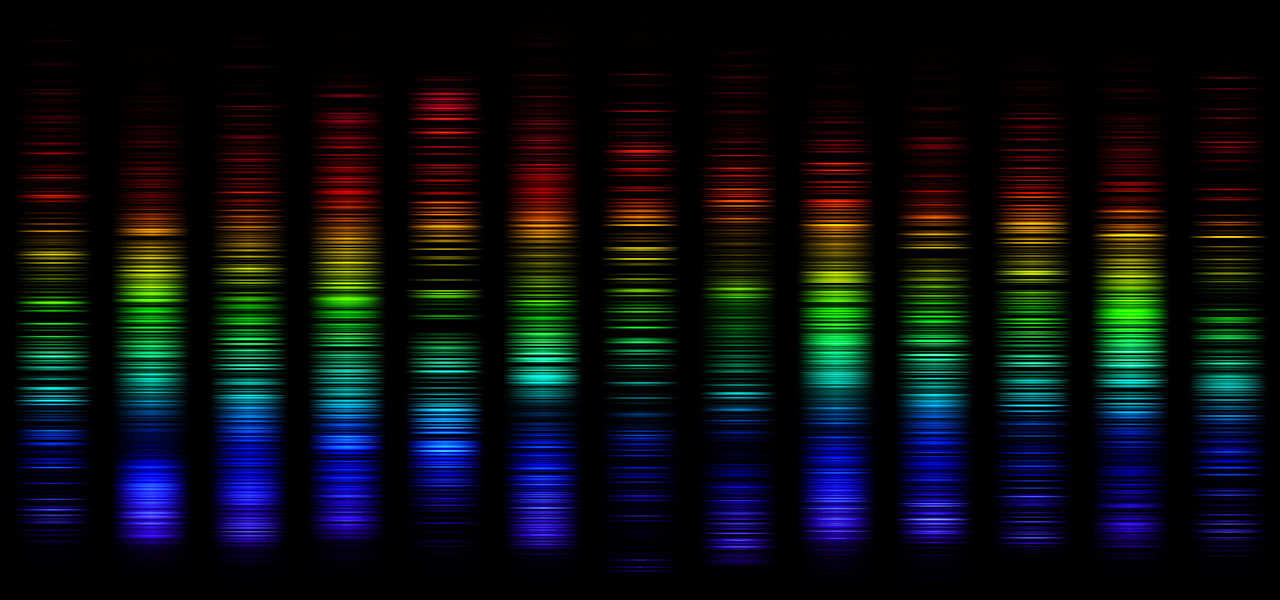
Berkelium
97
247
Bk
Berkelium
Element Stats
Select a temperature unit to update boiling and melting point values.
Physical
| Property | Value | Property | Value |
|---|---|---|---|
| Appearance | Silvery radioactive metal | ||
| Classification | Actinides | Density | 14.78 g/cm³ at STP |
| Boiling Point | 2900 K | Melting Point | 1259 K |
Atomic
| Property | Value | Property | Value |
|---|---|---|---|
| Atomic Number | 97 | Atomic Mass | 247 |
| Van Der Waals Radius | 244 | Atomic Radius (empirical) | 170 |
Electronic & Chemical
| Property | Value | Property | Value |
|---|---|---|---|
| Electronegativity | 1.3 | Electron Affinity | -165.24 kJ/mol |
| Electron Configuration | 1s2 2s2 2p6 3s2 3p6 4s2 3d10 4p6 5s2 4d10 5p6 6s2 4f14 5d10 6p6 7s2 5f9 | ||
| Oxidation States | 2, 3, 4 | ||
| Ionization Energies | Showing all 1 ionization energies.
| ||
History
Properties
Berkelium is a soft, silvery-white, radioactive metal. It shares many qualities with the lanthanide terbium, it’s partner element in the lanthanide series. It is easily soluble in dilute mineral acids, and rapidly oxidizes in air or oxygen.
Uses
Because berkelium is rare, there are no commercial uses. However, it is used in scientific research as a target to synthesize heavier elements by charged particle bombardment. It has the lowest resistance to bulk compression of the actinides.
Compounds
Berkelium forms two oxides, one a brown solid and the other a yellow-green solid. It also forms halides such as berkelium fluoride and berkelium chloride. Both of these are yellow green in appearance. Another halide is berkelium bromide, which has two forms. One is, you guessed it, yellow green. The other is just yellow.
Other inorganic compounds are berkelium sulfide and berkelium hydroxide. Berkelium sulfide is brownish black, while berkelium hydroxide shows a strong fluorescence when put under a green light. Berkelium also forms numerous alloys.
Forms
Berkelium metal exhibits two crystal forms: a double hexagonal close packed, and a face-centered cubic.
Nineteen isotopes of berkelium are now known and have been synthesized from mass number 233 to 253. All of the isotopes are radioactive. The half-lives range from 1,380 years (berkelium-247) to microseconds, therefore none could have persisted since Earth’s formation. Berkelium could have occurred naturally in the natural nuclear fission reactor in Oklo, Gabon, but would have long since decayed away. The isotope that is easiest to synthesize is berkelium-249, which is produced in nuclear reactors.
Sources
There are no natural sources of berkelium. It is artificially produced and only in small amounts. Most of the world’s berkelium is made at Oak Ridge National Laboratory in the High Flux Isotope Reactor, which was recently designated a Nuclear Historic Landmark.
Fun Facts
What's in a name?
The researchers from California had a tradition of naming actinides based on the lanthanide above it in the periodic table. Element 97 was no exception. They chose berkelium for Berkley, California, because its lanthanide counterpart, terbium, was named after Ytterby, Sweden. The naming tradition ended with berkelium.
Couldn't do it without you
Berkelium was the key to completing the current periodic table. Elements 116 and 118 had been discovered, but 117 was still missing! Russian physicist Yuri Oganessian had discovered the surrounding elements, and he figured berkelium would unlock that missing element. After 150 days of being irradiated with a beam of 6 trillion calcium-48 ions per second, the berkelium target produced six atoms of element 117.