We’re likely all familiar with the STEM acronym in education: science, technology, engineering and math. STEM also becomes STEAM with “arts” added to the mix, whether that’s language arts, visual design or music.
Too often the arts component can end up as separate from the others, but a nonprofit in Taos with longstanding ties to Los Alamos National Laboratory is putting art in a central place in STEAM, while giving young people from rural and tribal backgrounds cutting-edge skills and leadership experience.
Founded in 2009, STEMarts Lab provides a path for students to use technology to make art about science, benefiting the students and the wider community.
“We are a sci-art production studio and youth leadership program combined,” says chief executive and founder Agnes Chavez. “We empower youth through art, science and technology to imagine a better world and become creators and designers of our shared future.”
The core of STEMarts Lab’s work is helping cohorts of high-school students explore science topics with help from scientists, and then learn the skills to create immersive and interactive art projects about those topics.
The finished works are shown at museums and festivals, using art to help educate the wider community about science. Each year, more than 25 youth ambassadors and eight paid interns work to create projects and present them at events with more than 15,000 attendees.
Each cohort has around eight to 15 students and a single project might include multiple cohorts as it develops over several years. When the installations go to festivals and events, students set up and present the pieces and interact with the visitors (being paid for their time).
There’s a particular focus to the science topics that form the basis of the projects.
“The art is based on space science, astrophysics, particle physics: science that helps us understand our place in the universe,” says Chavez.
Enter researchers like Nicole Lloyd-Ronning, an astrophysicist at LANL who has partnered with STEMarts on projects for nearly 10 years, and now sits on their board.
“I was working closely with LANL's Community Partnerships Office and doing a lot of outreach in our local schools, and they connected me with Agnes, who was looking for an astrophysicist to help with a workshop on exploring the relationship between Western science and Indigenous cosmology,’ says Lloyd-Ronning. “Agnes and I immediately connected on our passion for sharing science and art and providing STEM opportunities to students in Northern New Mexico and around the world.
“As STEMarts developed, I began to collaborate and consult further providing video recordings, helping develop curriculum and giving background resources for the website and to share with students.”
The early workshop that combined cutting-edge research with Indigenous cosmology shows another thread that is consistent in STEMarts’ work: grounding projects that address topics that are literally out of this world in the experience of the students from rural and tribal communities.
In addition to scientists and artists, each project’s team contains cultural experts. “Everything STEMarts does is about integrating different views and connecting to people's personal experiences,” says Lloyd-Ronning. “Astrophysics is the ideal subject for this, since we all see the night sky, and it is especially brilliant to the rural communities with the darkest skies. We try to connect that beauty and wonder to people’s personal stories, experiences, and share with them the knowledge we've gained about our universe through science.”
Music and avatars
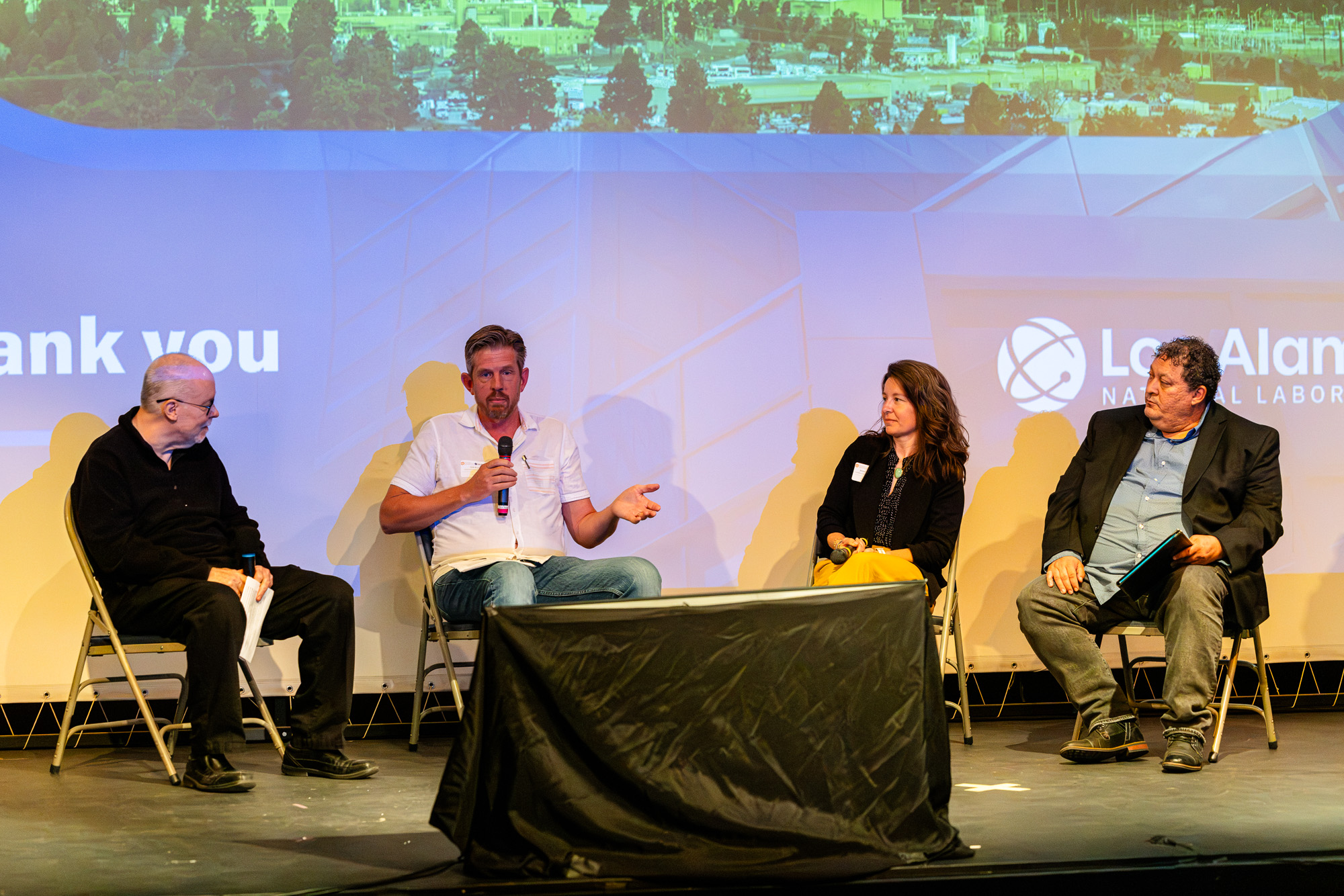
Another LANL astrophysicist, Kelcey Davis, provided a dataset of information from a distant galaxy collected by the James Webb Space Telescope as part of a recent installation, which was featured at Los Alamos Science Fest this year. Students converted the dataset into a sound file to use as the basis for the music score for a live coding performance.
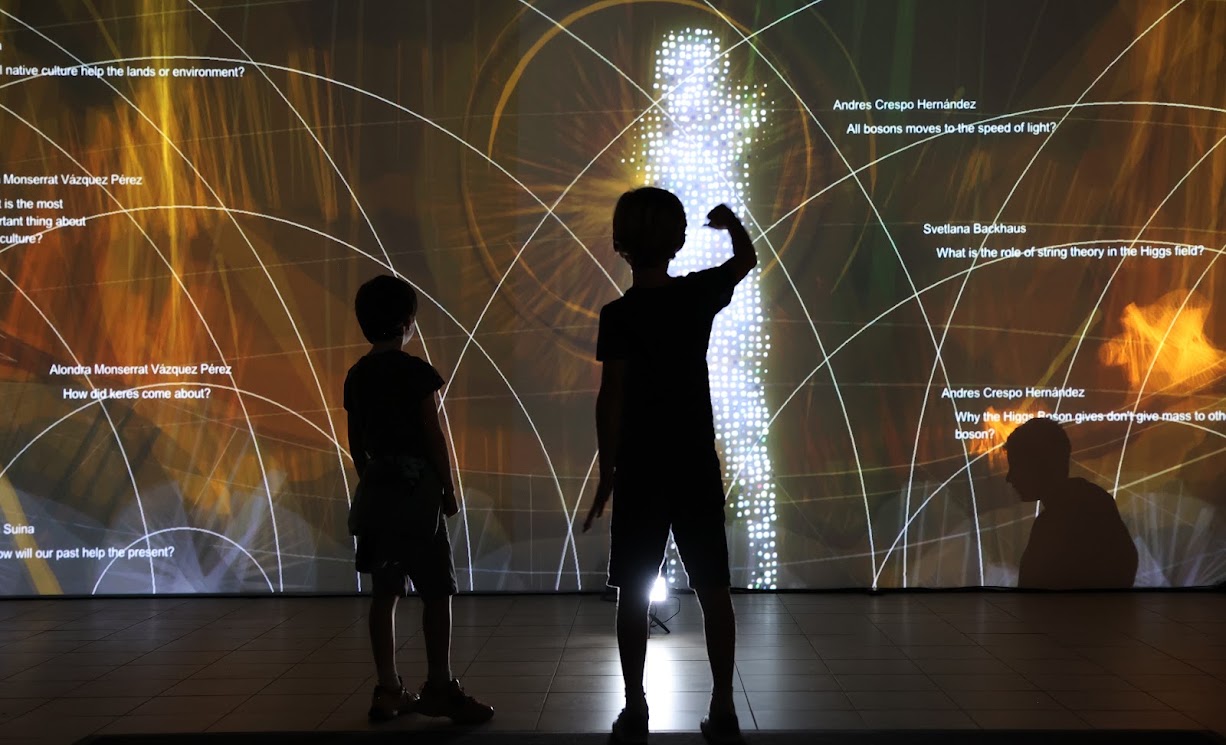
The Space Messengers A.I. installation featured LANL astrophysicist Andrea Albert as a live avatar at festivals around the world. Attendees in Portugal, for example, could ask her avatar science questions, and Albert (back in New Mexico) would answer live through her animated alter ego.
“I think STEMarts does a great job bringing important scientific topics to people who might not normally take interest,” says Albert. “People who might not be interested in attending a public lecture that is more technical are interested in the intersection of science and art.”
Pathway to opportunities
STEMArts offers a range of workshops and programs that creates a pathway for students to deepen their involvement and take on more responsibility as they get older. “Our goal is to get them to stay with us from the age of 11 through the end of high school and beyond,” says Chavez.
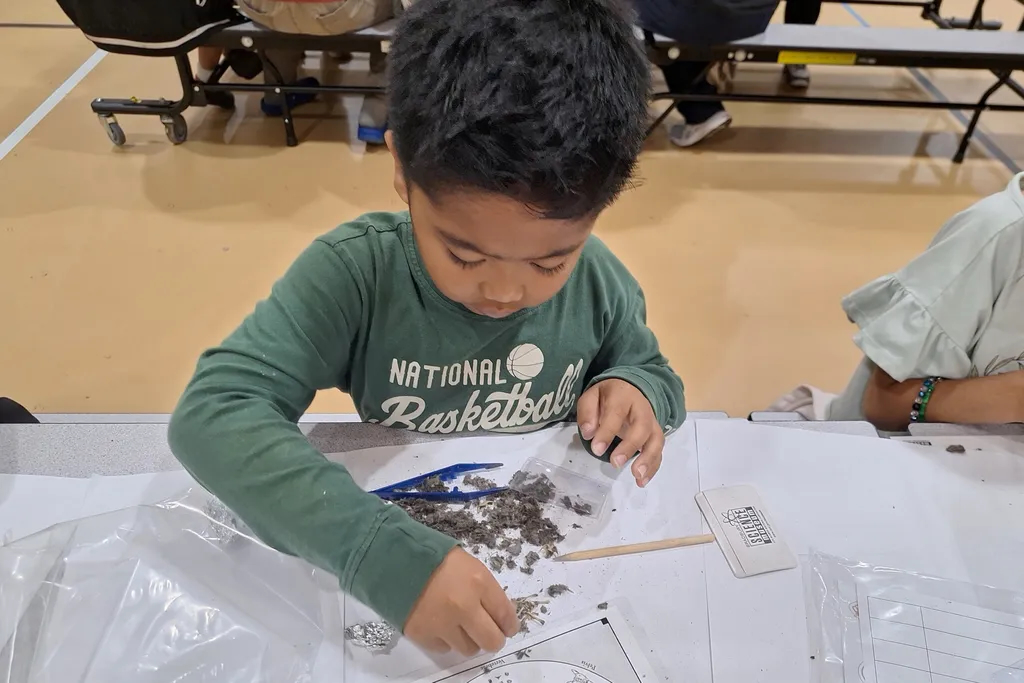
A typical journey for a student might be to first experience the nonprofit through a hands-on event at school or at an afterschool program and then attend a one-day bootcamp. They could then become an ambassador — a longer-term commitment in which they learn technical and leadership skills — and then finally move into the paid internship program which sees them assisting other students and presenting STEMarts’ installations at events.
The science, design, coding, audio/video, communications and leadership skills the students learn put them in a strong position for future academic and workplace opportunities.
“We’re training students as science communicators as well as coders and artists,” says Chavez.
Lloyd-Ronning has hired STEMarts participants to internships at the Laboratory, and several students have also received awards for their undergraduate studies from the Los Alamos Employees’ Scholarship Fund.
Feliciana Mitchell-Gonzales from Peñasco is one student who followed the STEMarts path from middle school onwards, ending up as an intern. Currently a first‑year student at Colorado College planning to major either in neuroscience or molecular biology, one highpoint of her time with the nonprofit was traveling to Guadalajara in Mexico, where she presented her work and had the opportunity to meet students from Mexico. (There is a strong international collaboration component to much of STEMarts’ programming.)
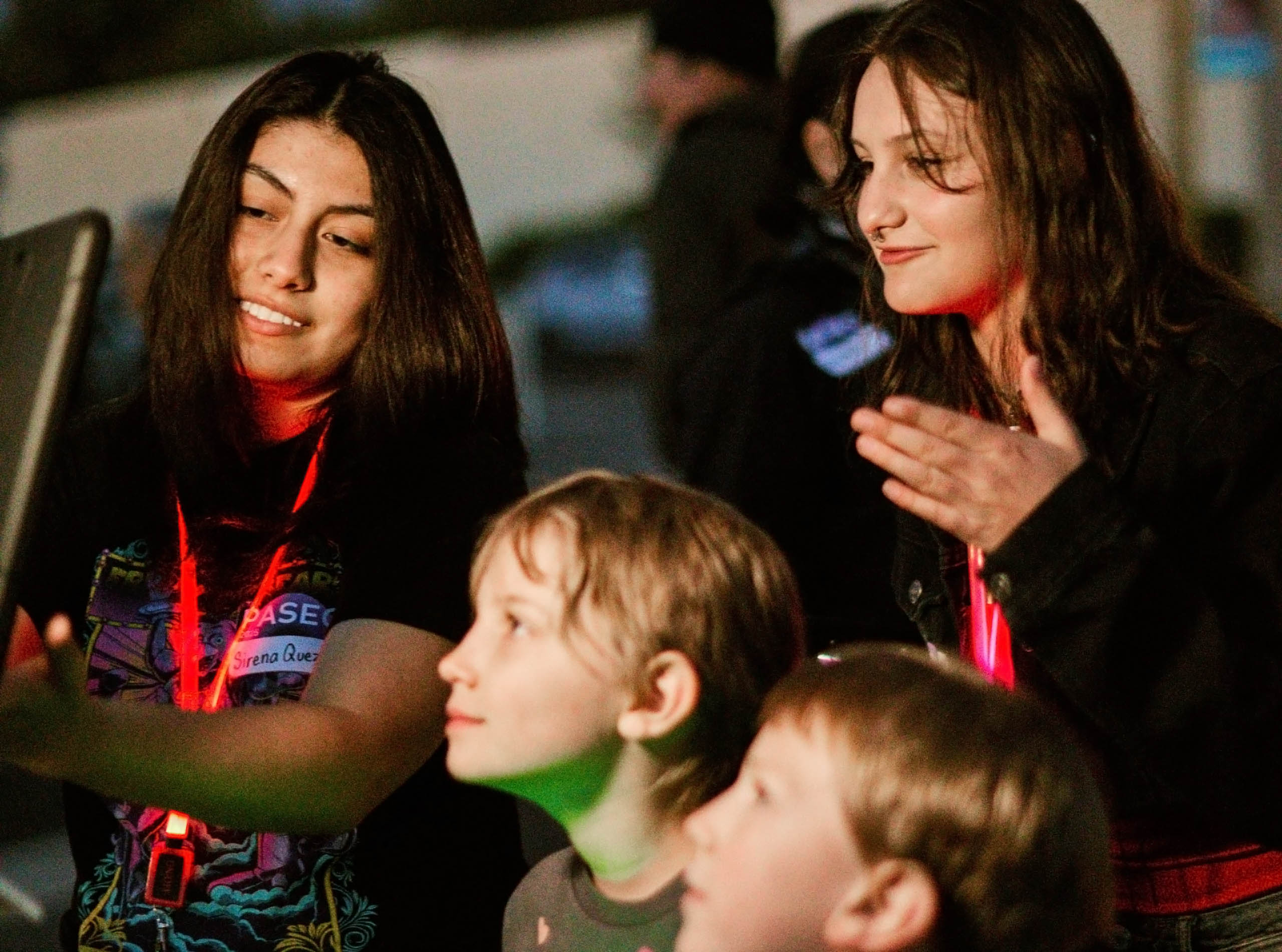
“Through STEMarts I have met astronauts, astrophysicists, artists and peers who have inspired me in countless ways,” says Mitchell-Gonzales. “Working with LANL scientists was incredibly inspiring. Many of the scientists I spoke with showed amazing passion, patience for my questions, and creativity in how they approached problems, which encouraged me to think differently.”
Augmenting the volunteer support with grants
In addition to the committed volunteer support for STEMarts from LANL scientists such as Albert and Lloyd-Ronning, LANL has provided financial support through several grants from its operator Triad National Security LLC.
Early this year, STEMarts also received $10,000 from the independent nonprofit LANL Foundation to support summer and school-year programming that engages young people in space science, AI and art-based technology exploration. The grant was made possible by $100,000 in funding from the National Nuclear Security Administration for STEM career pipeline development.
“Support from the Laboratory’s Community Partnerships Office and the LANL Foundation has been very instrumental in the development of STEMarts,” says Chavez.
Looking to the future, an upcoming initiative plans to provide a longer-term home for STEMarts' flagship Space Messengers installation at a museum, with smaller pop-up events acting as satellites around this hub, offering more opportunities for more people to see the work.
Lloyd-Ronning is clear on the impact that STEMarts has had and continues to have: “It's just the most amazing outreach program I've ever seen in my 25 years of doing STEM outreach around the world. It has grown in its impact exponentially since I first got involved, not only in its breadth but also in its depth. Agnes is as brilliant as the stars shimmering in our dark New Mexico skies!”