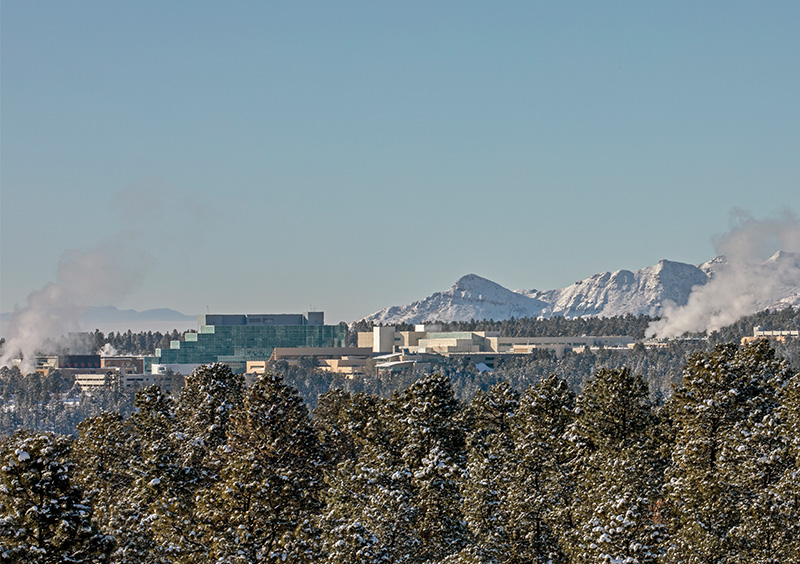
At Los Alamos National Laboratory, we strive to be a force for good in the surrounding region, which includes the seven counties of Los Alamos, Mora, Rio Arriba, Sandoval, San Miguel, Santa Fe and Taos. This year, the Lab and its employees contributed to this endeavor through educational enrichment, philanthropy, volunteerism, safety and environmental stewardship.
Raising $2.7M for nonprofits, students and children through Holiday Giving Campaign

Mariahjozzel Agustin (above) is just one of 120 employees who sorted and delivered gifts for the Northern New Mexico Toy Drive, part of our annual Holiday Giving Campaign.
Overall, donations and gifts totaled:
- $2.3 million to the Employee Giving Campaign to nonprofit organizations (not including the Triad National Security match to eligible nonprofits)
- $376,349 toward the Los Alamos Employees Scholarship Fund, providing scholarships for New Mexico students pursuing two-year, four-year or graduate-level higher education
- $30,441 and more than 1,000 toys for the Toy Drive
Making mind-boggling problems more manageable with Northern New Mexico Data Sprint
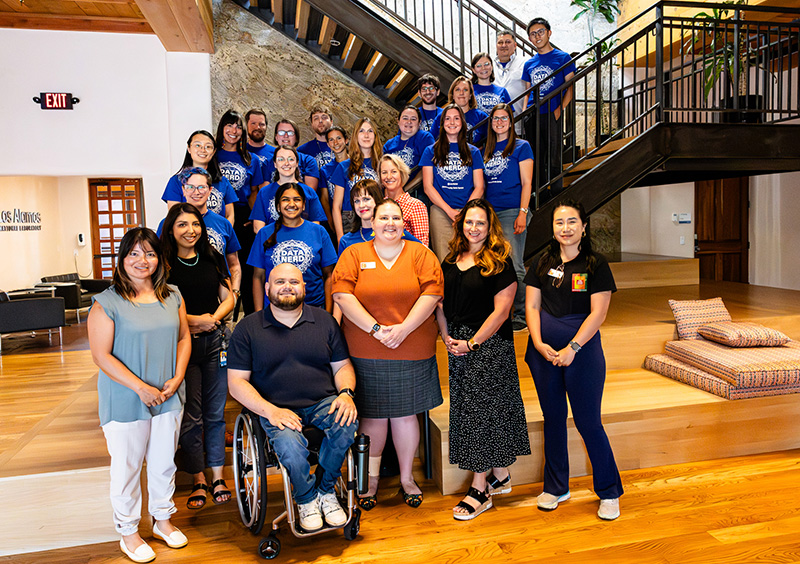
Self-proclaimed “data nerds,” otherwise known as Los Alamos National Laboratory data scientists (above), spent an entire week this summer volunteering for the Northern New Mexico Community Data Sprint. Altogether, 17 employees took part in tackling data-related problems for three Northern New Mexico organizations at no charge: the state Office of Housing and nonprofits The Food Depot and Adaptive Sports Program New Mexico. Data analysis provided new ways to understand the root causes of homelessness, food-insecurity trends and how to better supply outdoor sports activities for individuals with disabilities. If your organization would like to participate in the 2026 Community Data Sprint, apply here.
Reaching more students than ever with Challenge Tomorrow trailers
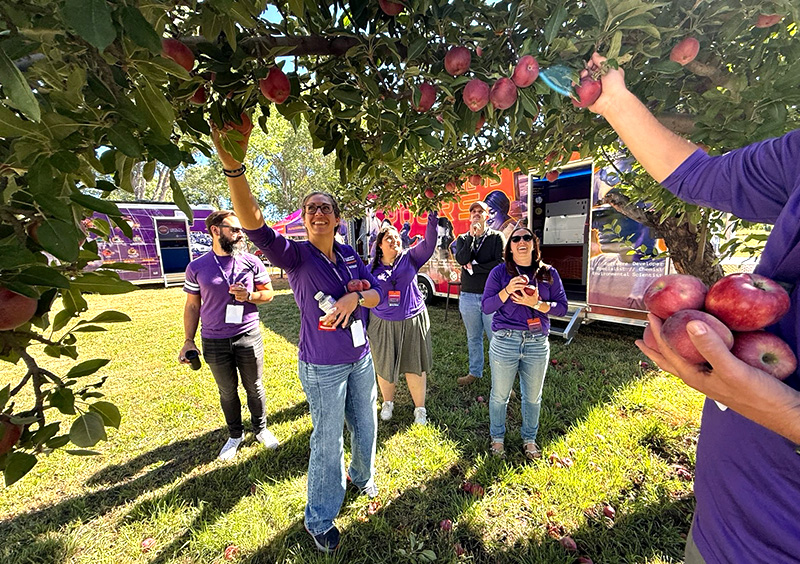
In 2025, Bradbury Science Museum staff and Laboratory volunteers (above) brought our two mobile museums, the Challenge Tomorrow trailers, to more than 6,700 people at 28 events across New Mexico (like the Los Luceros Harvest Festival in Alcalde, above), sparking curiosity and inspiring future careers in STEM.
Enriching education with Summer Physics Camp
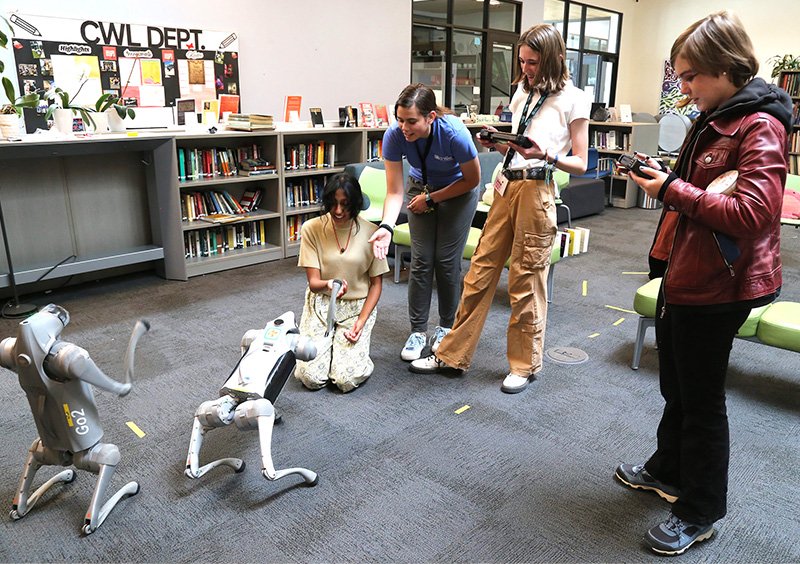
More than 30 middle and high school students from across New Mexico learned about science and STEM careers at the free, two-week Summer Physics Camp. Led by a group of more than 150 volunteer scientists and other experts, the camp provided students with role models they could identify with, and also offered professional development sessions on how to discover their personality strengths, write a resume, perform well in interviews and apply for internships — in addition to hands-on science. Campers like the ones above learned how to operate the Lab’s robotic dogs, then used their skills to build their own remotely operated robotic hands or models of solar-powered homes with proximity sensors, lights and fans.
Supporting $1M in scholarships for Northern New Mexico students
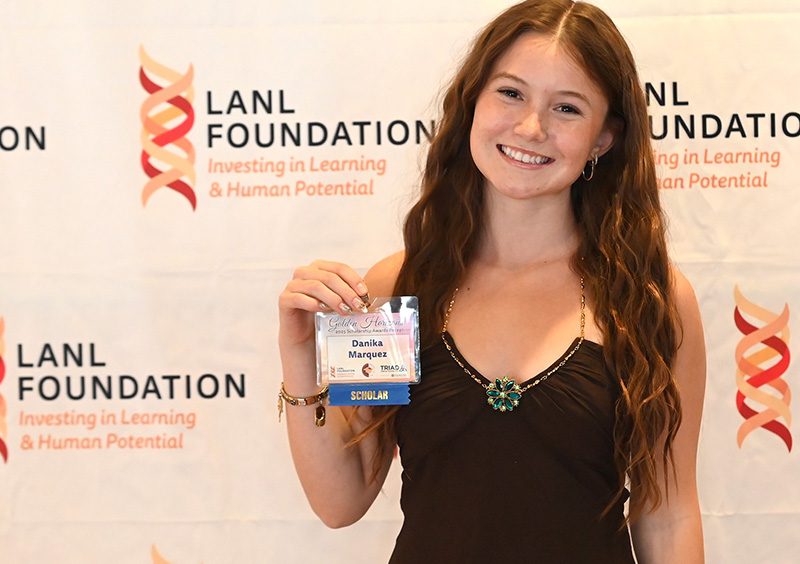
Each year, the LANL Foundation awards roughly $1 million in scholarships to Northern New Mexico students like Danika Marquez from Rio Rancho High School (above). The scholarships are funded by donations from Laboratory employees. In 2025, 138 students from the region pursuing bachelor’s degrees received 147 scholarships. Awards are also given to students pursuing two-year programs and certificates through the Career Pathways scholarships. New for 2026 are scholarships exclusively for graduate students. Apply here.
Fighting food insecurity with Spring Food Drive
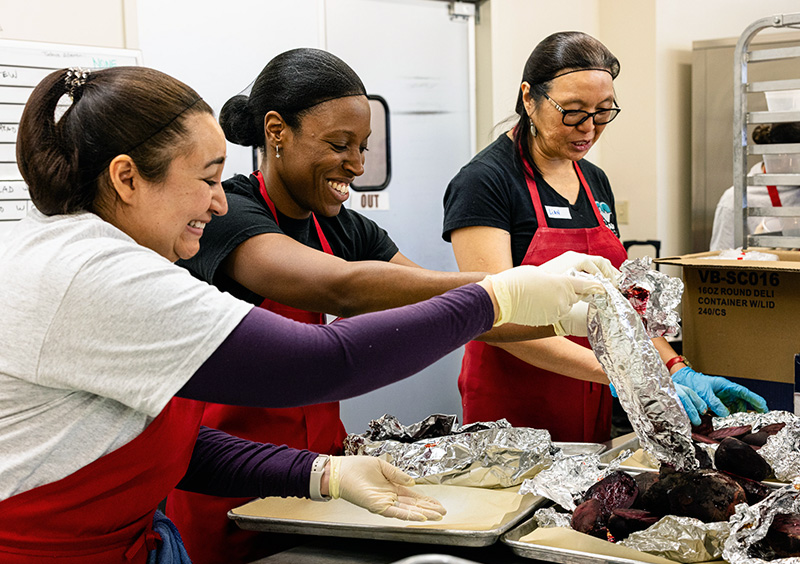
Our employees donated dollars, food and time during the 2025 Spring Food Drive, benefiting The Food Depot and other nonprofits such as Kitchen Angels (above), providing 337,518 meals across nine Northern New Mexico counties. Meals reached individuals in Colfax, Harding, Los Alamos, Mora, Rio Arriba, San Miguel, Santa Fe, Taos and Union counties — an increase of more than 48,000 meals from last year.
Getting the word out about wildfire preparedness

Community members frequently ask how the Laboratory and its facilities are protected from the wildfires that are a natural part of our high-desert ecosystem. In 2025, Lab operations staff, including Wildland Fire Program Manager Rich Nieto (above), teamed up with area journalists for our first-ever Wildfire Preparedness Media Tour, in which the press and subsequently the public witnessed firsthand how experts manage the forests on our 40-square-mile site by thinning the understory, trimming trees around powerlines, and making sure vegetation is trimmed to 6 inches or less. Visit the Continuous Air Monitoring page to learn more.
Mentoring future computer scientists with the Supercomputing Challenge
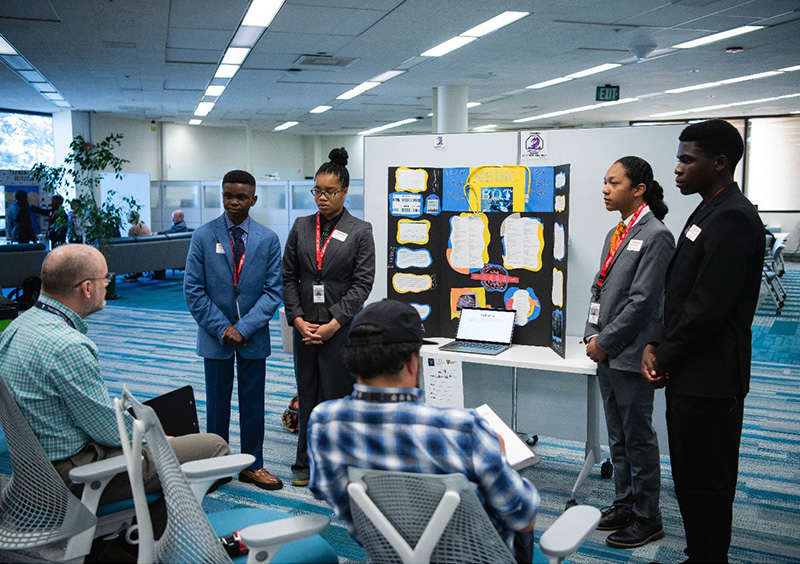
The Laboratory made headlines in 2025, thanks to the unveiling of the Venado supercomputer and an increasing emphasis on artificial intelligence. But how does the Lab prepare local students for careers in this this rapidly growing field? With the Supercomputing Challenge, of course, organized via a collaboration between the Laboratory, the New Mexico Consortium, Sandia National Laboratories and PNM. Completing its 35th year in 2025, the yearlong project allows middle- and high school student teams from across New Mexico to compete for scholarships as they learn coding skills and teamwork. Since its inception, more than 12,000 students have participated.
Providing needed tools for back-to-school

Thanks to the generosity of Laboratory employees, this year’s Back to School Drive made a meaningful difference for 1,500 elementary and middle school students attending 16 schools across Northern New Mexico. The drive surpassed the goal of $40,000 and raised an impressive $44,998 to purchase backpacks, notebooks, pencils and other essential supplies.
Connecting the Lab’s past with its present at Manhattan Project National Historical Park

Manhattan Project National Historical Park (MAPR) celebrated its 10th anniversary this year. Also this year, Lab Director Thom Mason called artificial intelligence “the Manhattan Project of our time.” Twice a year, park historians lead guided tours, available via lottery only, showing the public how 80 years ago, scientists built the weapon that ended World War II in a remote New Mexico canyon using slide rules (read: no computers!) and a few meager outbuildings. So far, thousands of visitors from our local communities and across the nation have gone behind the fence. Visit the Behind-the-Fence Tours page to learn more.