Rotor returns to Los Alamos to power critical science
Massive rotor completes around-the-world journey as it’s installed in Los Alamos
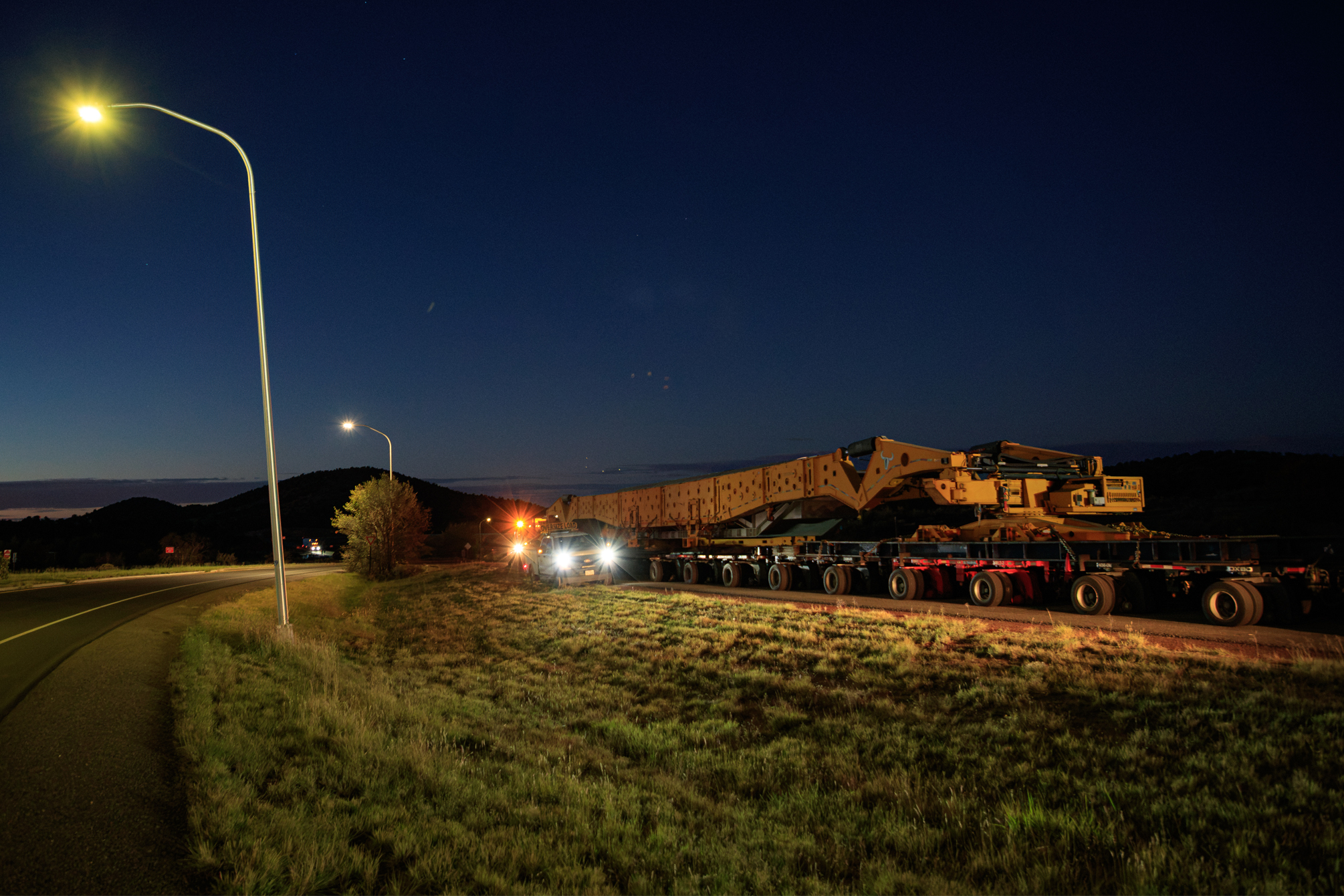
Completing a seven-year odyssey by ship, truck and rail, the 63-foot-long, nearly 227-ton rotor that powers critical science at Los Alamos National Laboratory has returned to the Lab. The rotor, part of a generator that drives uniquely strong magnets, offers Los Alamos and the Department of Energy an array of critical experimentation capabilities for contributing to stockpile modernization science, energy research, materials science, condensed matter physics and more.
“The return of the rotor to Los Alamos is a milestone for the Laboratory and for the mission-relevant, foundational research we are excited to again undertake,” said Pat Fitch, deputy Laboratory director for Science, Technology and Engineering. “This equipment provides record-setting capabilities that are useful across multiple areas of research. Our team and vendor partners have worked tirelessly to make this happen, and we’re proud to see their efforts pay off with the rotor’s return.”
The rotor, forged in Japan and finished in Switzerland by General Electric (GE), was delivered to the Pulsed Field Facility in Los Alamos (commonly referred to as the MagLab), which is one of three locations that are part of the National High Magnetic Field Laboratory. The delivery completes a transatlantic trek by barge, ship and truck. The new rotor will expand the capacity for research and enable more scientists to make use of the facility, as well as extend the lifespan of the Pulsed Field Facility decades into the future.
Unique power generation capacity
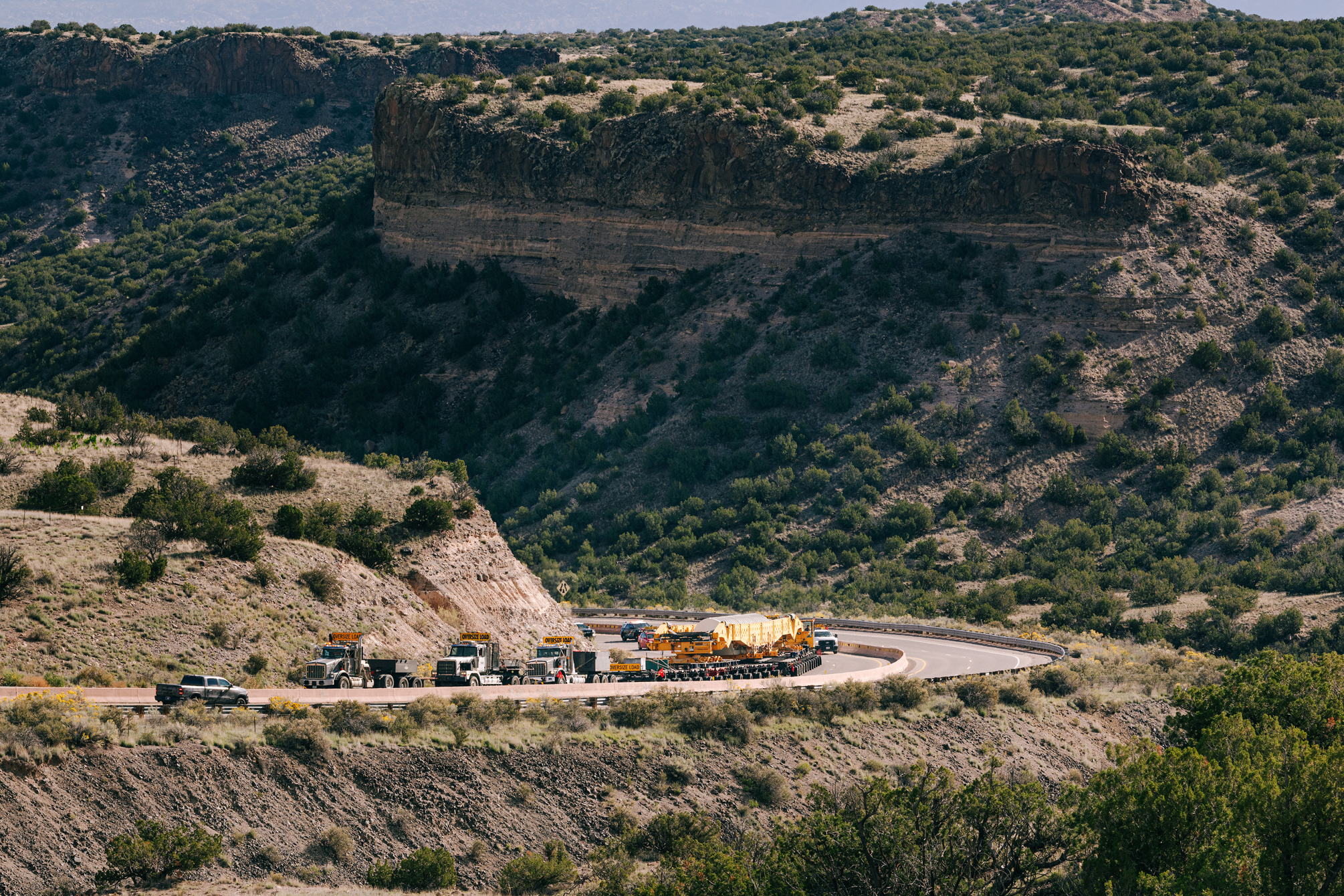
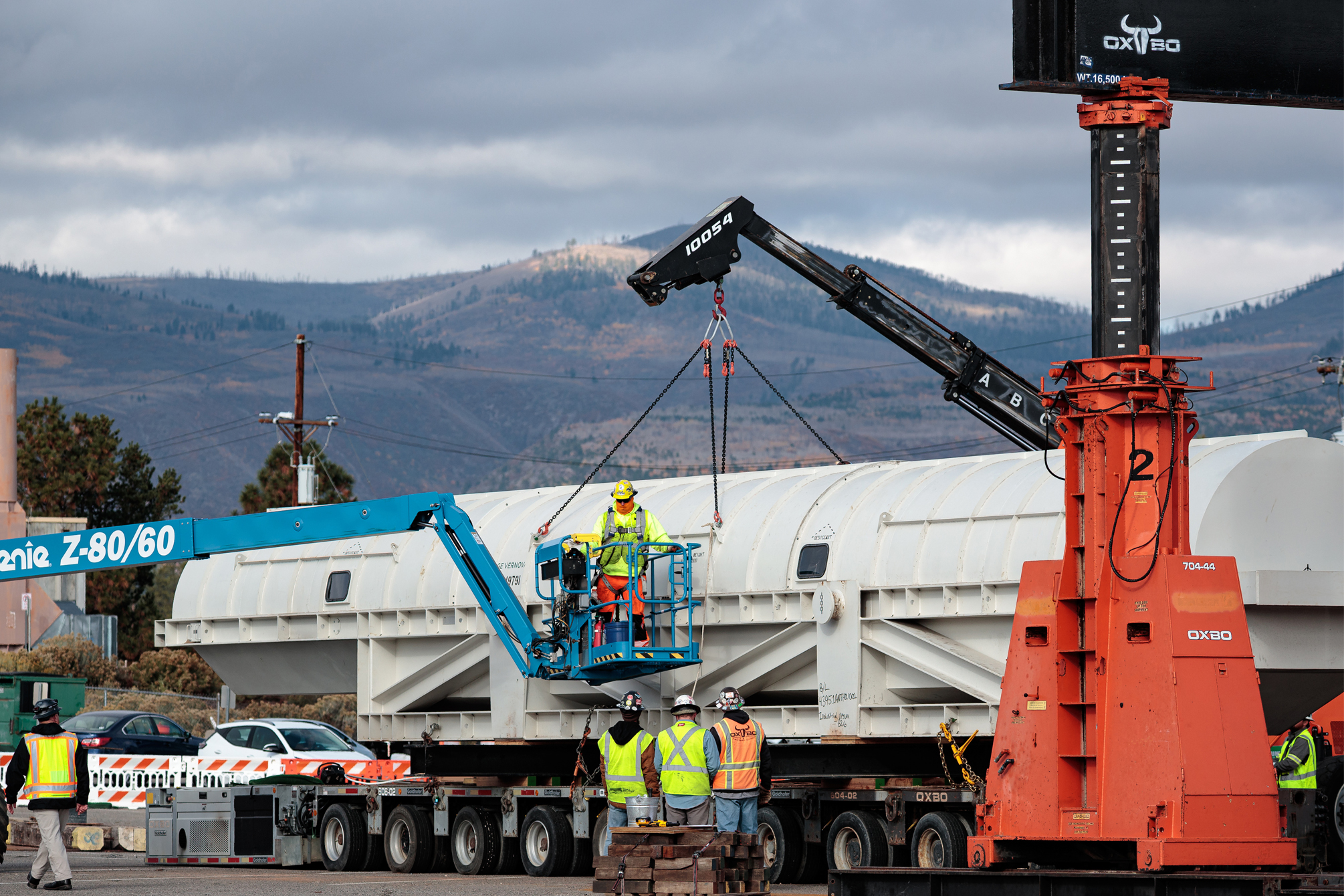
Made from steel, copper, brass and other materials, the rotor weighs approximately 453,500 pounds. The rotor was trucked from the port of Houston, Texas, to Los Alamos via a heavy-duty transport vehicle powered by three prime movers — large, strong tractors able to haul massive objects such as cranes and bridge girders. The rotor was transferred to a specialized, remote-controlled piece of equipment maneuverable enough to bring the rotor into the MagLab facility, and insert it into the generator housing, or stator, followed by the bearings being reassembled around the rotor over the next several months.
When the generator is recommissioned in 2027, the pulsed power it creates — up to 560 megawatts, enough to power half a million homes — will allow specialized magnets to come back online for research. The facility’s multi-shot 100-tesla magnet will return to action, as will a 60-tesla controlled waveform magnet used for physics investigations. (Tesla is a measure of magnetic strength.) The 100-tesla magnet is the instrument with which the Pulsed Field Facility at Los Alamos achieved the world record for the highest non-destructive magnetic field — 100.75 tesla, more than 2 million times more powerful than the Earth’s magnetic field.
“The Pulsed Field Facility has the world’s only scientific program that has delivered scientific results in non-destructive magnetic fields up to and exceeding 100 tesla,” said Ross McDonald, director of the Pulsed Field Facility for the Laboratory. “The rotor’s return will bring the critical capabilities of that 100-tesla multi-shot magnet back online, delivering transformative research for our Laboratory’s mission. This delivery and installation is an investment in our national security and fundamental science communities for decades to come.”
An extreme capability for important science
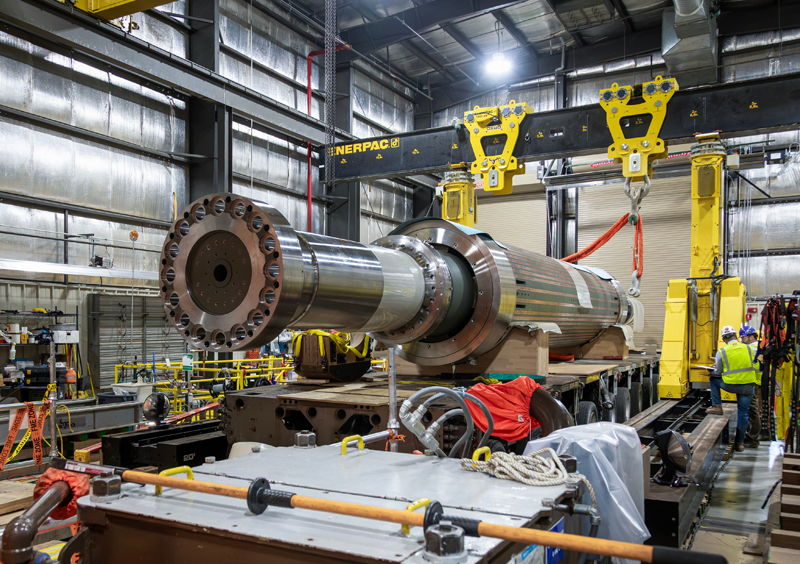
As the Laboratory worked with GE on the new rotor’s specifications, the team also prepared the other components of the generator. The team has applied engineering lessons from the previous rotor’s operation and experience in the power industry to ensure the rotor is optimized for the Lab’s unique pulsed power application upon the rotor’s installation and the generator’s reassembly. As part of this work, the reused generator components have been thoroughly disassembled, inspected, serviced and cleaned.
After the generator has been reassembled, the team will test and calibrate the machine. For the Lab’s pulsed power application, the generator works by storing and then converting the kinetic energy of the rotor spinning inside the stator into a very large pulse of electrical power. The 560 megawatts of power is on par with the largest single power generation units in the country.
These electrical pulses are delivered to electromagnets –– special coils of wire that generate extreme magnetic fields. Under these extreme fields, samples cooled to almost absolute zero — nearly zero degrees Kelvin, or minus 459 degrees Fahrenheit — are measured to probe fundamental and applied questions about materials.
An intercontinental journey
The original rotor was built in Switzerland as part of a 1,430-MVA steam generator designed for a nuclear power plant project with the Tennessee Valley Authority. The power plant project was halted and the generator — the rotor, stator and other parts — slated for scrap until Los Alamos acquired it. The rotor traveled to New Mexico by barge and locomotive, and it was trucked up Main Hill to the Laboratory in 1989 for use in fusion energy experiments.
Beginning in the 1990s, the generator became a tool for the National High Magnetic Field Laboratory, operated for the National Science Foundation. The rotor remains an asset and the property of Los Alamos National Laboratory for the Department of Energy.
Following a failure of the windings, the original rotor was trucked off the hill in 2019. Because it could not be repaired, a new rotor was forged at the Japan Steel Works in Muroran, Hokkaidō, Japan. In April 2023, the newly forged rotor left the foundry in Japan for final machining and manufacturing at a GE facility in Birr, Switzerland. That work included adding the copper windings and balancing the rotor at high speed.
The rotor left Switzerland this summer, traveling by barge down the Rhine River to Rotterdam, Netherlands, before being loaded onto a cargo ship in Antwerp, Belgium. The equipment was shipped across the Atlantic to Houston, Texas.
View a photo gallery of the rotor’s return to Los Alamos.
LA-UR-26-28861