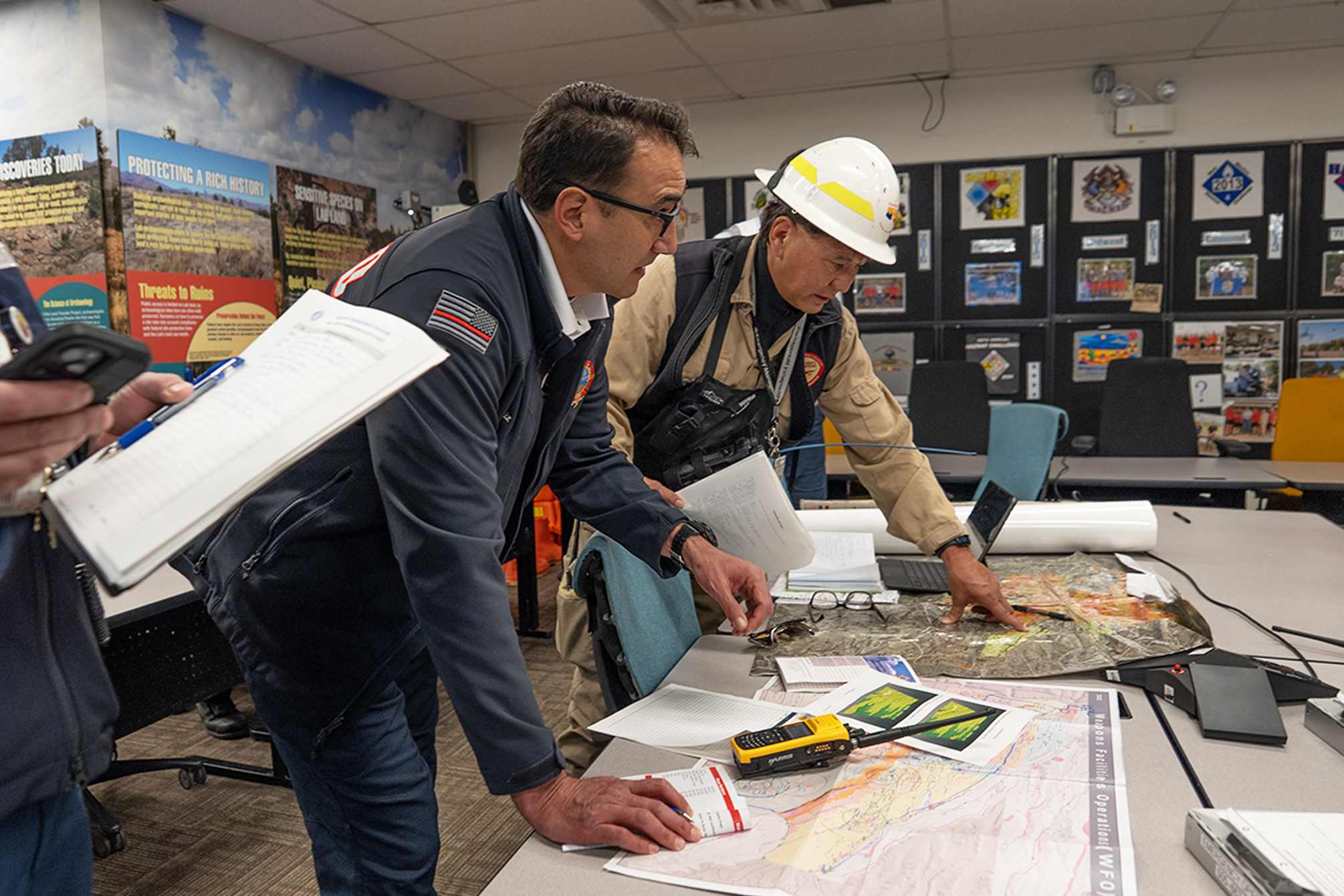
Los Alamos National Laboratory recently conducted a full-scale emergency exercise to practice its wildland fire response capabilities, bringing together multiple teams across the site as well as external response partners to simulate a wildfire threatening Laboratory facilities.
The exercise included staff from the Lab’s emergency operations center, response professionals, security personnel, facility teams, Lab leadership, and communications specialists working together under realistic conditions. The exercise tested the Lab’s coordination with several partner agencies, including the Los Alamos Fire Department, the Pueblo de San Ildefonso, the New Mexico Department of Homeland Security and Emergency Management, and the U.S. Forest Service.
"Full-scale exercises put our people and equipment through realistic scenarios with the pressure of time and the need to make quick, informed decisions," said Jeff Dare, the Lab’s Emergency Management division leader. “This collaborative interagency effort strengthens whole-community resilience and preparedness efforts.”
Testing under pressure
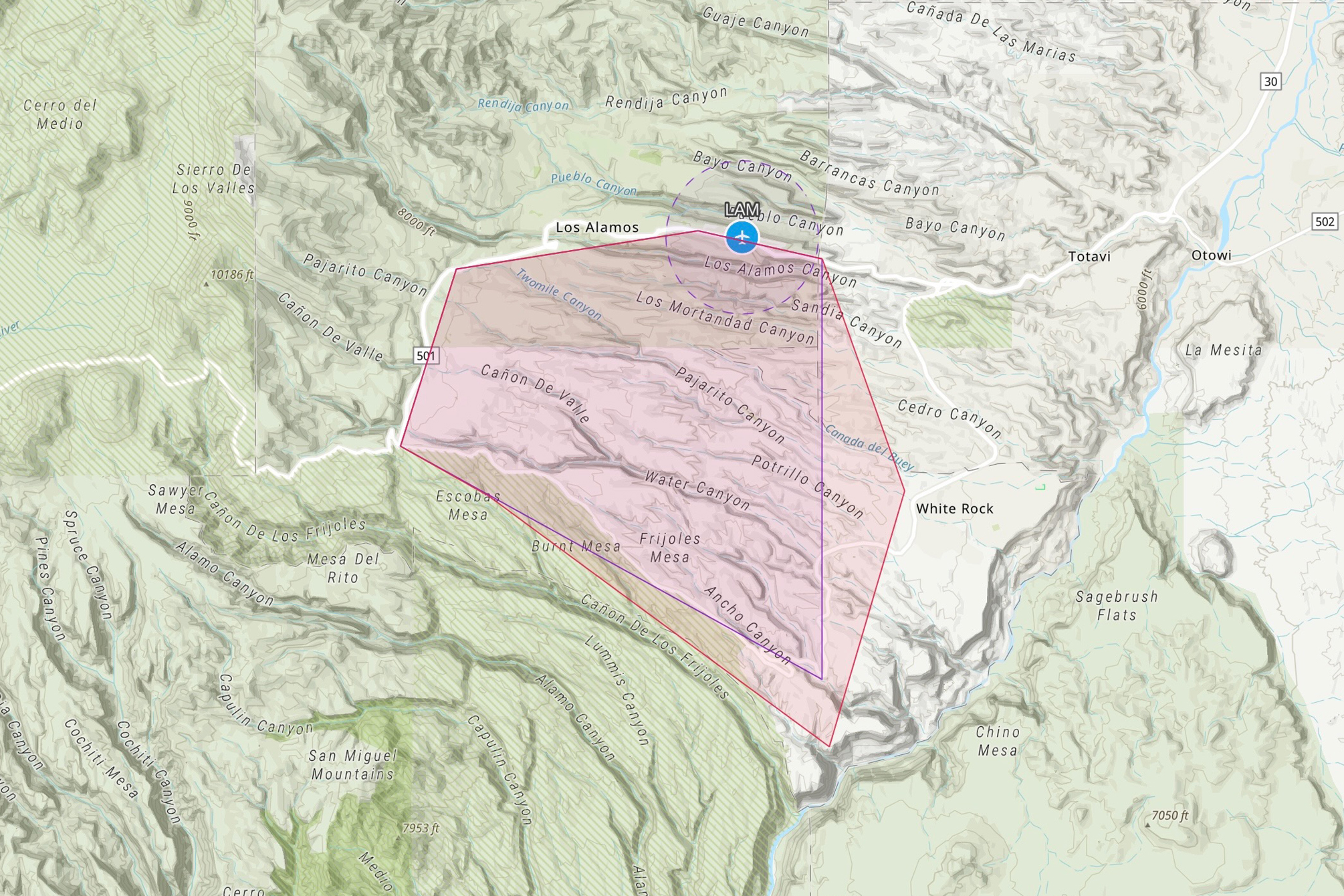
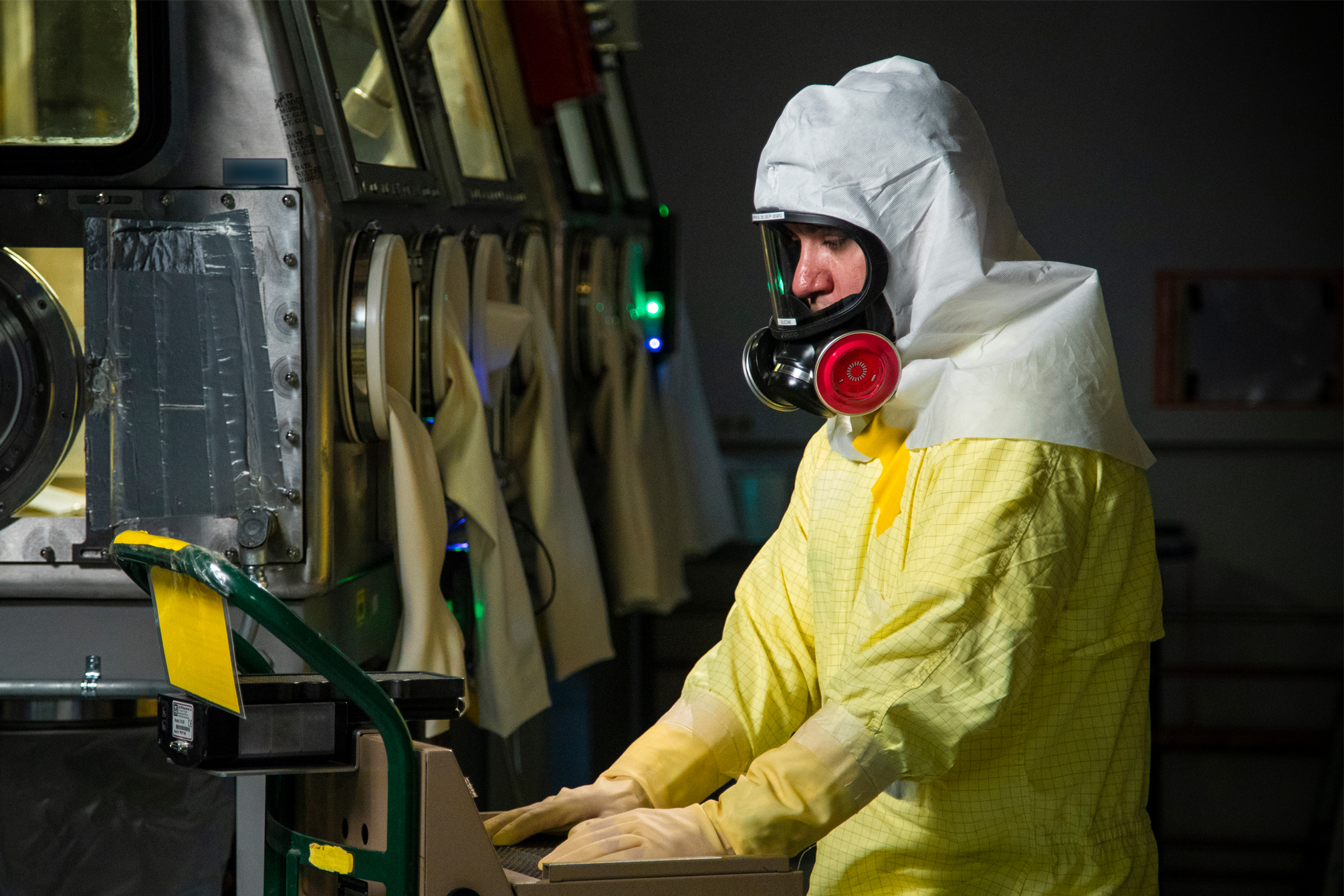
The scenario involved a malfunctioning truck striking waste drums causing a hazmat release and breach to the vehicle fuel tank. This breach ignited a rapidly expanding wildland fire in the adjacent canyon.
During the multi-hour exercise, participants across the site responded to the simulated emergency scenario designed to replicate the challenges of a complex emergency event. Laboratory and response personnel were engaged in evacuating buildings, coordinating with Los Alamos County emergency services, protecting facilities, and managing communications with staff, the public and the media.
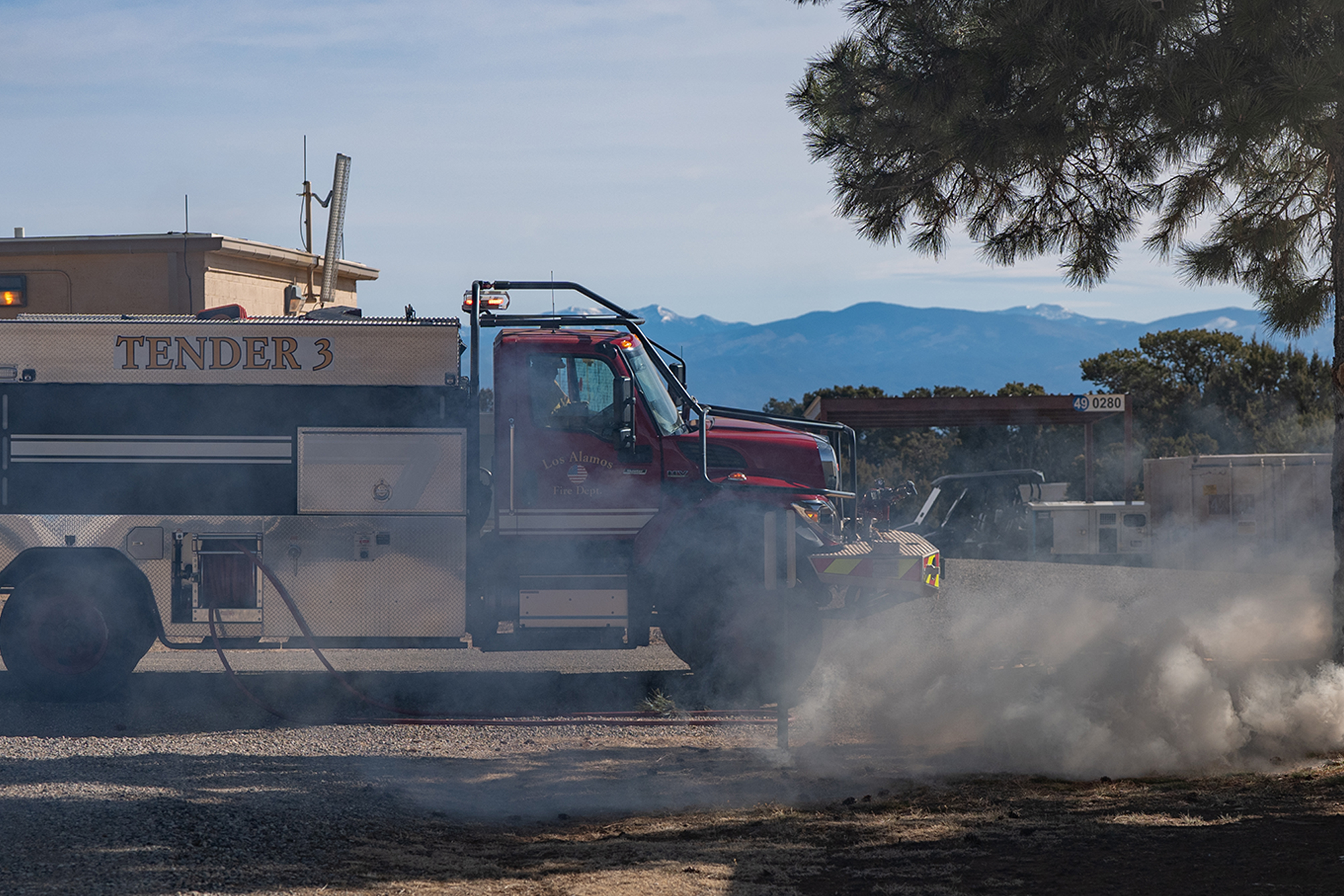
Participating response agencies deployed personnel and equipment in real-time, including drones, HAZMAT robots, and coordinated communications for aerial fire suppression reflective of actual operational environments. To ensure proper testing of public information capabilities, the Laboratory partnered with Argonne National Laboratory’s mock media team to create dynamic and accurate news media.
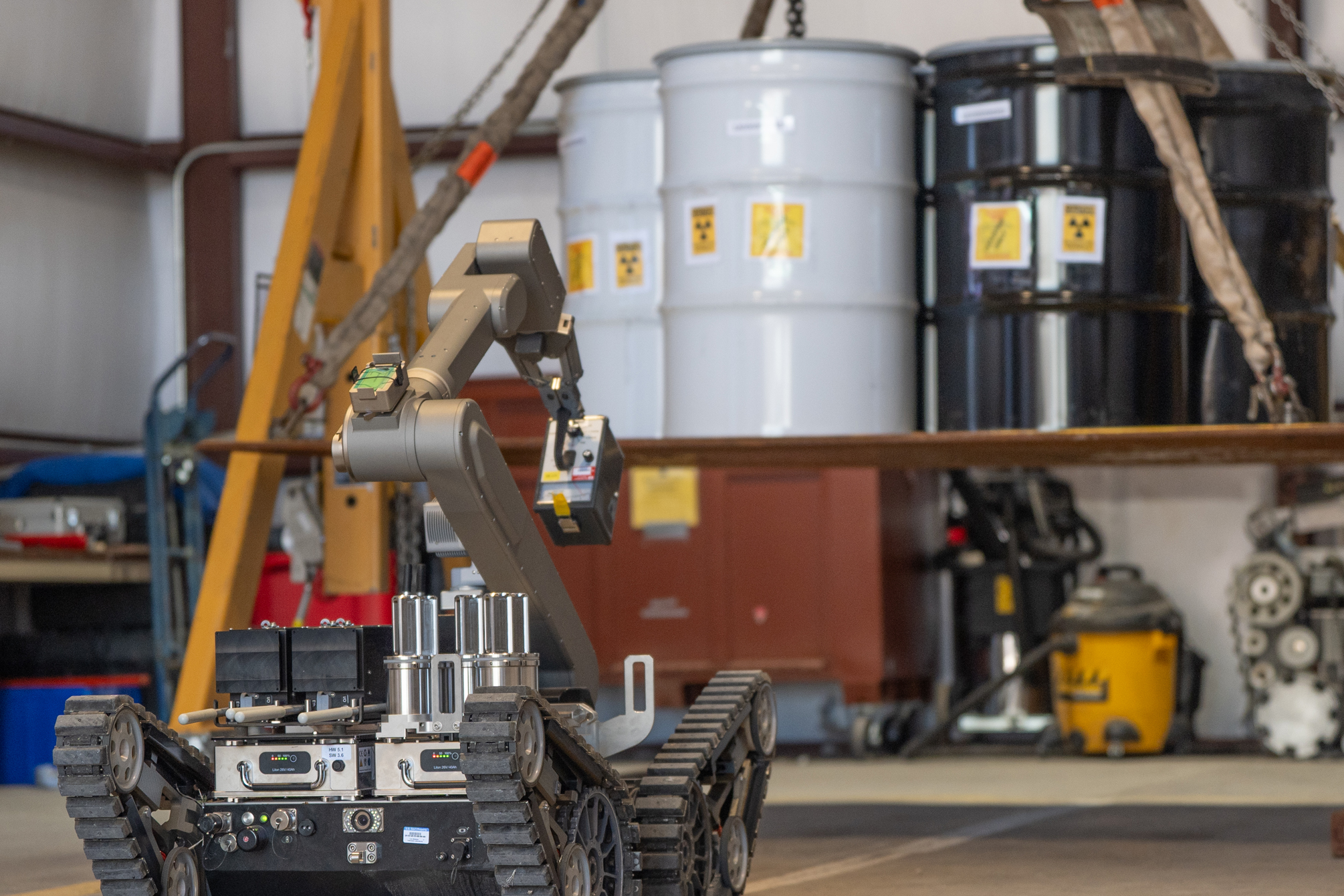
The realistic training allowed participants to practice key skills needed during an actual wildfire, including:
- establishing operational tasks and objectives
- deploying resources quickly to protect people and facilities
- coordinating with community partners
- making critical decisions under time pressure
- communicating effectively
Building readiness through performance
The Lab relies on realistic practice scenarios to build "muscle memory" — helping teams respond automatically and effectively when seconds count. By rehearsing a response, Lab personnel can improve their speed and coordination during actual emergencies.
"These exercises aren't just about following a checklist," explained David Silver, deputy division leader, "They're about teams learning to work together seamlessly, leaders gaining confidence in making tough calls, and everyone understanding their role if a real emergency threatens the community."
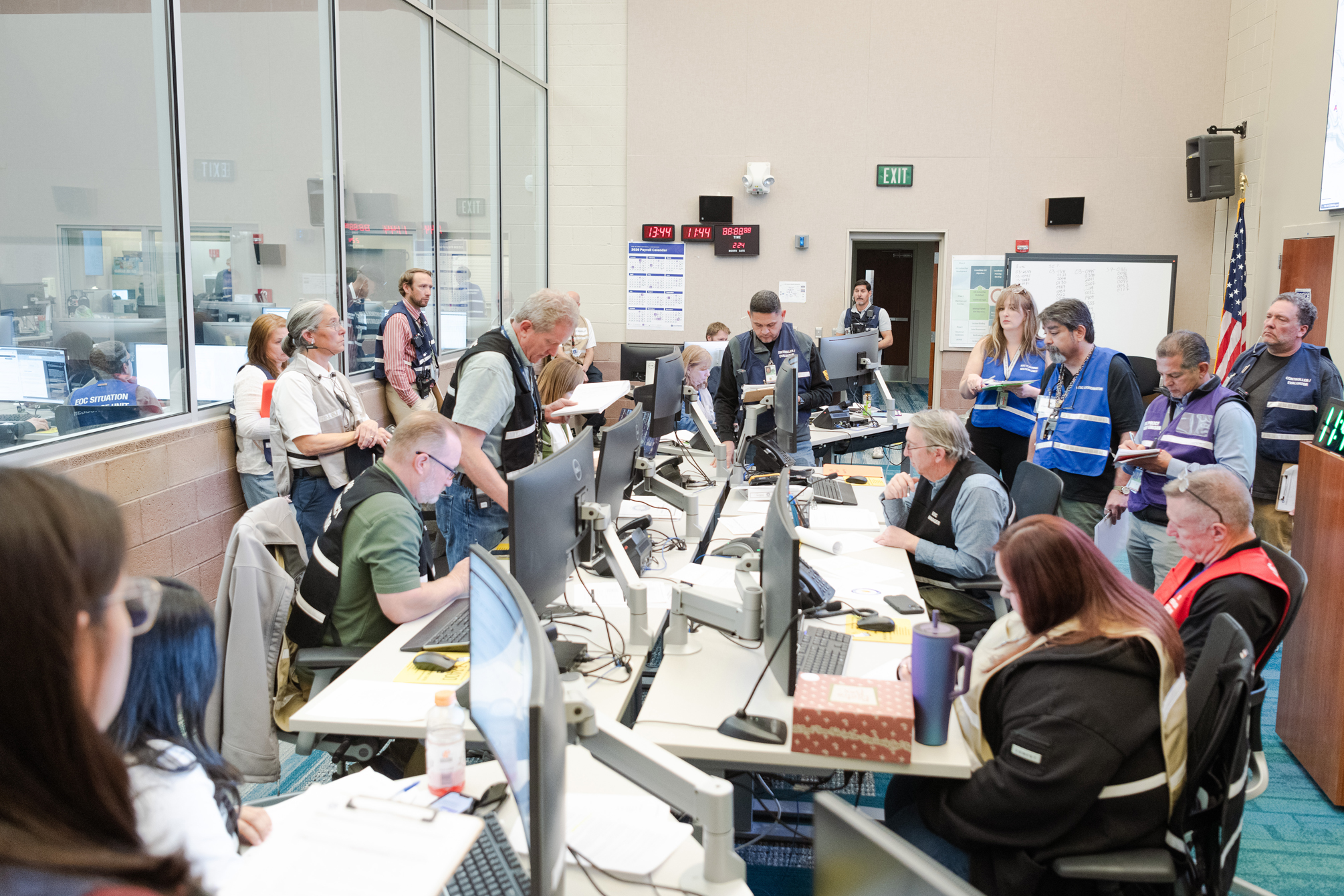
The exercise strengthened coordination with the Lab’s local and federal partners — partnerships that are critical when wildfires threaten both the Laboratory and surrounding communities.
The Laboratory conducts several emergency exercises annually to maintain readiness and practice emergency response capabilities.
Preparing for real threats
Given Northern New Mexico's wildfire risk and the Laboratory's location in a forested area, wildfire preparedness is a top priority for the Lab. The recent McCauley Springs fire in the Jemez Mountains, the Cerro Pelado Fire in 2022 and other regional wildfires have demonstrated the importance of being ready to collaborate quickly and effectively.
LA-UR-26-27291