The emerging technology of advanced nuclear microreactors offer solutions to many modern energy challenges. The ZiaCore design, a low-enriched uranium dioxide-fueled microreactor developed by Los Alamos National Laboratory, now joins several developing concepts for fission-based nuclear power microreactors achieving initial criticality. The ZiaCore design reached this milestone with the execution of a proof-of-principle experiment with a high-temperature, zero-power criticality demonstration at the National Criticality Experiments Research Center (NCERC) in Nevada.
“The execution of our ZiaCore experiment will support an entire category of nuclear power microreactors,” said Christopher Stanek, director of the Nuclear Energy Program Office at Los Alamos. “The experiment will provide valuable data for low-enriched reactor technologies, including components developed at Los Alamos, at representative reactor temperatures.”
Over the course of four weeks in April through May of this year, the ZiaCore system was brought to zero-power critical at high temperatures. An important benchmark in reactor design and testing, zero-power critical provides invaluable validation of reactor physics — essentially proving that the reactor design is valid.
Fuel-efficient, compact and manufacturable
The ZiaCore microreactor can also take advantage of high-assay low-enriched uranium, which is enriched to less than 20% uranium-235, when that supply chain matures.
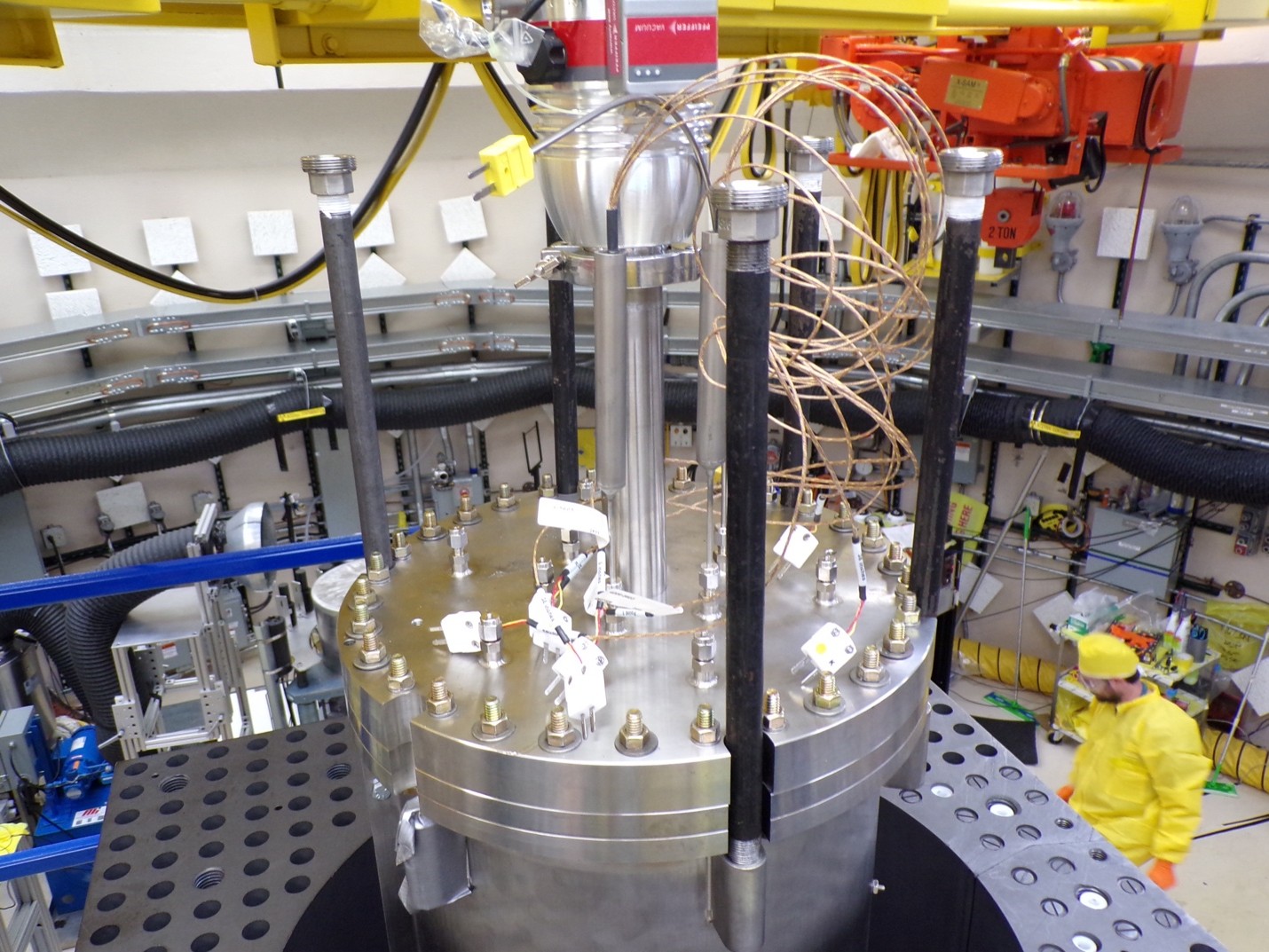
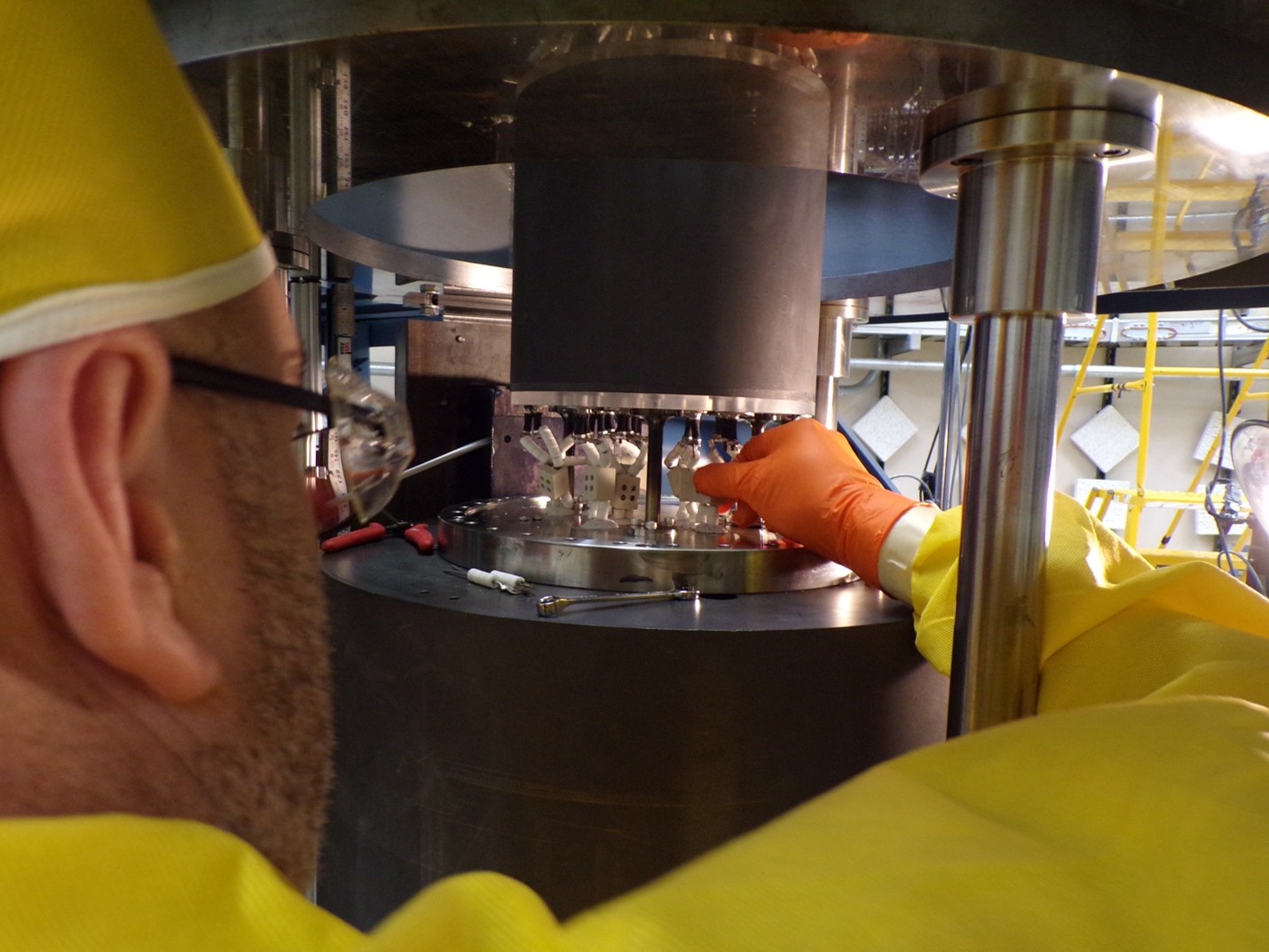
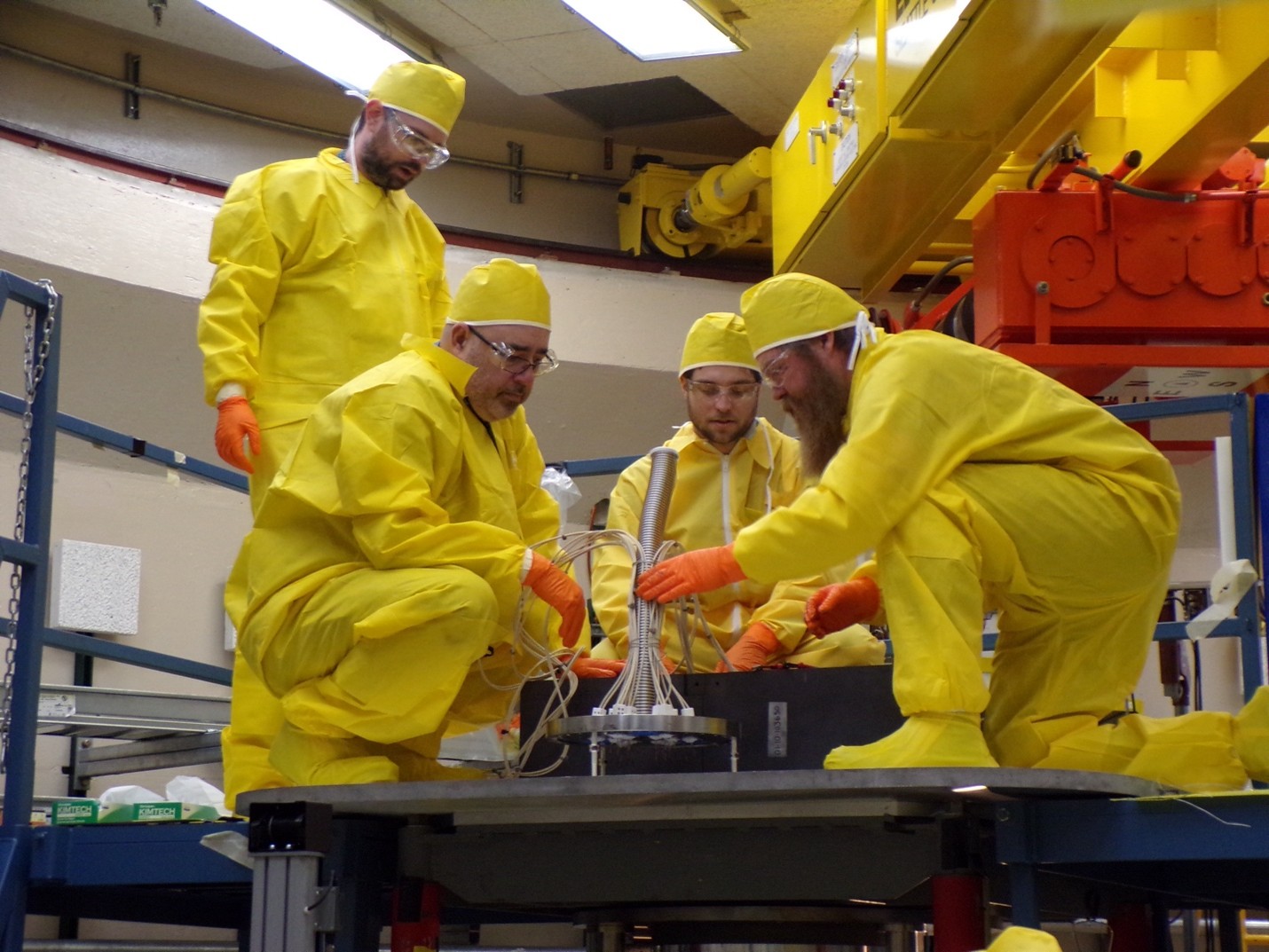
Los Alamos researchers began developing the technology in 2021, spurred by the goal of a microreactor that would efficiently use low-enriched uranium and be readily buildable. The team focused on the design of the reactor and components, using zirconium hydride moderator and heat pipe cooling. In addition to the primary components, a vacuum chamber was designed to hold the fuel assembly from the ZiaCore reactor, as well as the assembly’s heat pipes, zirconium hydride moderator components, fuel and custom electric heaters.
The ZiaCore fuel assembly in its vacuum chamber was deployed on the Deimos testbed, a versatile platform for criticality experiments at the NCERC. The team conducted a series of tests at high temperature — more than 800 degrees Celsius — and at near-zero-power criticality. Researchers were able to glean key data about the operations and characteristics of the full-scale system, including temperature coefficients of reactivity. These are needed insights for this system and for the larger category of microreactor development.
“This project draws together experimentalists, physicists, engineers as well as production and fabrication experts,” said Ellen Cerreta, associate Laboratory director for Physical Sciences. “The team saw a pressing need in our energy landscape and was able to move quickly to build on Los Alamos’ strengths in heat pipes, materials development and criticality testing. The experiments proved a success not just on the terms of zero-power criticality, but how Los Alamos is able to pivot to important, practical applications in the national interest.”
“Zero power” critical, describes the establishment and sustainment of a fission chain reaction, but the reaction is stopped before measurable generation of heat from the fission process. Zero-power experiments are practical because negligible concentrations of fission products are created, meaning the radioactivity is sufficiently low that work in the laboratory space can continue quickly after the experiment occurs. The nuclear fuel is not expended and remains available for future experiments.
Accelerating advanced nuclear technologies
This demonstration project builds upon the successful commercial demonstrations of advanced reactor concepts driven by the Trump administration’s 2025 executive orders, to include “Deploying Advanced Nuclear Reactor Technologies for National Security,” which positions the government to “accelerate the secure and responsible development, demonstration, deployment, and export of United States designed advanced nuclear technologies to bolster readiness and enhance American technological superiority.”
“This experiment truly highlights the Laboratory’s ability to draw upon a wide range of disciplines to tackle complex technological challenges,” said Pat Fitch, deputy Laboratory director for Science, Technology and Engineering. “Los Alamos research and development is critical to achieving our mission goals in energy security, science dominance and national security.”
Topher Matthews was the principal investigator of the project, and together with co-principal investigators Samantha Lawrence and Nick Thompson, and NCERC crew chief Theresa Cutler, led the design, planning and execution of the experiment.
“With more than 100 people contributing to this project, the sense of shared success became very real,” Matthews said. “It was incredibly rewarding – and honestly joyful – to see so many people’s hard work come together.”
Located at the Nevada National Security Sites, the NCERC is the nation’s only general-purpose critical experiments facility and is supported by the Nuclear Criticality Safety Program.
Funding: This work was supported by the Laboratory Directed Research and Development program at Los Alamos.
LA-UR-26-24765