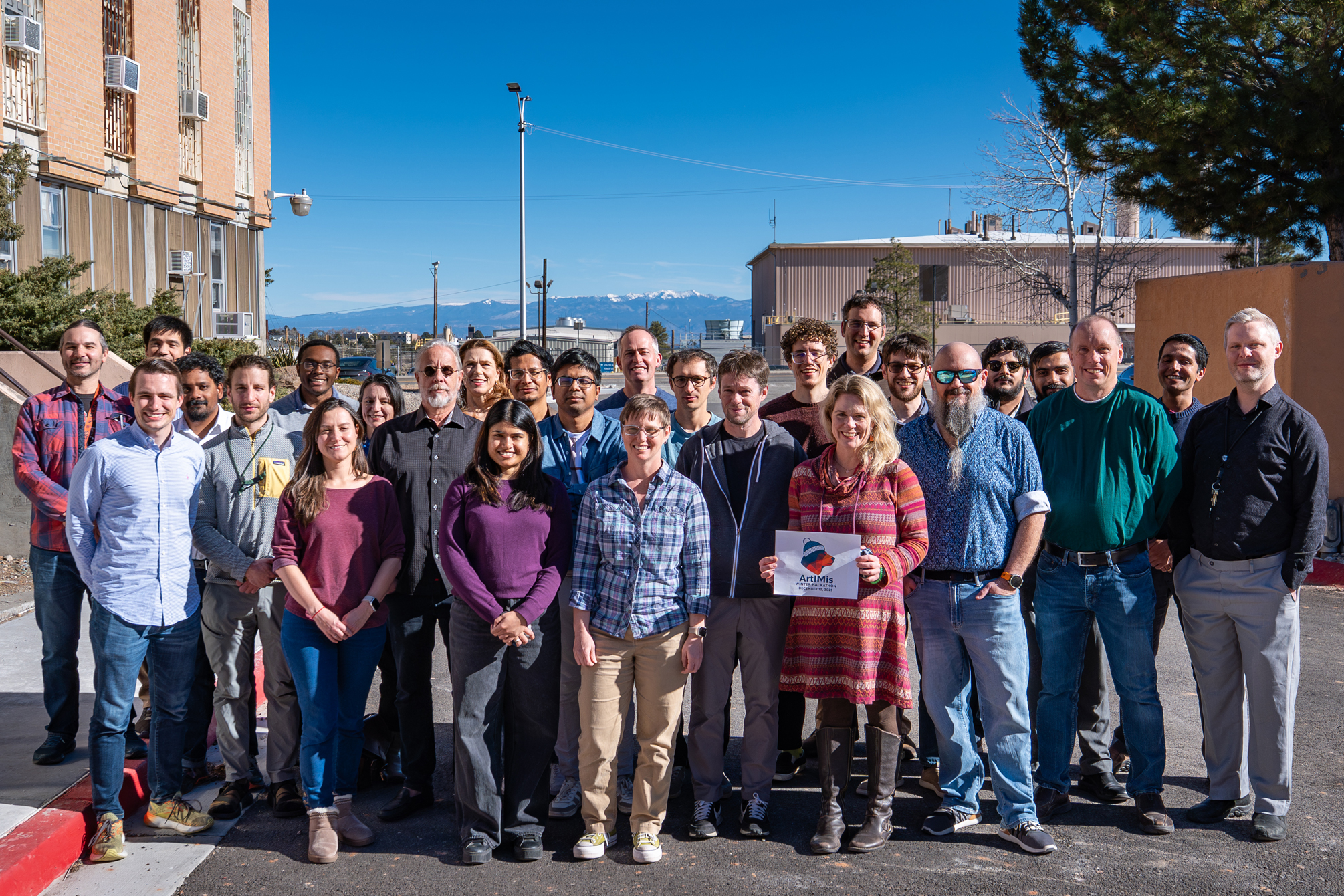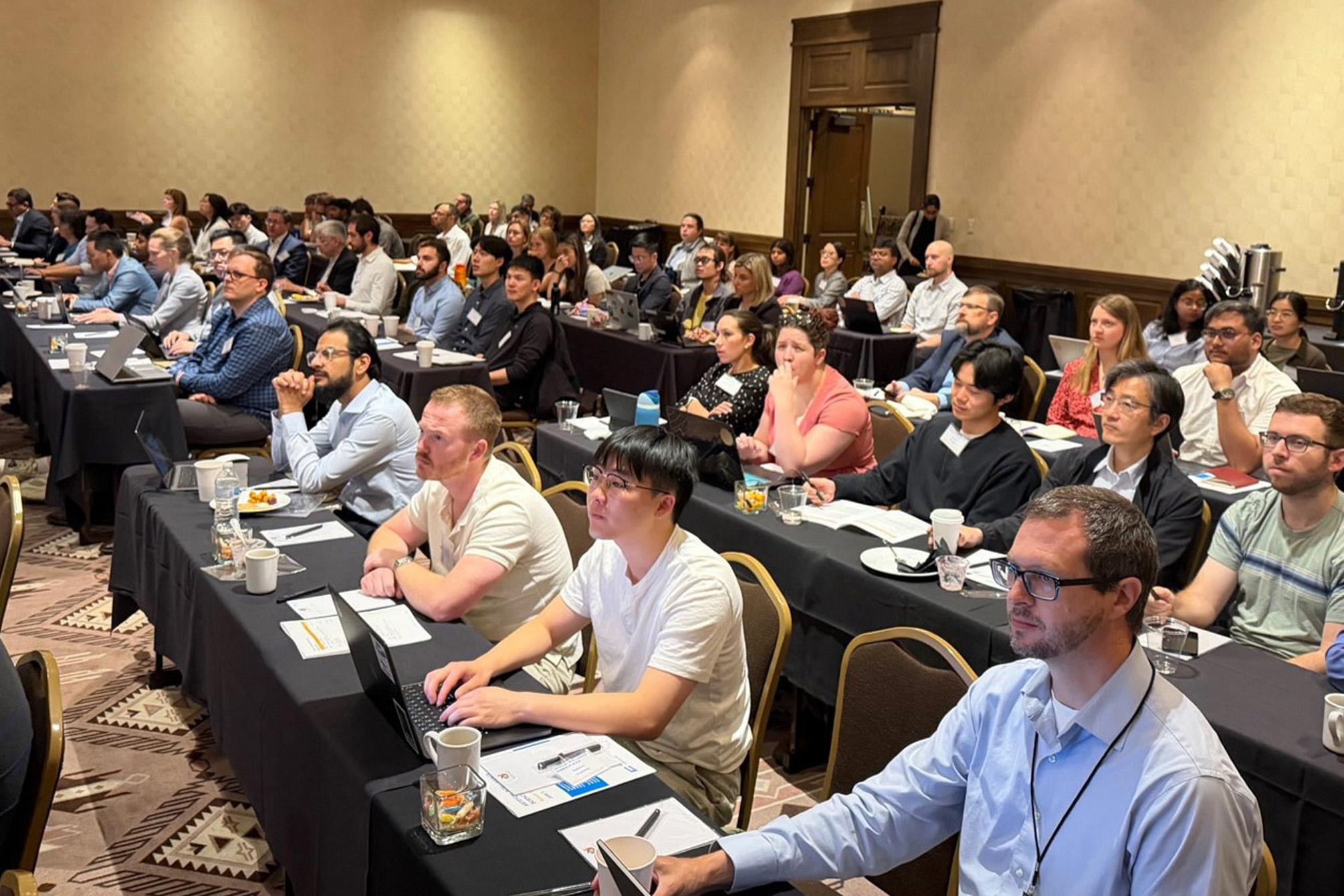
On June 11, 2026, the University of California (UC) convened researchers and leaders from across the UC system in Santa Fe, New Mexico, for the first annual "AI Science at Scale" summit. The summit was planned in recognition of AI's growing role in scientific discovery and the Department of Energy's increasing interest in frontier AI which was formalized in the Genesis mission in 2025.
Backed by a $19 million investment from fee income UC earned from its role managing Department of Energy (DOE) national labs, the UC AI Science at Scale initiative awarded grants to UC faculty and UC-affiliated national laboratory researchers, thereby reinvesting in the scientific enterprise. From a competitive pool of researchers from across the UC system, four multi-campus teams were selected in April 2025, supporting research in AI-driven genomics, quantum materials discovery, geothermal energy, and integrated data platforms.
"We launched the AI Science at Scale initiative because we saw that artificial intelligence is becoming a foundational capability for scientific discovery and national security missions," said June Yu, vice president for UC National Laboratories. "By strategically reinvesting University management fee income, we chose to accelerate collaboration across UC and our national laboratories, build enduring research partnerships, and develop the talent needed to apply AI to some of the nation's most complex scientific challenges."
The summit drew heavy attendance from senior laboratory leadership, including Los Alamos National Laboratory Deputy Director for Science, Technology, and Engineering Pat Fitch, numerous associate lab directors, and Don Haynes, senior director for Los Alamos' National Security Artificial Intelligence Office, alongside key representatives from LLNL. The presence of Triad and lab leadership underscored the alignment between UC's academic engines and the rapid deployment of frontier AI models on the world's most powerful supercomputers, including El Capitan and Tuolumne.
"First, a huge thank you to UC for making this investment and doing so on a short timeline with the full inclusion of priorities and opportunities with LLNL and LANL," said Fitch. "Second, the value and impact of multi-campus, multi-lab teams really shine, especially through the excitement of students, postdocs and faculty."
The four selected project teams, led by principal investigators from UC San Francisco, UC Santa Barbara, UC Irvine and UC San Diego, are not merely researching AI — they are building the foundational architecture for the future of American scientific competitiveness. By training sequence-to-function models, leveraging AI foundation models to predict subsurface physics and advance materials discovery, and advancing integrated AI-relevant data ecosystems, the teams are operating at the bleeding edge of discovery.
"This initiative highlights the power of partnership between UC and the national laboratories," added Eric Schwegler, director of the Academic Engagement Office & Science Education at LLNL. "By connecting UC's research strengths with LLNL's high-performance computing, AI, and mission-driven science expertise, we can accelerate discovery in critical areas and help prepare the next generation of scientists and engineers for the DOE mission."
"For over eighty years, LANL and the University of California have joined to apply cutting edge science and technology in the national interest," said Haynes. "The AI Science at Scale program continues that collaboration, and I was thrilled to learn about the advances made in these important applications of AI and to witness the excitement and passion exhibited by the students and postdoctoral fellows."
IGCC co-director Neil Narang, a professor in the Department of Political Science at UC Santa Barbara, who currently serves as interim Associate Vice President at UC National Labs, was on the ground at the event. Narang leads IGCC's postdoctoral fellowship on security and technology, a collaboration with the national labs, which support cutting-edge research on a range of emerging technologies, including AI.
Says Narang: "Maintaining U.S. leadership in artificial intelligence requires a scale of collaboration that very few institutions can deliver. This summit made one thing crystal clear: the University of California's systemwide intellectual firepower, combined with the capabilities of our national labs, makes UC the premier, indispensable partner to execute the DOE's Genesis mission."