A Workshop Series Focused on Scientific Collaboration
Michigan SPARC hosts various scientific workshops throughout the year with a heavy focus on bringing together researchers from government , academia, and industry to foster lasting and productive collaborations. Typically, these workshops last from 2-3 days and include technical talks, open-ended discussion and question sections, breakout sessions and more. Attendance can be anywhere from 15-30 people. See below for a list of our upcoming and previous workshops and the topics covered.
Interested in learning more or participating in a SPARC event?
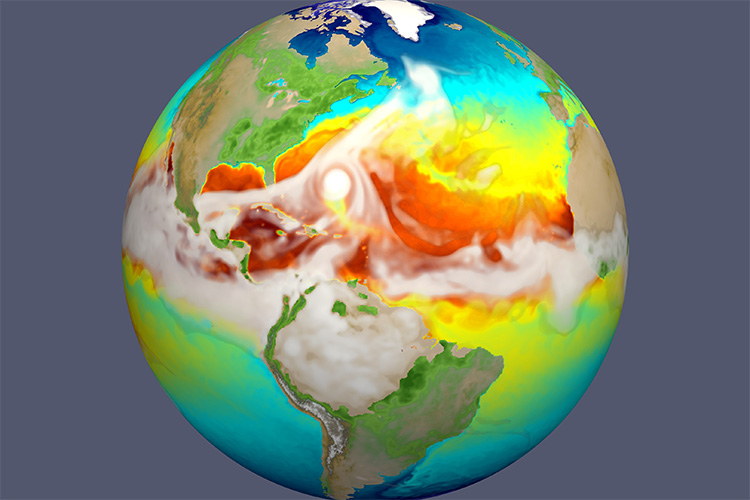
University of Michigan and LANL researchers will gather at UM SPARC from September 8th-10th to discuss ongoing and future collaborations in Earth system science. Through technical talks, round table discussions, and panel sessions, participants will explore topics including climate modeling, atmospheric gas modeling, Earth system simulation, and related computational and observational approaches. Discussions will also help identify future research priorities and opportunities for advancing next-generation Earth system science.
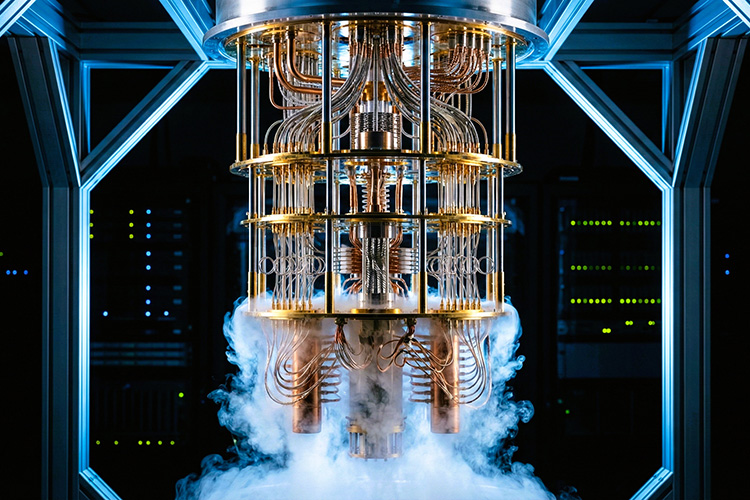
This workshop will bring together researchers in quantum computing and quantum information science to discuss emerging directions in quantum algorithms, quantum machine learning, quantum architectures, optimization, quantum communication, sensing, and information-theoretic foundations. Emphasis will be placed on identifying cross-cutting challenges at the interface of theory, algorithms, and new applications of quantum information processing. The roundtable and white-paper sessions will aim to define collaborative research directions connecting University of Michigan and Los Alamos expertise.
The goal of this workshop is to identify areas of collaboration for improving simulation capabilities for high-speed flows. High-speed flow involves numerous challenges, including fluid dynamics, rarefied gases, thermodynamics, reacting flows, and radiation transport, materials, both thermal and mechanical loads, and flight environments. In this context, high-speed could include transonic, supersonic, and hypersonic up to re-entry speeds. Potential collaborations could span fundamental physics, relevant modeling, numerical methods, and experiments for validation or improved understanding of underlying physics.
Space Weather Collaboration Workshop
June 15 - 17, 2026
The workshop brought together researchers from Los Alamos National Laboratory and the University of Michigan to strengthen collaborations in space weather science and related technologies. Discussions focused on integrating advanced modeling, observations, computing, and instrumentation to improve understanding and prediction of the space environment while addressing operational challenges. The meeting also identified opportunities for future joint research, student engagement, and workforce development, establishing a foundation for continued collaboration across institutions.