
Mark B. Chadwick
Introduction
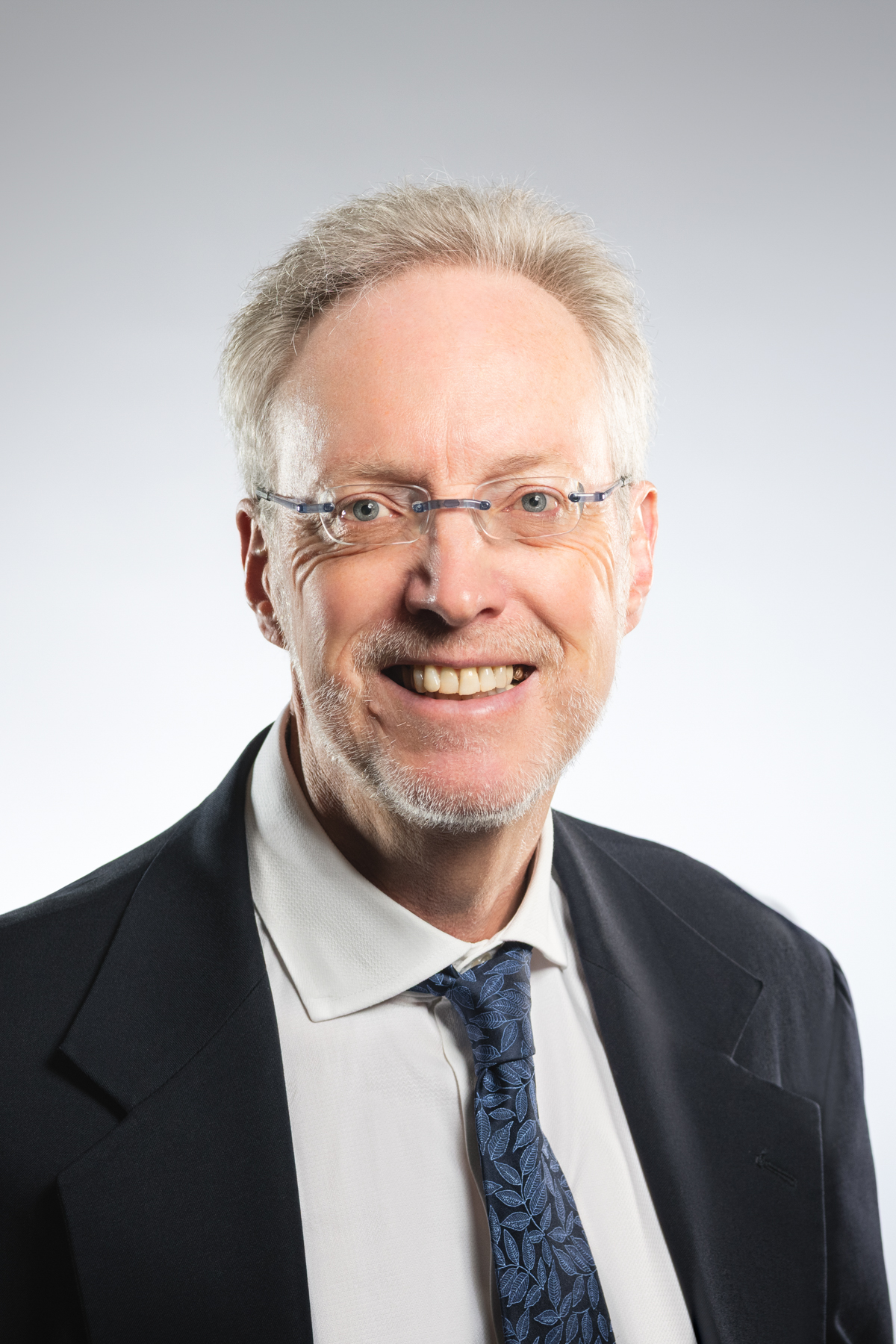
Mark Chadwick leads Simulation, Computing & Theory (ALDSCT), advancing the high-performance computing, algorithms, and theoretical science that underpin stockpile modernization and broader national security missions and AI and quantum discovery science. He previously served as interim Los Alamos Deputy Director for Science, Technology & Engineering and as chief scientist/operating officer for Weapons Physics.
Background
A Los Alamos Laboratory Fellow and internationally recognized nuclear physicist, Chadwick has worked across Science, Technology & Engineering and Weapons organizations for more than three decades. As interim DDSTE, he aligned Lab-wide scientific capabilities with national priorities. He previously served as program director for National Nuclear Security Administration experimental science programs and as division leader for simulation codes in ALDX. He collaborates with agencies, universities, national laboratories, and industry partners to expand advanced computing and AI ecosystems and ensure that theory and simulation remain tightly coupled to experiment. Chadwick has led the US nuclear data evaluation collaboration Evaluated Nuclear Data Files for almost three decades, creating the world’s highest-fidelity databases used worldwide in radiation transport codes, including the Laboratory’s Monte Carlo N-Particle code. He served on both Lawrence Livermore and Los Alamos’s Red Teams, advising the respective laboratory directors on the health of each lab’s deployed nuclear deterrent. He has served on numerous strategic advisory committees for the DOE, IAEA, and UK MOD, and managed Los Alamos collaborations with allies that include the UK and Australia. He has published more than 182 papers in open science and classified journals. Chadwick has also published technical nuclear history books on fission and fusion during the Manhattan Project and H-bomb invention era.
Education / Awards
- PhD, Physics — University of Oxford
- BA, Physics — University of Oxford
- Junior Research Fellow, University of Oxford, 1989
- Lindemann Fellow of the English-Speaking Union of the Commonwealth; NATO Fellow at LANL, 1990
- LANL Director’s Postdoctoral Fellow in T-2, 1991
- Fellow, American Physical Society, 2009. Citation: “For significant and innovative contributions to applied nuclear physics, including medical radiation therapy, nonproliferation, homeland security, the physics of nuclear weapons, and especially to development of the modern ENDF/B-VII data base.”
- Fellow, Los Alamos National Laboratory, 2013
- DOE E.O. Lawrence Award, 2011. Citation: “For innovative scientific contributions to advance understanding of fission product yields and other key nuclear reactions resulting in the resolution of a longstanding problem in national security
- Fellow, American Nuclear Society,2021. Citation: “In recognition of his leadership in the United States of nuclear cross section evaluations leading to improved simulation performance across the range of nuclear applications; renowned contributions to modeling of plutonium fission; international leadership in nuclear science and technology; and substantial and enduring individual technical contributions to the nuclear enterprise.”
- Adjunct Professor, Texas A&M university
Area Managed
ALDSCT has three divisions: High Performance Computing, Computing and AI, and the Theoretical division with the Center for Non-Linear Studies. It partners with DDW and DDSTE on simulations for national security. ALDSCT has hundreds of postdocs and students, providing a Laboratory recruitment pipeline, and sets scientific directions through convening workshops. Research is in computer science, materials/high-explosives and manufacturing, physics (nuclear, particle, plasma, astrophysics), energy (fission, fusion, electrical grid) and national security (weapons, earth and biological systems). AI uses ALDSCT’s unique data, scientific expertise, and high-performance computing to accelerate the Laboratory’s missions. Quantum advances algorithms for emerging hardware and partners with experimentalists on functional material discovery.