Environment for our Future
-
Better to be safe
Workers in full safety gear use a direct-push rig to sample waste at Material Disposal Area B on DP Road. Results will be used to plan the excavation of all waste from the site which was used from 1945 through 1948. The site has been targeted for a full residential clean up.
-
Rain or shine...or snow
An extensive remediation project will remove 167,000 square feet from the LANL footprint. The two-story building, 21-210, was the first major structure be decommissioned and demolished thanks to Recovery Act Funding. Demolition began on March 1 and no trace was left by March 7.
-
Recycle, reduce, reuse
Precise extraction of metals before, during and after the demolition of building 21-210 produced 106 tons of recyclable material, exceeding estimates by 16 tons, thanks to the skill of the operator. Recycling reduces the cost of disposing of waste and the volume of waste going to landfills.
-
Protected
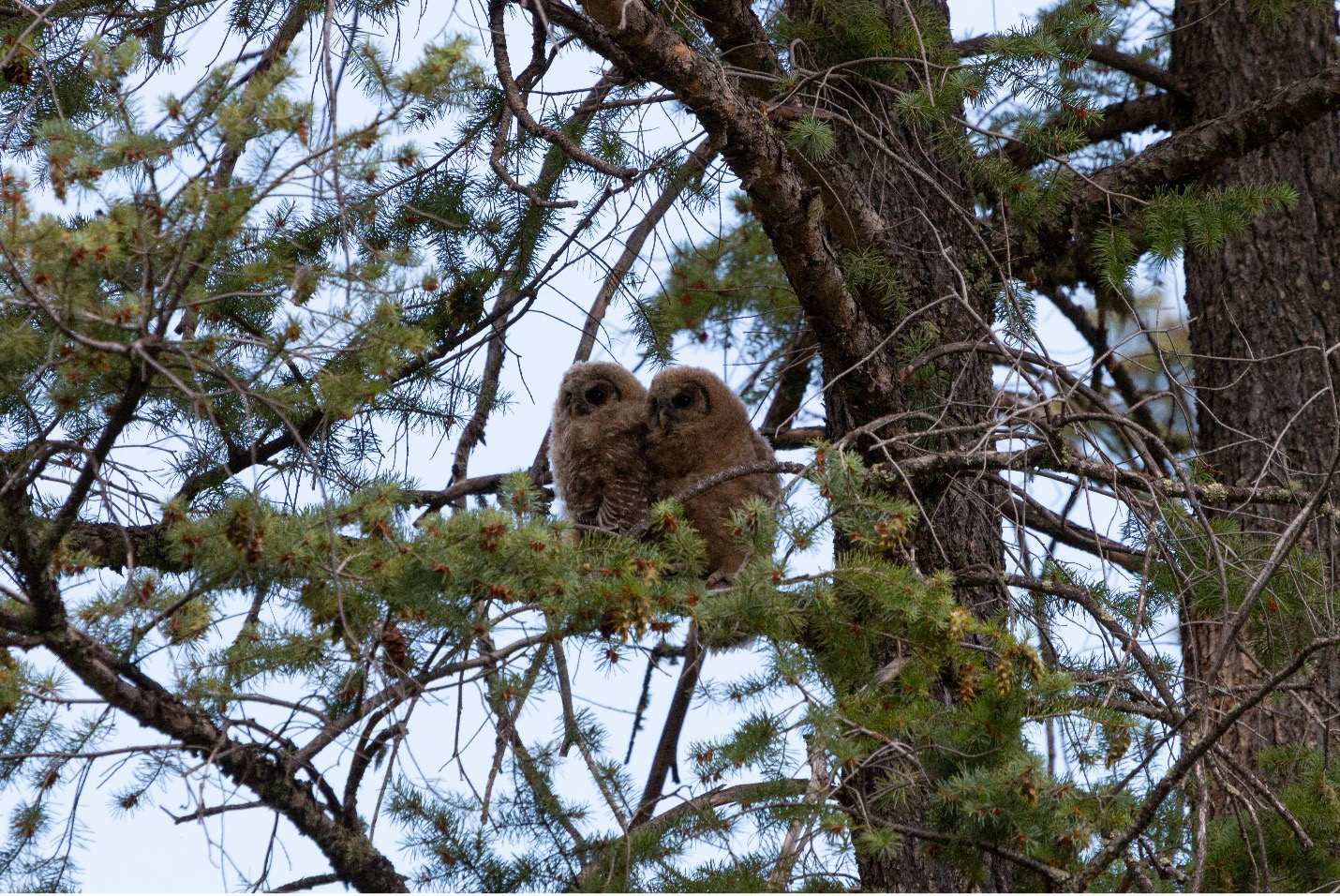
LANL operations are suspended for 5 months each year during the Mexican Spotted Owl breeding season to avoid habitat disruptions. Other endangered and sensitive species protected on LANL property include the southwestern willow fly catcher, the bald eagle, the Jemez Mountains salamander and the American peregrine falcon.
-
Cleaning up the legacy
In the 1980s, LANL conducted an inventory of 2143 sites potentially contaminated by historic operations. Thanks to concerted efforts fulfilling on the Compliance Order on Consent agreement between the NM Environment Department and LANL, fewer than 800 sites remain today. Material Disposal Area Y pictured is no longer one of these.
-
Your Recovery Act Dollars
LANL sponsored a job fair with 5 Northern New Mexico firms. Over 400 attendees explored job opportunities at LANL.
-
300 locations monitored
LANL maintains an extensive groundwater monitoring and surveillance program through sampling in 102 deep groundwater wells, 41 intermediate groundwater wells and springs, 67 wells in alluvium in canyons and 92 natural sources such as springs and base flow.
-
Protected
LANL property contains over 2000 well-preserved archaeological and historic sites. In cooperation with surrounding pueblos, artifacts and sites are managed compliant with laws, including the National Historic Preservation Act, and Native American Graves and Repatriation Act.
-
Tidy waste disposal
Low-level radioactive waste such as soil from remediation projects, retired laboratory equipment and safety supplies such as lab coats and gloves is permanently disposed in pits and shafts at Area G.
-
The mesa breathes
Pits and shafts are unlined, allowing for the speedy evaporation of precipitation, preventing water from pooling and gathering a "head" which could push contamination down into the groundwater more than 600 feet below the site.
-
Waiting for WIPP
As of January 2010, 12,690 drums of transuranic or TRU waste remain stored above ground awaiting shipment to WIPP. In 2009 about 4000 drums were shipped including 16 canisters of remotely-handled TRU waste. In addition to reducing the numbers of drums, this dramatically reduced the radioactivity present on site.
-
WIPP bound
In 2009 a record number of 4000 drums of transuranic waste were shipped to the Waste Isolation Pilot Plant. Shipments are scheduled to accelerate to 5000 drums in 2010. Also on deck for 2010 is resolving the disposition pathway of an additional 33 shafts containing TRU waste.
-
Public welcome
LANL Environmental Programs host hundreds of events annually to bring stakeholders, community leaders and members of the public into the Laboratory to explore our environmental clean up and stewardship practices.
-
Controlling contaminant migration
Because our commitment to the Buckman Direct Diversion Project and to effectively trap any contaminants the might migrate off the site, LANL installed 9 new sediment control features in the Los Alamos and Pueblo Canyon watershed using techniques ranging from planting over 10,000 willows in to installing the weir pictured.
-
Checking by land, air and...on the water
LANL collects over 400,000 samples annually and prepares the Environmental Surveillance Report for DOE to account for LANL impacts to air, groundwater and surface water, soils, foodstuffs and biota. This includes a yearly raft trip through White Rock Canyon to collect water samples from springs.
-
Stormwater monitoring
Storm water is monitored at 250 sites across the 37 acre campus and controlled using over 400 water control measures ranging from straw wattles and berms to grade control structures and weirs. Gauging stations and control measures have to be checked quickly after each rainfall event to collect samples and ensure continued efficacy.
-
Air quality monitoring
LANL deploys over 60 AIRNET air monitoring stations around the Laboratory and off of the site to ensure compliance with the Clean Air Act and DOE radiological regulations.
Environment at LANL
Overview
Overview | Compliance | Earth Day | Earth & Environmental Sciences | Environmental Management System | Legacy Contamination | Monitoring | Operations | Outreach | Protection | Status
Air
Compliance | Dose Assessments | Emissions | Monitoring | NEPA | Permits | Pollen | Plans/Procedures | Regulations | Reports
Biological Resources
Compliance | Migratory Birds | Monitoring | NEPA | Endangered Species | Plans/Procedures | Regulations | Reports
Clean-up & Remediation
Compliance | Current Projects | Ecological Risk Assessment | LTES | NEPA | Permits | Sites | Plans/Procedures | Regulations | Reports | Stimulus
Compliance & Monitoring
Air | Clean-up | ESR | Land Transfer | NEPA | Permits | Plans/Procedures | RCRA | Regulations | Reports | SWEIS | SFB | TSCA | Waste | Water
Cultural Resources
Archaeology | Compliance | Historic Properties | NEPA | Regulations | Reports
Environmental Risk Reduction
Compliance | Earth Day | Environmental Management System | NEPA | Pollution Prevention | Regulations | Reports
Waste & Waste Management
Community Relations Plan | Compliance | LANL Operations | Permits | Programs | Plans/Procedures | RCRA | Regulations | Reports | TSCA
Water
Clean Water | Compliance | Drinking Water | Groundwater | Individual Permit | Monitoring | NEPA | Plans/Procedures | Permits | Regulations | Reports | Surface Water | Studies
Environmental Sciences
Earth and Environmental Sciences at LANL
Compliance
LANL Environmental Compliance
LANL's environmental protection mission is to reduce the risk to the public, workers, and the environment of current and historic activities conducted at LANL through natural and cultural resource protection, pollution prevention, deployment of risk/cost effective measures for TRU waste disposition, and for environmental remediation.
It is our duty to be stewards of the LANL reservation through risk communication, strategic monitoring and surveillance, and integrated natural and cultural resource management.
Our goal is to assure the sustainability of LANL by continually improving our support of LANL mission assignments, our social responsibility in Northern New Mexico, and environmental protection of the Pajarito Plateau.
Outreach
LANL Environmental Outreach
The purpose of environmental outreach is to increase public knowledge of environmental stewardship methodology and practices at LANL, to use stakeholder input to make better stewardship decisions, and to improve our relationship and increase our dialog with the public. Our goal is to clearly, consistently and effectively communicate with the public in a timely, open and interactive way.
Our vision is to operate a proactive and interactive environmental communication and public involvement program that is inclusive and responsive to communities, tribes, agencies, and federal and state governments.
Data/Documents
- Public Reading Room
Electronic (EPRR)| Hard-copy (PRR)
Looking for Plans and Procedures?
| Data | Docs & Factsheets | Permits | Publications & Reports | Regulations | |
|---|---|---|---|---|---|
| Air | * | * | * | * | * |
| Biological Resources |
* | * | * | * | |
| Clean-up | * | * | * | * | * |
| Cultural Resources |
* | * | * | ||
| Ecological Risk Reduction |
* | * | * | ||
| Environmental Surveillance & Support |
* | ||||
| NEPA | * | * | * | * | |
| Waste | * | * | * | * | * |
| Water | * | * | * | * | * |