DOE/LANL Jurisdiction Fire Danger Rating:
Img 1409
  1. LANL Home
  2. Engage with LANL
  3. Bradbury Science Museum

Learn Opportunities at the Bradbury

Free programs for students in grades K-12

Our museum educators provide themed hands-on STEM experiences at the museum, in your classroom, or online during an interactive virtual field trip to support NGSS.

The Bradbury Science Museum is the public gateway to Los Alamos National Laboratory. We connect students and visitors with the Lab’s history, from its Manhattan Project beginnings to today’s mission of advancing global security.

Our field trip programs give students the chance to explore science, technology, engineering, and math (STEM) through hands-on experiences led by our dedicated educators. Every program is designed to spark curiosity, deepen understanding and bring science to life.

Plan your visit:

We offer engaging, in-person educational programs Tuesday through Thursday during school hours.

  • At the Museum: Bring your students to Los Alamos for an immersive experience inside the Bradbury Science Museum.
  • In Your Classroom: Can’t make the trip? With our Science on Wheels program, our team can come to you with the same high-quality, hands-on learning.

Need a different time? We’re happy to work with you! Contact our education team to discuss alternative scheduling or accommodations.

Each program has been carefully designed and tested to maximize learning and engagement. Explore our list of activities to find the best fit for your class.

Schedule your visit: 

Booking your field trip is easy!

  1. Review our program calendar for available dates.
  2. Complete our online request form.
  3. Once you submit your form, a Bradbury educator will contact you to confirm your visit and finalize the details.
External Banner Filler

Kindergarten - 2nd Grade

  • Engineering: Penny Bridges

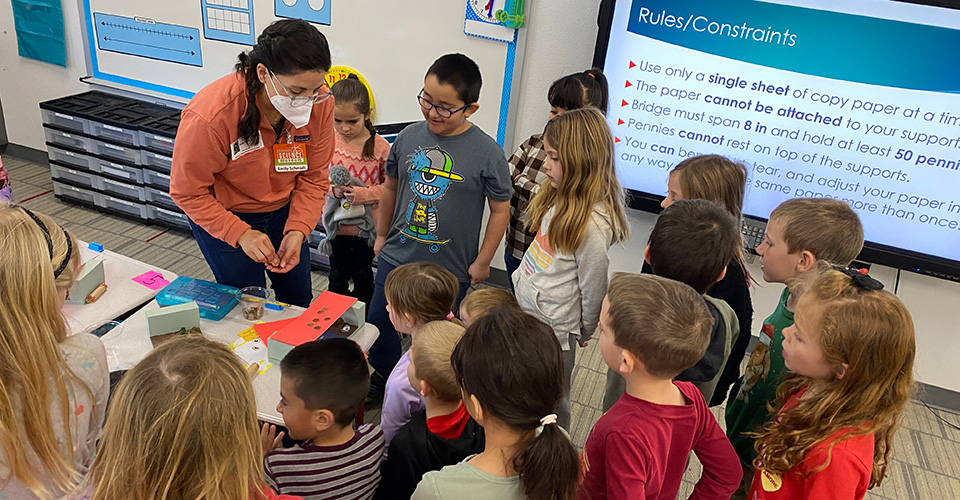
    After a brief introduction to bridges, students design and build a bridge out of a piece of paper that can support as many pennies as possible. After several designs, students usually show improvement of initial bridge designs capable of holding just a few pennies to designs that can hold upwards of 100.

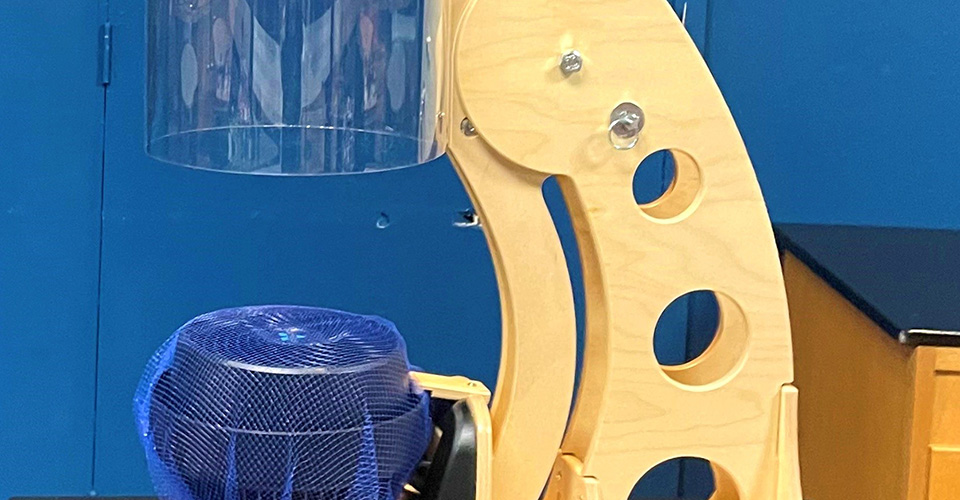
  • Engineering: Vertical Wind Tunnels

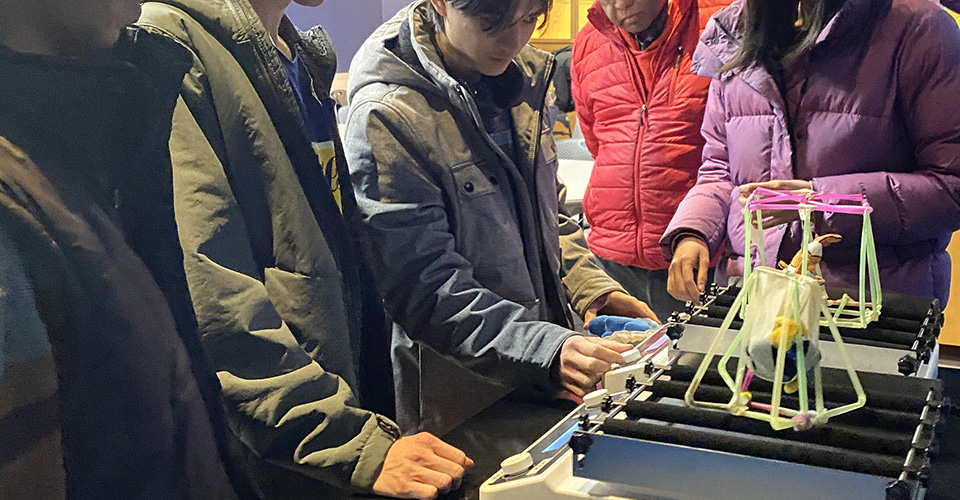
    Following a brief introduction to the physics of flight, students use vertical wind tunnels to design and test simple aircraft using given materials. There are several design challenges based on age and ability level.

  • Friends of the Pajarito Plateau

    Students are introduced to the wildlife of Northern New Mexico and are presented with hands-on challenges to build a habitat while understanding the impact humans have on wildlife and our environment.

External Banner Filler

3rd - 6th Grade

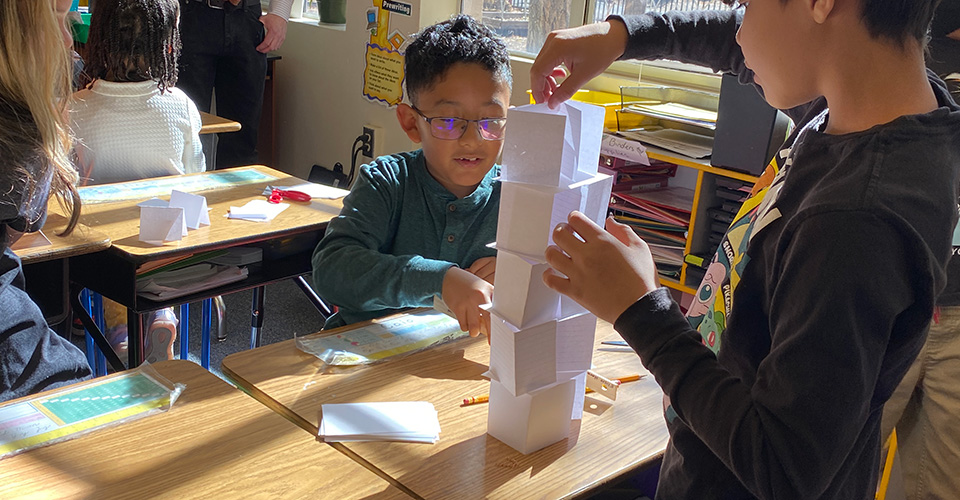
  • Engineering: Card Towers

    Given a stack of 3X5 cards, students (usually working in pairs) design and build a tower that supports a given weight at a minimum height. After testing, successful designs are subjected to more difficult challenges.

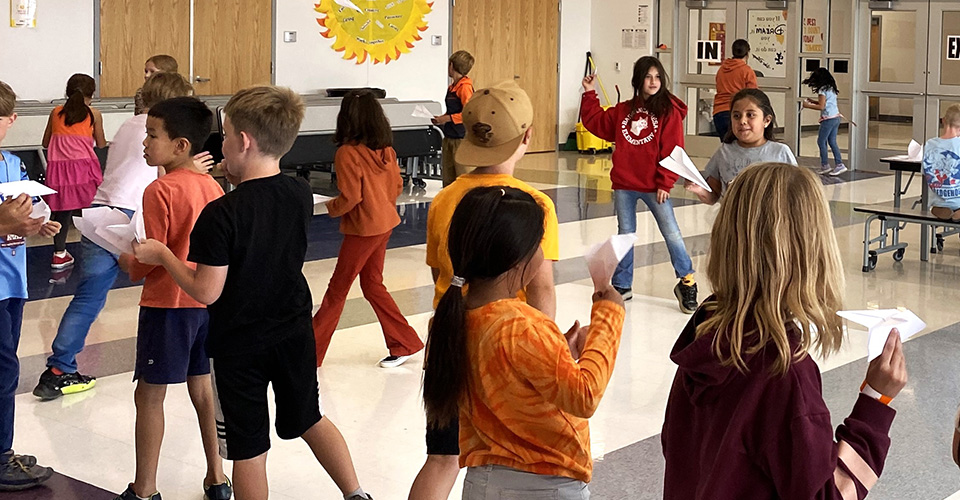
  • Engineering: Paper Airplanes

    After a brief introduction to engineering and flight, students are led through the folding of three different styles of paper airplanes which they test and try to alter the flight pattern of with modifications and/or design their own plane.

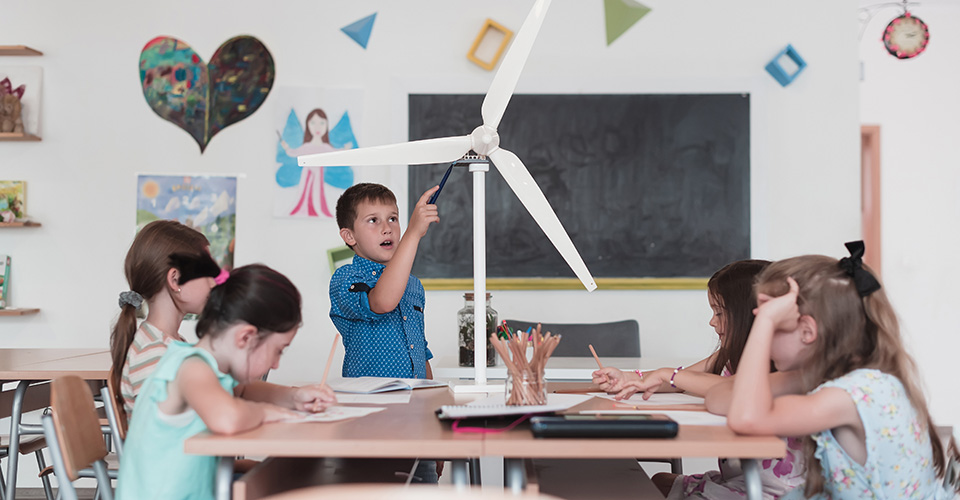
  • Engineering: Windmills

    After a brief introduction to electricity generation, students modify a wind turbine to spin as fast as possible using fans as a source of wind. Students measure the output voltage of the spinning turbines, with the goal of generating the highest voltage possible.

  • Engineering: Vertical Wind Tunnels

    Following a brief introduction to the physics of flight, students use vertical wind tunnels to design and test simple aircraft using given materials. There are several design challenges based on age and ability level.

  • Engineering: Earthquake-proof structures

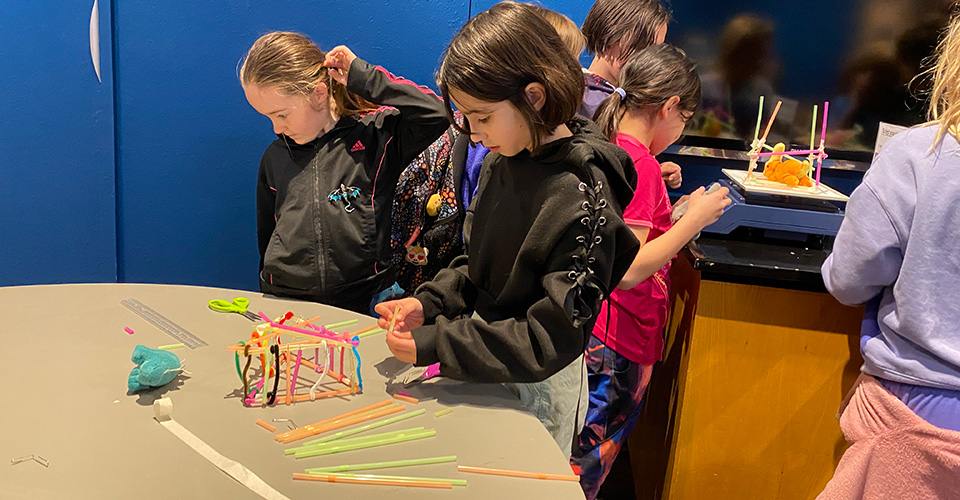
    After learning about earthquakes in New Mexico, students (usually working in pairs) design a small structure out of given materials (plastic straws, paper clips, etc) that must support a given weight at a minimum height. Buildings are then tested with shake tables.

  • Nuclear Detectives

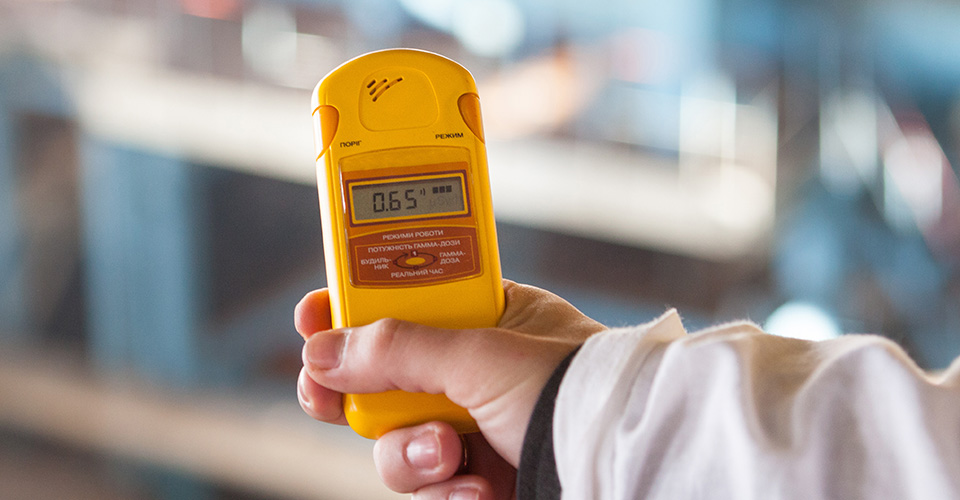
    Students are introduced to the topic of nuclear safeguards, security and are challenged to detect the potential misuse of nuclear material or technology in a simulated environment.

External Banner Filler

7th - 12th Grade

  • Building Immunity

    After an introduction to protein synthesis and immune responses, students role play the actions of a virus, cells and the immune system.

  • Engineering: Vertical Wind Tunnels

    Following a brief introduction to the physics of flight, students use vertical wind tunnels to design and test simple aircraft using given materials. There are several design challenges based on age and ability level.

  • Engineering: Loudspeakers

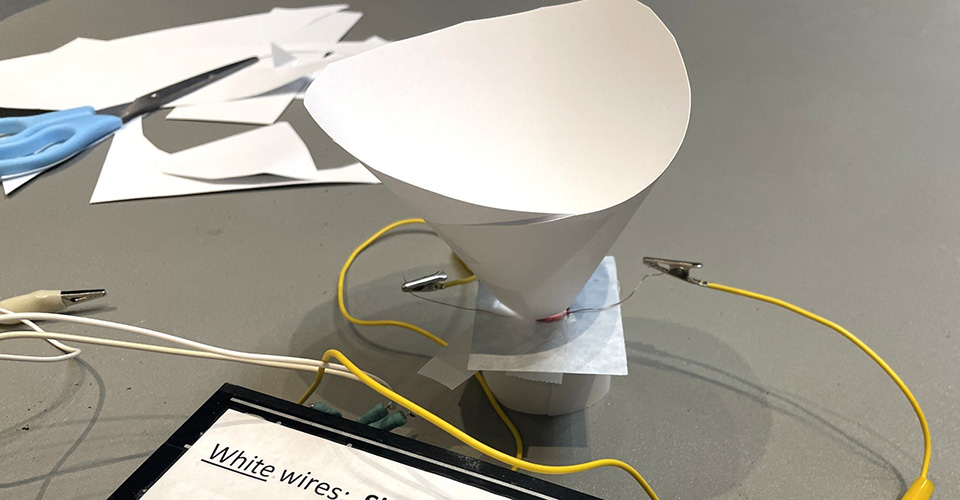
    After a brief introduction to sound waves, students build a simple functioning loudspeaker using given materials. Although the sound is barely audible at first, students engineer a structure to increase the loudness of the speaker.

  • Engineering: Earthquake structure

    After a brief introduction to earthquakes in New Mexico, students (usually working in pairs) design a small structure out of given materials (plastic straws, paper clips, etc) that must support a given weight at a minimum height. Buildings are then tested with shake tables

  • Manhattan Project

    After an introduction to communications and encryption during the Manhattan Project, students participate in several hands-on activities that utilize Morse Code, encryption, and radio. Encryption activities use a cipher tool analogous to the German Enigma Machine of WWII, while Morse Code activities include transmissions over radio, telegraph, and flashing light.

  • Nuclear Detectives

    Students are introduced to the topic of nuclear safeguards and are challenged to detect the potential misuse of nuclear material or technology in a simulated environment.

Additional Information:

  • Engaged chaperones are vital to a successful program. Please assign your chaperones to students and remind them that they must accompany students for the entirety of the field trip.
    • K-8: 1 chaperone per 6 students is required.
    • 9-12: 1 chaperone per 10 students is required.
  • The Bradbury Science Museum is a public space, and all visitors are subject to photography. Triad National Security, LLC reserves the right to make and use video, audio and/or photographic recordings of the participants at this event and may be used for promotional and marketing materials.
  • We encourage students to leave food, drink, and personal items on the bus. We do not allow eating or drinking within the museum.
  • Cameras are allowed and encouraged depending on the teacher’s discretion.
  • Admissions and parking are free to all visitors.
  • BSMA Bus Scholarships are available for schools’ needing assistance with transportation costs.
We can’t wait to welcome you and your students for an unforgettable STEM experience!
Challenge Tomorrow Marquee

Challenge: Tomorrow

Challenge: Tomorrow is an innovative mobile STEM outreach initiative created by Los Alamos National Laboratory in partnership with the Bradbury Science Museum.

Learn More

Bradbury Science Museum

1450 Central Avenue | Los Alamos, NM 87544 | (505) 667-4444 

Open: Tuesday-Saturday, 10 a.m.-5 p.m., Sunday, 1-5 p.m.

Closed: Mondays, Thanksgiving, Christmas and New Year’s Day

Free Admission

Tripadvisor | Instagram | Facebook